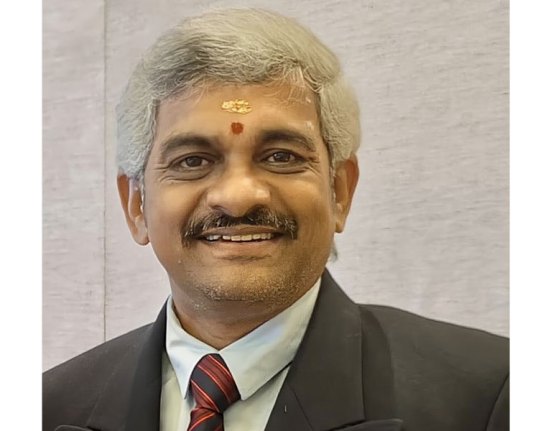
In a comprehensive dialogue with BW Business World, Mihirr P Thaker, Chief Information Security Officer at Allcargo Group, offers a masterclass in this evolving role
As the world’s supply chains grow increasingly digital, the vulnerability of a global logistics company is no longer just physical; it’s a constant, unseen battle against cyber threats. The modern CISO is no longer simply a guard at the gate but the architect of an entire company’s digital resilience.In a comprehensive dialogue with BW Business World, Mihirr P Thaker, Chief Information Security Officer at Allcargo Group, offers a masterclass in this evolving role. He details his leadership principles for safeguarding a company that operates in over 180 countries, balancing strict global frameworks with local adaptation, and leveraging cutting-edge technology like AI without falling for the hype. Thaker’s insights reveal a philosophy that sees cybersecurity not as a barrier, but as a critical enabler of business growth and customer trust.
What core leadership principles have shaped your journey from traditional IT security roles to leading enterprise-wide cybersecurity strategy, and how do you balance compliance, risk management, and innovation when building or overhauling a cybersecurity function?
Well, maintaining a learning mind-set is the key. Because cybersecurity domain is always evolving with new developments. The role of Chief Information Security Officer has now transitioned to the role of business enabler, driving business continuity and customer trust metrics.
At Allcargo Group, for balancing compliance, risk management, and innovation, we have created a unified governance model aligned to global frameworks like ISO 27001 (International Organization for Standardization 27001) and NIST (National Institute of Standards and Technology), while adapting controls locally, operating across over 180 countries. The goal is to remain strategic & proactive rather than reactive.
How do you ensure cybersecurity policies remain adaptable and effective across diverse geographies, given evolving threats, shifting regulations, and emerging technologies like AI and ML?
We follow a globally aligned yet locally adaptable approach to formulate cybersecurity policies. Our framework is built on a unified set of principles that allow regional customisation to meet jurisdictional requirements like GDPR (General Data Protection Regulation) in Europe or India’s DPDP Act (Digital Personal Data Protection Act).
To address various cybersecurity-related situations, we maintain active collaboration with CERT-In, NCIIPC, and international ISACs, enabling real-time intelligence sharing and proactive mitigation. We leverage machine learning to prioritise alerts and detect anomalies, but with human oversight at every stage. AI is not a magic bullet. The AI models require regular modifications to further strengthen transparency, and accountability, as regulatory expectations around AI continue to evolve.
Ultimately, our philosophy is strategic adoption over blind adoption. As Gartner’s hype cycle puts it, every technology has its maturity curve, and we carefully evaluate its relevance and value before integration into our ecosystem.
What is your approach to identifying and safeguarding critical digital assets, and how are AI/ML-driven tools enhancing threat detection, predictive analytics, and automated response at Allcargo?
Our approach is built on the confidentiality, integrity, and availability triad – that’s the foundation of any strong cybersecurity framework.
In the logistics industry, we integrate with third-party. What makes this particularly challenging is that we operate in an interconnected world where we engage with multiple partners across various digital platforms – mobile apps, email, APIs, etc..
The third-party risk management is crucial here. We conduct due diligence, continuous assessments, and even joint tabletop exercises with critical vendors. We also keep a close tab on external experts’ data access activities and specify limits to data access.
Regarding AI and ML, these tools strengthen our predictive decision-making capabilities in identifying cyber threats. They enhance our threat detection by processing vast datasets from various sources, identifying subtle warning signs that human analysts might fail to notice. The automation aspect helps us channel human intelligence toward addressing vital problem areas.
We avoid black-box solutions because we need to understand how our models work, especially as the regulatory landscape around AI accountability continues to develop.
Could you share your framework for rapid detection, response, and recovery in the event of a large-scale cyberattack, and how AI/ML is integrated into crisis response workflows?
Our incident response strategy is rigorously formulated and based on the NIST framework. It includes proactive detection, rapid containment, root-cause eradication, and structured post-incident reviews. What’s crucial is that these exercises include not just the technical teams, but also legal, communications, and customer-facing teams.
The framework recognises that implementing security controls requires cooperation across the organizational IT landscape. Control mechanisms are applied at various points – endpoints like desktops and laptops, servers, applications, databases, perimeter defences. These are managed by different teams, so collaboration is essential.
Our approach to balancing operational demands with strategic oversight. This helps us engage with ongoing operations while maintaining that strategic perspective.
Besides, the AI/ML integration has enhanced our capability to process information quickly and identify patterns, but the human element remains critical for context and decision-making during crisis situations.
How do you build and lead high-performance cybersecurity teams, foster collaboration between IT, operations, and business units, and align training programmes with the fast pace of technological change?
Team building in cybersecurity is all about creating a culture of continuous learning and scenario-based thinking. We run a continuous upskilling program that includes threat simulations, hands-on labs, and real-world use case training. We don’t just train on tools – we train for scenarios. That’s how teams learn to think critically.
The human element is crucial because, let’s face it, everyone prefers seamless access. The idea of entering passwords each time to access systems can face resistance. Effective communication becomes essential in conveying the importance of security measures. Security needs to be seen as a growth enabler, not a hindrance.
Having said that, ensuring security is everyone’s responsibility. In an organization, everyone needs to contribute to cybersecurity efforts. Our cybersecurity team holds discussions with other stakeholders to align them with cybersecurity practice and objectives.
Building digital trust is essential, when people understand why these measures exist, they become partners in the security effort.
For staying current with technological change, I prefer to actively engage with research, peers, and my own team to identify trends early and adapt. The cybersecurity landscape is in constant flux, and technology adoption demands a strategic approach.
In your view, what are the most underestimated cyber risks in India and the APAC region, and how do you see your role evolving—as a strategist, technology innovator, or mentor shaping the next generation of cybersecurity leaders?
India is making rapid progress in technology deployment. The successful rollout of UPI with enhanced cybersecurity measures is proof of that advancement. However, there are several underestimated risks which cannot be overlooked.
Zero-day vulnerabilities in software pose ongoing challenges, requiring constant vigilance and prompt patching. It’s like maintaining immunity in a pandemic – you can never let your guard down.
The expanding threat perimeter through third-party relationships is significantly underestimated. In logistics, where partner integration is constant, vendor vulnerabilities become direct threats to the operations. The emergence of EDI and API technologies has made data exchange swift, but it has led to a new attack vector that need constant monitoring.
What’s particularly concerning is that threat actors are now smarter than ever. To identify and defend against these malicious individuals or groups, the cybersecurity professionals must collaborate and exchange inputs more effectively.
CISOs should not chase technology. Instead, they should focus on risk, communication, and connecting business with security.
The cybersecurity landscape presents both opportunities and challenges. The scenario gives cybersecurity professionals opportunities to improve their learning curve and address vulnerabilities more effectively. The key is to is maintain the balance between strategic thinking and operational awareness and between innovation and proven security fundamentals.