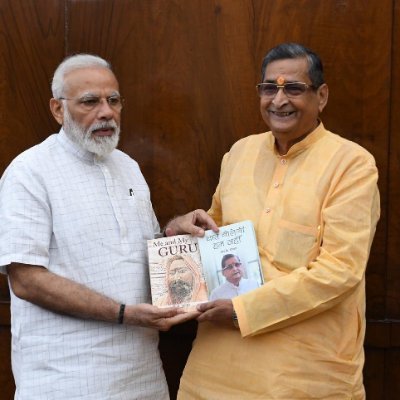
Kunwar Vikram Singh urges the Prime Minister to review PSARA and replace police-run licensing with an autonomous professional council for an industry that employs nearly one crore people.
The chairman of the Central Association of Private Security Industry (CAPSI) has asked Prime Minister Narendra Modi to order a national review of the Private Security Agencies (Regulation) Act, 2005, known as PSARA. Kunwar Vikram Singh argues that licensing administered through the police has outlived its purpose and should give way to professional self-governance. He says the Government has embraced “Minimum Government, Maximum Governance” and deregulation elsewhere. An industry that employs nearly one crore people and protects homes, offices, factories and private assets deserves the same reformist approach, he says.
A service, not a sovereign function
Singh’s case starts with a simple question: why should a privately financed, market-driven service need police permission to operate? He points to how the industry works in practice. A client decides what protection it needs, judges the competence of providers, negotiates commercial terms and signs a service level agreement. The agency then recruits, trains and supervises its personnel and answers for what it delivers. In his view, competence comes from education, training, experience, ethical conduct, competition and accountability, and a government licence does not guarantee any of them.
He also challenges the habit of describing private security as part of India’s internal security architecture. Law and order, criminal investigation, intelligence and national security belong to the sovereign institutions of the State, he says. Private agencies hold no comparable statutory powers and rarely take part in official security policy, because their duties arise from private contracts. Singh welcomes cooperation with law enforcement during emergencies but cautions against mistaking it for institutional subordination. If the Government expects private security to carry a formal role in the national framework, he says, that role must come with legal recognition, institutional representation, appropriate authority and defined obligations.
The cost of the licence
On how PSARA works in practice, Singh describes a system of licensing, renewals, verifications and inspections. He says agency owners across the country complain of delays, inconsistent interpretations, excessive paperwork and room for arbitrary action. In his view, official discretion without transparency creates openings for harassment and corruption, and he says these concerns deserve independent investigation and should not be dismissed as routine business grievances. He also asks why already stretched police forces should be running the commercial affairs of security agencies.
He calls for a transparent national assessment of licensing revenue, administrative spending and measurable regulatory outcomes. According to Singh, the Government collects licensing and renewal fees but publishes little consolidated information on how they support training, entrepreneurship, research or the welfare of security personnel.
The industry’s finances, he says, make the regulatory burden harder to bear. Private agencies receive no budgetary support and are paid by their clients, yet they must also meet licensing requirements on top of taxation and labour laws. Singh lists delayed client payments, GST-related cash-flow problems, rising wage obligations, unrealistic tender conditions and very low service charges as threats to the viability of many agencies. An agency must pay its staff on time even when a client withholds payment for months, he points out. While employees must be protected, he asks who protects the legitimate employer from chronic payment defaults. He urges the Finance and Labour Ministries to accept that a financially unsustainable industry cannot offer stable jobs or dependable services, and he adds that Ease of Doing Business must mean less intervention, not just digitised versions of the same procedures.
A council in place of a counter
As an alternative, Singh proposes an autonomous National Council for Private Security Services, backed by State-level professional councils. It would be created by legislation and governed largely by elected representatives of the profession, with seats for security personnel, professional institutions and the Central and State Governments. Its remit would cover professional registration, competency standards, training accreditation, ethical conduct, disciplinary accountability, quality certification and workforce development. He cites the Bar Council of India, the Institute of Chartered Accountants of India and the statutory framework for medical professionals as proof that professions can be regulated without police-administered business licensing. Government representatives would guide the council and safeguard the public interest, he says, without controlling routine professional affairs.
Singh stresses that the proposal does not remove essential safeguards. Criminal antecedent verification, investigation of offences, weapons regulation and other public safety functions would stay under existing laws. “This is not a demand for freedom from accountability,” he writes, but for freedom from unnecessary bureaucracy and a move towards stronger professional accountability. He also warns that self-regulation must be transparent and inclusive, and must not become a way for established businesses to restrict competition or keep new entrepreneurs out.
Under such a system, he says, clients could choose providers on the basis of recognised certifications, demonstrated experience, independent quality ratings, trained staff and measurable service standards. Agencies would then have every reason to invest in upskilling, technology, supervision and ethical practice. Singh adds that Recognition of Prior Learning, competency-based certification and continuous professional development could change the career prospects of millions of security personnel.
The ask
His specific request is for a high-level committee that brings together the Ministries of Home Affairs, Law and Justice, Finance, and Labour and Employment, along with State Governments and the private security industry. The committee would study whether police-administered licensing should be replaced by autonomous statutory governance, assess the actual costs and benefits of the current regime, and recommend ways to remove unnecessary inspections, discretionary powers and repeated compliance requirements.
Singh frames the issue as a question of purpose and not of control. What matters, he says, is how the industry can best serve its clients, protect its workforce and contribute to economic growth. He closes with a three-line summary of his position: “Let the Government govern. Let professionals regulate their profession. Let clients choose their security service providers.”
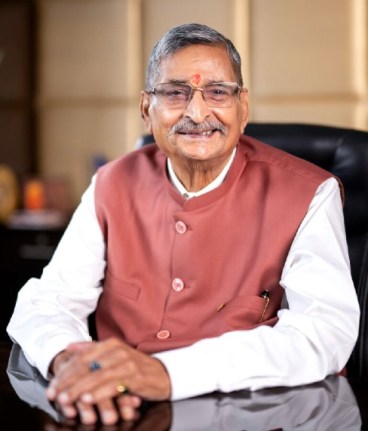
By Kunwar Vikram Singh, Chairman, Central Association of Private Security Industry (CAPSI)
The views expressed are the author’s own and do not necessarily reflect the views of BW Security World.