


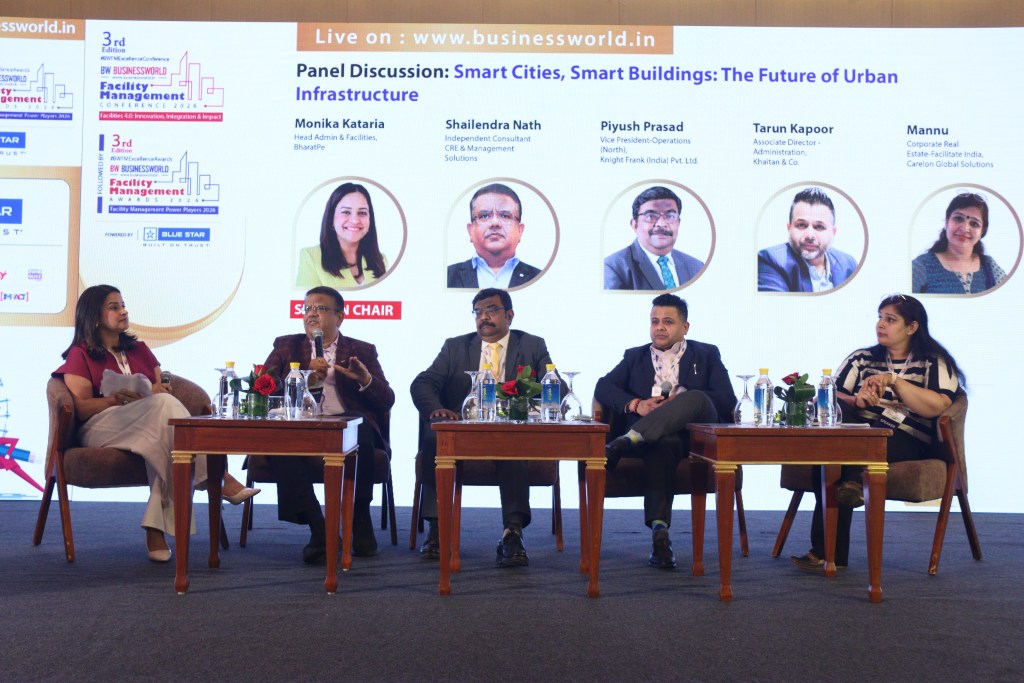
Experts flag gaps in EV, governance and infrastructure, while highlighting data-driven buildings, user behaviour and integration as key to smart cities
India’s ambition to build smart cities is gaining momentum, driven by rapid urbanisation, rising infrastructure demands and increased adoption of digital technologies. With urban population expected to nearly double by 2050, the pressure on cities to deliver efficient transport, sustainable energy systems, and improved quality of life is intensifying.
However, while multiple government-led initiatives and private sector investments are underway, the transition remains uneven across regions.
Experts note that progress is often fragmented while some cities are advancing in areas such as mobility, waste management and energy efficiency, others continue to grapple with basic infrastructure gaps, limited resources and governance challenges.
The concept of a smart city remains broad and long-term, said Shailendra Nath, an independent consultant, noting that different cities are advancing in specific areas such as power systems, waste management and traffic control.
“Smart cities cannot be built overnight or even in a decade. We are getting there, but it will take time,” Nath said, citing resource constraints and competing priorities. India, which houses about one-fifth of the world’s population, faces limitations in scaling infrastructure quickly, he added. The session was chaired by Monika Kataria, Head-Admin & Facilities, of BharatPe.
From a corporate perspective, speakers said companies are adopting smart building technologies faster than cities are upgrading infrastructure.
Mannu, a corporate real estate professional at Facilitate India, said organisations aiming to shift to electric vehicles (EVs) are facing challenges due to inadequate charging infrastructure. “Companies are moving towards sustainability, but cities are not fully supporting that transition yet,” she said, citing limited EV charging stations even in premium locations.
Experts said smart buildings are increasingly defined by their ability to use real-time data for efficiency and user comfort. Piyush Prasad, Vice President–Operations (North) of Knight Frank, said smart buildings integrate systems such as heating, ventilation, air conditioning, lighting and security to automate operations.
“It is about collecting and analysing data and making systems predictive rather than reactive,” he said.
Such systems can optimise energy use, reduce costs and improve occupant experience, he added.
Tarun Kapoor, Associate Director–Administration of Khaitan & Co., said user experience remains central to the concept. “If technology becomes complex, it is no longer smart. It should be seamless and largely invisible,” he said.
Experts said lack of coordination between different levels of government remains a key barrier.
“Central, state and municipal bodies often do not move in sync, which slows implementation,” Prasad said. He also pointed to funding constraints, shortage of skilled manpower and rapid urbanisation as challenges.
Legacy infrastructure in older buildings further complicates the adoption of new technologies, Kapoor added. Beyond infrastructure, experts highlighted citizen behaviour as a critical factor.
“Technology alone cannot make cities smart. User behaviour and compliance are equally important,” Nath said.
Facility managers were seen as playing a growing role in shaping both buildings and urban systems, given their operational expertise.
Looking ahead, speakers said smaller cities could adopt smart infrastructure more effectively by building systems from the ground up.“Smart is about making life easier and more efficient. That can apply to any city, town or village,” Prasad said.
By: Priyanshu Priya