


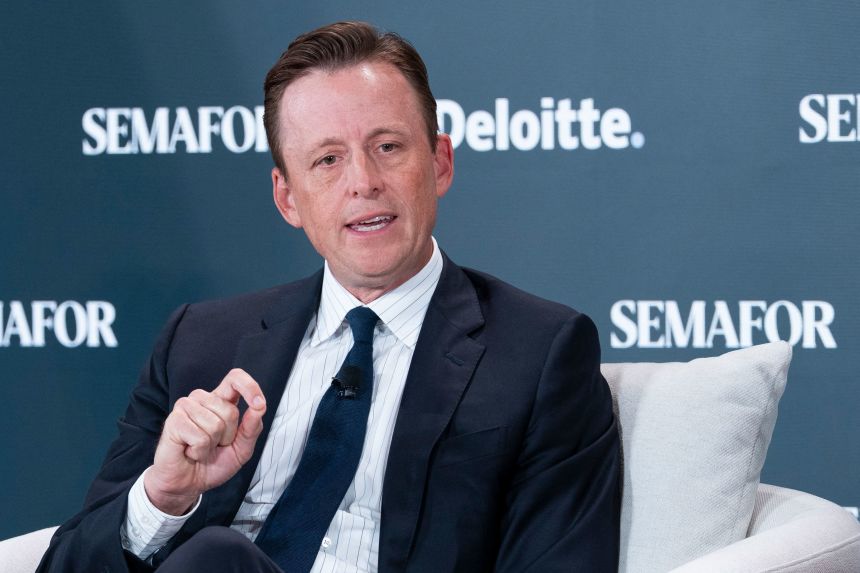
Trump says he wasn’t “good enough”, while officials insist the outages were not cyberattacks. Pentagon CIO Kirsten Davies steps in.
The White House has removed its top cybersecurity official, Sean Cairncross, after a little over a year in the post and days after a string of technology outages hit banking, air traffic control and other sectors.
Cairncross, the National Cyber Director, was forced out after losing the confidence of White House chief of staff Stephen Miller, according to CBS, the BBC’s US news partner. Asked about the removal on Friday, President Donald Trump said Cairncross was not “good enough”. Two White House officials told reporters Miller pushed him out, while two other sources described the departure as amicable.
A successor named
Secretary of State Marco Rubio announced on X that Department of Defense chief information officer Kirsten Davies is the new national cyber director. The White House named Davies on Thursday as acting head of the Office of the National Cyber Director, which coordinates cybersecurity policy and strategy across the federal government.
Outages and scrutiny
The change follows a run of disruptions across banking, aviation and other services. US officials have said the outages were not caused by cyberattacks. Even so, the incidents prompted scrutiny from members of Congress, who demanded a clearer explanation of what went wrong.
Earlier this week, Rubio said there was “zero evidence” that the outages were connected, adding that “we are not under systemic attack”. No specific link between Cairncross’s role and the outages has been reported.
The timing has still unsettled many people. So many failures in quick succession have raised questions about the safety of the technology that daily life depends on. The concern also comes amid wider worries over advanced AI models, mostly from US companies, that can discover vulnerabilities humans would struggle to find on their own.
Who is Cairncross?
Cairncross began as a lawyer in the Republican Party and later became chief operating officer of the Republican National Committee. In the first Trump administration, he was part of the White House chief of staff’s team. He then worked in the private sector before returning to government in August 2025.