


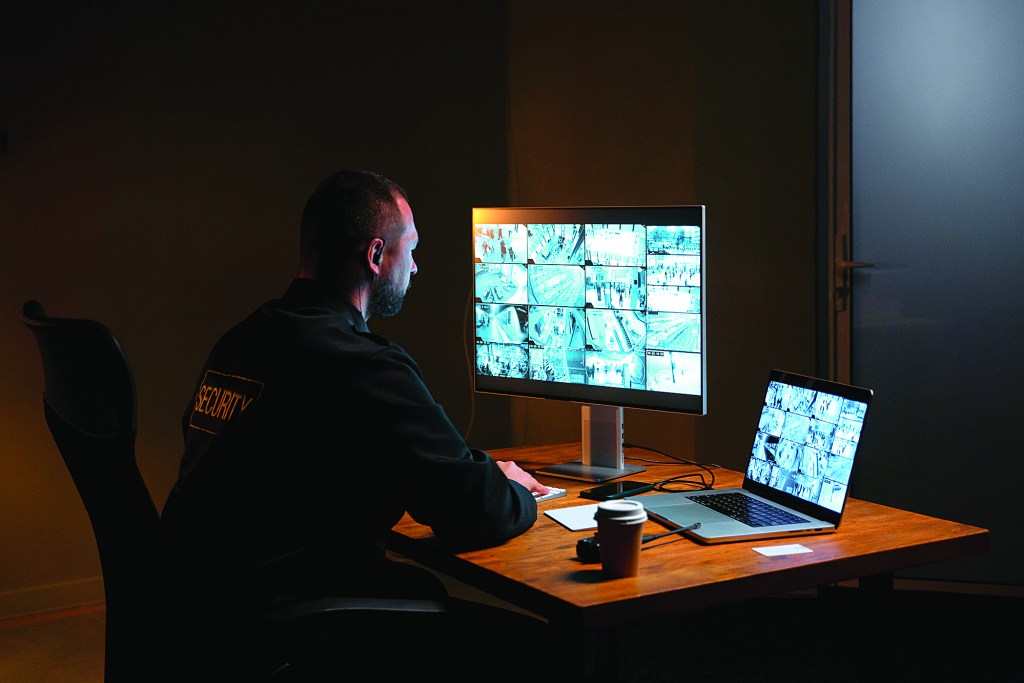
Manned guarding, a long-standing way of securing physical locations with human beings, is experiencing a technological change
The impact of technology on manned guarding is transforming the landscape and rethinking established paradigms in the field of security services. Manned guarding, a long-standing way of securing physical locations with human beings, is experiencing a technological change. As cutting-edge tools and systems are integrated, it is critical to investigate the complex influence technology is having on the efficacy, efficiency, and overall function of manned guarding services.
One of the key ways that technology is affecting manned guarding services is through the installation of surveillance and monitoring technologies. Guards benefit from greater situational awareness when using advanced CCTV cameras with capabilities such as facial recognition and real-time video analytics. This not only increases their ability to detect and respond to possible threats, but also allows for a more proactive approach to discovering security flaws.
The integration of drones in manned guarding services represents a significant leap forward in terms of surveillance capabilities. Drones can cover large areas quickly, providing real-time video feeds to security personnel. This aerial perspective enhances the effectiveness of manned guards, allowing them to monitor expansive spaces, identify potential risks, and respond promptly to unfolding situations.
Access control systems, another technological aspect influencing manned guards, have evolved to provide increasingly complex options. Biometric access systems, such as fingerprint and facial recognition scanners, improve entry point security by guaranteeing that only authorised people obtain access. These solutions not only strengthen security but also make the process easier for guards, lowering the possibility of unauthorised entrance.
Communication tools and devices are becoming increasingly important in enhancing the performance of manned guarding services. Guards can communicate with one another and with central command using advanced radio communication systems, mobile devices, and wearable technologies. This ensures quick response times, effective emergency coordination, and the capacity to adapt to changing security scenarios.
Furthermore, the introduction of artificial intelligence (AI) and machine learning (ML) is changing the way manned guarding services operate. Intelligent algorithms can analyse vast amounts of data in real time, assisting security personnel in identifying patterns, predicting potential dangers, and making more educated judgements. AI-powered technologies also help to automate mundane activities, freeing up manned personnel to focus on more complicated security concerns.
Despite these advances, the human element is still essential in manned security services. Guards’ powers are enhanced by technology, but human intuition, judgement, and adaptability are essential assets. Manned guards must not only respond to security situations, but also identify and mitigate threats using interpersonal skills and critical thinking.
The employment of technology in manned security services also helps to reduce costs. When combined with manned security, automated monitoring technologies allow for more efficient resource allocation. Guards can devote their attention to duties that require human interaction, while technology handles regular surveillance and data processing. This collaboration of technology and human beings improves the overall efficiency of security.
While technology has had a good impact on manned guarding services, it has also presented obstacles. It is critical for security personnel to have continuing training and upskilling in order to adapt to emerging technologies. Furthermore, technology integration must be complemented by comprehensive cybersecurity measures to protect against any vulnerabilities and cyber-attack.
To summarise, technology’s impact on manned guarding services is a dynamic and transformational force. The integration of modern surveillance, access control, communication tools, and artificial intelligence is improving manned guard capabilities and overall security. In an increasingly technologically driven environment, striking the correct mix between technology and human skill is critical to navigating the developing landscape of manned guarding services.
–By Jyotsana Bhalla, Senior Vice President, APS Group