


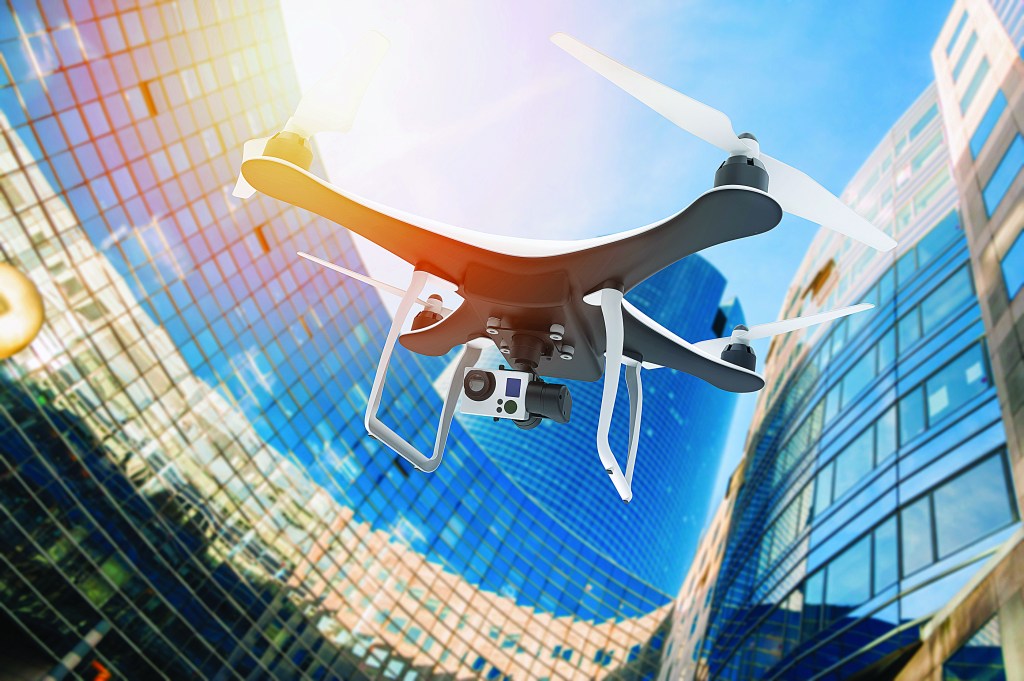
Drones have become increasingly popular for industrial security due to their ability to provide aerial surveillance, remote monitoring and rapid response capabilities
On November 12, 2023, a section of the Silkyara Bend-Barkot tunnel, which is under construction to connect National Highway 134 in the Uttarkashi district of Uttarakhand, India, collapsed. This incident resulted in 41 workers being trapped inside.
After 17 days, Indian engineering teams successfully rescued the workers. The workers were low-wage and had been stranded in the 4.5 km (2.8 mile) tunnel. Miners drilled the final section by hand to reach the workers. Drones were successfully utilised for many critical requirements and assessments and have proved their importance in such operations.
Drones have become increasingly popular for industrial security due to their ability to provide aerial surveillance, remote monitoring and rapid response capabilities. Drones, also known as Unmanned Aerial Vehicles (UAVs), can play a crucial role in enhancing industrial security in various ways.
Drones are increasingly being used in emergency response and security management for various reasons. They have the ability to reach challenging areas and provide aerial views, making them useful in law enforcement and search and rescue operations. Some specific applications include locating missing persons, traffic collision reconstructions, real-time investigations, crime scene analysis, disaster response, and surveillance.
The use of drones has several advantages. They can access remote or hazardous locations that are inaccessible to humans. Additionally, drones have become a popular solution for data gathering and routine tasks that were previously performed by expensive helicopters. In many ways, drones represent the future of crime fighting and rescue missions.
Here are some ways drones can be better utilised for industrial security:
Emergency Response:
Drones were used to monitor the rescue operation of 41 workers trapped in the Silkyaratunnel in Uttarakhand. The tunnel collapsed on November 12, 2023. The drones were able to track inside the tunnel and provide real-time data and imaging. The drones were also able to operate in GPS-denied areas. The drones used in the rescue operation were created by Squadrone Infra Mining Pvt. Ltd. The drones were controlled by a motion control device that allowed them to be operated by hand. The rescue operation was successful and all 41 workers were removed.
Drones play a significant role in emergency response scenarios, providing valuable support to first responders and aiding in various aspects of crisis management. In the event of an emergency, drones can quickly survey the area to assess the situation, providing crucial information for emergency response teams. They can be deployed to areas that may be hazardous or difficult for human responders to access.
Drones play a significant role in emergency response scenarios, providing valuable support to first responders and aiding in various aspects of crisis management. Here are several ways in which drones are utilised for emergency response:
Communication Relay:
Drones can serve as communication relays in areas with poor connectivity, ensuring that security personnel remain in contact with each other and with the central monitoring system. Drones can serve as valuable tools for communication relay in various scenarios, particularly in areas where traditional communication infrastructure is limited, damaged or nonexistent. Here are several ways in which drones can be employed for communication relay:
The effective deployment of communication relay drones requires consideration of regulatory compliance, security, and privacy concerns. Additionally, advancements in drone technology, such as extended flight times and increased payload capacities, contribute to the feasibility and success of communication relay missions.
Intruder Detection and Access Control and Asset Protection:
Drones can easily navigate to the most unreachable locations without any major workplace hazards. Not just for maintenance, but the videos and images can be stored in a safe repository and used by relevant stakeholders whenever necessary. Drones can be used during the construction period of assets as well. When it comes to asset protection, the focus is on deterrence and recovery. Both of which are accomplished with drones. Drones are quick to deploy, require minimal manpower, record video and photos for prosecuting thieves, and offer a significant return on investment (ROI).
Drones equipped with thermal imaging cameras can identify and track intruders, even in low-light conditions. Autonomous drones can be programmed to patrol predefined routes, alerting security personnel to any unusual activities.
Drones can be integrated with access control systems to monitor and control entry points, ensuring that only authorised personnel have access to specific areas. They can be used to inspect fences, gates, and other barriers for signs of damage or tampering.
Drones can be used to monitor high-value assets, such as equipment and machinery, to prevent theft, vandalism, or unauthorised access. They can also perform routine inspections to identify maintenance needs and potential issues.
Here are some ways in which drones are used for asset protection:
Surveillance and Monitoring:
Drones equipped with high-resolution cameras and thermal imaging sensors can provide real-time video feeds to security personnel, allowing them to monitor large industrial sites, such as oil refineries, power plants, and manufacturing facilities, from a safe distance. Drones can patrol the perimeter, fly over restricted areas, and identify potential security breaches or safety hazards. They provide real-time video feeds to security personnel, enabling them to detect and respond promptly to potential security threats.
Environmental Monitoring:
Drones equipped with sensors can monitor environmental conditions, such as gas leaks, chemical spills, or other hazardous materials, helping to prevent accidents and ensuring a safe working environment.
Access to Hard-to-Reach Areas: Industrial facilities often have hard-to-reach areas such as rooftops, silos, and storage tanks that are difficult for security personnel to access. Drones can navigate these areas easily and safely, providing visual inspections and identifying any anomalies or vulnerabilities that may pose security risks.
Quick Response to Incidents: Drones can be deployed rapidly in response to security incidents, such as intrusions or alarms. They can provide real-time situational awareness to security teams, enabling them to assess the situation quickly and respond appropriately. Drones can also transmit live video feeds to a command centre, allowing for remote decision-making and coordination of security personnel.
Deterrence and Prevention: Drones can serve as a visible deterrent to potential intruders or trespassers. The presence of drones flying over an industrial site can discourage unauthorised access and criminal activities. Additionally, drones can be used to enforce no-fly zones, preventing unauthorised drones from entering restricted airspace around industrial facilities.
Cost-effective Solution: Drones can provide a cost-effective solution for industrial security compared to traditional methods, such as manned patrols or fixed CCTV cameras. They require less manpower, can cover large areas quickly, and can be operated remotely, reducing the risk to security personnel. With drones, carrying out inspections is cheaper. Drone security patrols have the ability to monitor vast areas and provide high-quality images and video footage in real time, which could also mean that fewer on-site security officers are needed to protect a site or property. Speed is another advantage.
Data Collection and Analysis: Drones can capture vast amounts of data, and advanced analytics can be employed to process and analyse this data for actionable insights. Integration with other security systems, such as video surveillance and access control, enhances the overall security infrastructure. Drones can collect and transmit data from various sensors, such as gas detectors or radiation detectors, to assess environmental risks or detect leaks, emissions, or other anomalies. This data can be analysed in real-time or stored for further analysis, helping industries proactively address potential security or safety issues.
Training and Simulations: Drones can be used for training and simulations to improve the preparedness of security personnel. Drone-based simulations can simulate various scenarios, such as intrusions, fires, or chemical spills, allowing security teams to practice their response procedures in a controlled environment.
The drones offer significant potential for enhancing industrial security through enhanced surveillance, access to hard-to-reach areas, quick response to incidents, deterrence and prevention, cost-effective solutions, data collection and analysis, as well as training and simulations. Proper implementation and integration of drones into industrial security protocols can lead to improved security outcomes and enhanced operational efficiency for industrial facilities.
While the use of drones for industrial security offers numerous benefits, it’s important to consider privacy concerns, regulatory compliance, and the potential for misuse. Implementing appropriate safeguards and following legal guidelines are essential for responsible and effective drone usage in an industrial security context.
-By Prof. (Capt.) SB Tyagi, Chief Councillor, ICSSM