


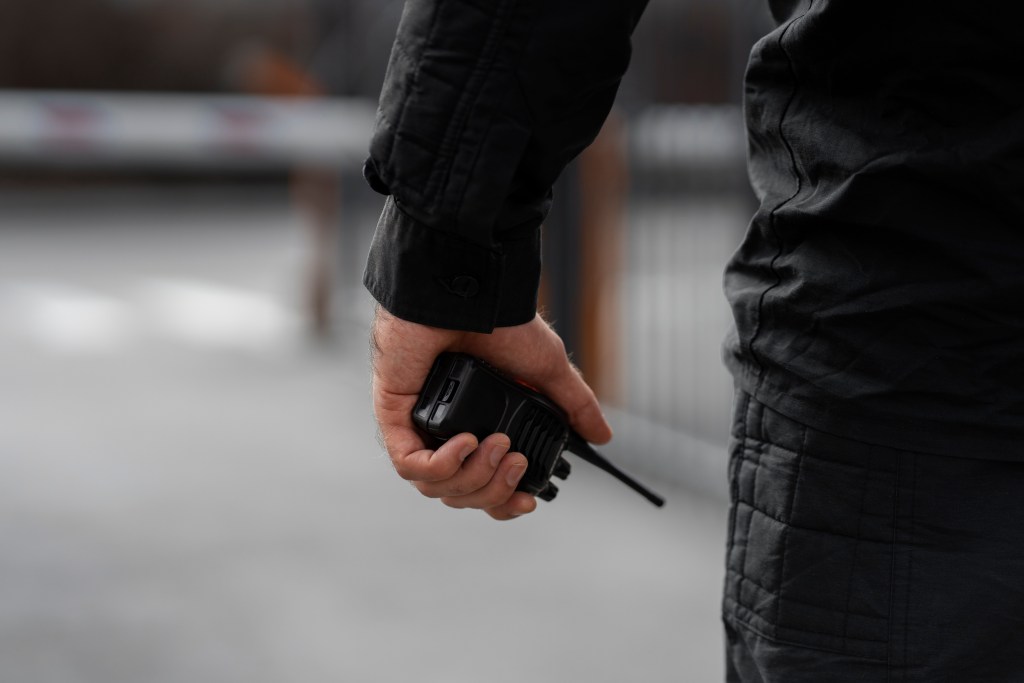
As AI takes over round-the-clock monitoring and first-level analysis, the role of the guard becomes less reactive and more strategic
The traditional image of a lone security guard pacing perimeters or watching static monitors is giving way to a more dynamic, intelligent model of physical security. Rather than replacing guards, artificial intelligence (AI) is redefining their roles—enhancing human capabilities, enabling real-time decisions, and turning security personnel into proactive and strategic responders.
At the heart of this shift lies a concept known as the “symbiotic shift”—a mutually beneficial relationship between humans and machines. AI is no longer simply a tool; it’s a collaborative partner that is dramatically improving how physical security is implemented, managed, and experienced.
From Watching ScreensTo Acting On Intelligence
Much of a traditional guard’s workload has long been repetitive and error-prone—manually checking surveillance feeds, patrolling, and logging routine activity. Fatigue and distraction can make these tasks vulnerable to oversight. Today, AI-powered video analytics are reshaping this reality.
These systems work continuously, identifying and analysing people, vehicles, or movements in real time. They filter out false positives—such as shadows or moving branches—that typically plague legacy motion sensors. AI doesn’t just watch; it understands context and flags abnormalities.
Instead of a guard scanning a dozen monitors, AI will highlight only critical alerts—say, someone loitering at a fence or trying to force entry. With detailed alerts like “unauthorised access attempt in Zone 3”, personnel can respond precisely and quickly, informed by a live feed and situational data.
This extends beyond cameras. AI integrates with a wide network of devices: door sensors, access control logs, IoT systems and more. It identifies irregularities—such as a door left open too long or unusual foot traffic—and learns from them to improve future detection.
Redefining Guard’s Role
As AI takes over round-the-clock monitoring and first-level analysis, the role of the guard becomes less reactive and more strategic. Rather than patrolling blindly, guards can deploy to high-risk areas identified by the system, intervene earlier in unfolding incidents, and even prevent events before they escalate.
This means guards now engage in higher-value work: assessing threats with more context, assisting individuals on-site, building rapport, and becoming the human face of a technology-enhanced security approach. They’re no longer mere responders, but informed decision-makers.
Reporting is also being streamlined. AI logs incidents, correlates inputs from different sources, and helps guards file reports more efficiently. Less paperwork means more time spent actively managing and improving safety on the ground.
Intelligence-driven Security
One of AI’s most transformative aspects is its ability to learn and forecast. By analysing historical data—past security breaches, seasonal trends, access logs—AI can pinpoint vulnerabilities and suggest where resources should be concentrated.
While it doesn’t predict the future with certainty, it brings pattern recognition to the table. It might, for instance, alert a team to an uptick in incidents during certain hours or recommend temporary patrols during known high-risk times.
Soon, wearable tech like AR glasses may further enhance this. Guards could receive live overlays in their vision—directions to a suspect, exit paths, or live alerts—transforming how they interact with their environment.
Meanwhile, increasingly advanced AI models may use data from social media, weather forecasts, and local news to issue preemptive warnings or recommend security protocol adjustments. It’s the emergence of a proactive security culture, driven by smart forecasting.
Collaboration With Drones & Robots
AI is also key to integrating autonomous technologies. From ground robots to surveillance drones, these assets are becoming more common—and human guards will direct them.
Rather than roaming randomly, drones might fly to flagged zones and relay video to guards. Ground robots could conduct inspections in unsafe areas. AI will orchestrate these responses and feed insights back to human supervisors who retain control and judgement.
AI isn’t just changing what guards do—it’s changing how they’re trained. Through virtual reality (VR) and AI simulations, guards can practise crisis scenarios, improve de-escalation techniques, and learn how to interpret AI-generated data. Training becomes continuous, personalised, and closely tied to real-world conditions.Contrary to dystopian fears, AI is not erasing human roles. Instead, it’s elevating them. Security is still a people-centric profession—requiring empathy, intuition, communication, and ethical judgement. AI simply enhances these qualities by eliminating busywork and offering deeper insight.
The future of physical security lies in this partnership. AI empowers guards to act earlier, with more precision and confidence. It enables strategic oversight, sharpens situational awareness, and strengthens frontline readiness. And it ensures the human presence remains at the core of a smarter, safer environment.
As the lines between digital and physical threats blur, the integration of intelligent tools with human expertise may well be the most vital evolution in modern security practice. This is not automation for efficiency alone—it is augmentation for impact.