


The risks have grown more complex, in hotels and other organisations, the most pressing threats include unauthorised access, terrorism, active shooter incidents, bomb threats, theft, insider risks, and fire or life safety hazards
As the lines between digital and physical threats blur, the role of the Chief Security Officer (CSO) has expanded far beyond its traditional scope. No longer confined to overseeing guards, CCTV cameras, or access control, today’s CSOs sit at the intersection of technology, regulation, and risk management. They must protect not just people and property, but also sensitive data, operational systems, and organisational reputation.
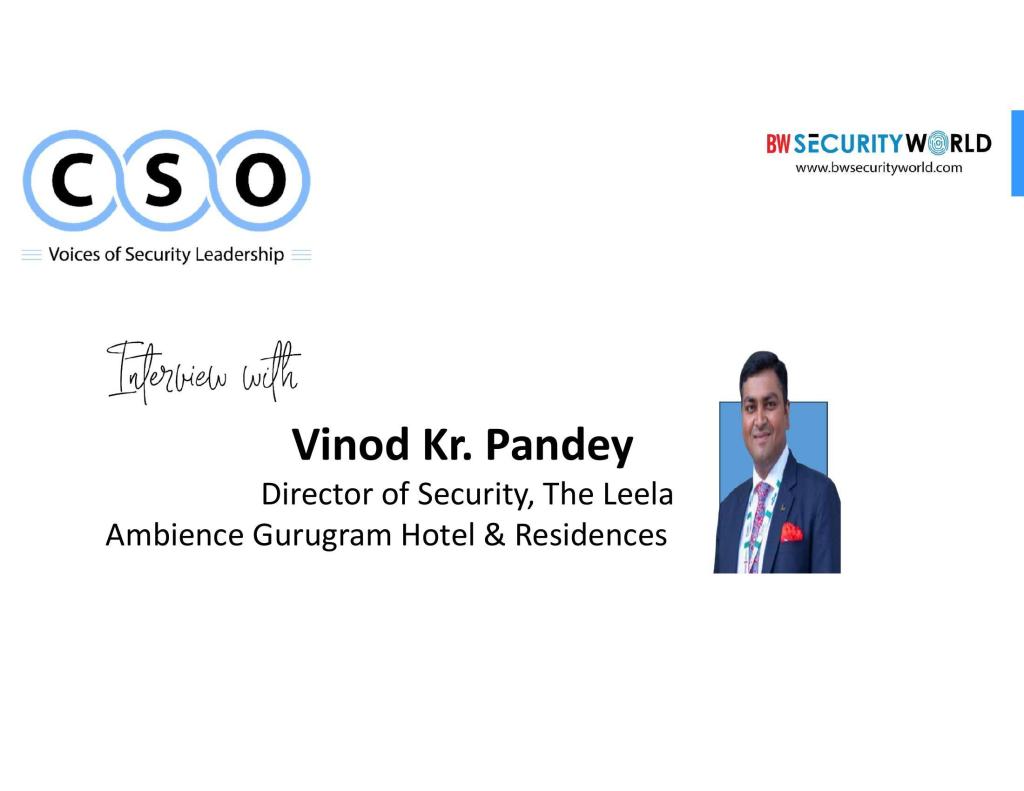
In this conversation, we speak with Vinod Kumar Pandey, Director of Security, The Leela Ambience Gurugram Hotel & Residences, who has been instrumental in building resilient security frameworks that balance guest experience with the highest standards of safety. He shares his insights on the changing role of the CSO, the evolving threat landscape, and the innovations shaping the future of physical security.
How has the role of a Chief Security Officer changed with the increasing integration of physical and cyber security measures?
The role has shifted from focusing primarily on physical safety to safeguarding both physical and digital assets. Today, CSOs must integrate physical and cyber security by collaborating closely with IT teams, ensuring compliance with data laws, and preparing for hybrid threats such as hackers targeting building management systems. This evolution demands that security leaders train teams in both physical and digital awareness. In essence, the CSO is no longer just a security manager, but a strategic leader responsible for protecting people, property, information, and reputation.
What are the most pressing physical security risks organisations face today, and how do you prioritise them?
The risks have grown more complex. In hotels and other organisations, the most pressing threats include unauthorised access, terrorism, active shooter incidents, bomb threats, theft, insider risks, and fire or life safety hazards. Additional challenges come from workplace violence, vehicle-based threats, natural disasters, and cyber-physical vulnerabilities.
Prioritisation always begins with life safety—any risk that could cause harm to guests or staff, such as fire or terrorism, must be addressed first. Next comes preventing unauthorised access and theft, as these incidents are more frequent and can harm both reputation and customer trust. From there, organisations must prepare for vehicle threats, natural disasters, and technology-driven vulnerabilities. In short, risks are prioritised by their likelihood and potential impact, but protecting lives is always the highest priority.
What do you see as the main drivers of growth in the physical security market in the coming years?
The market is expanding rapidly, and I see several key drivers. Rising threats such as terrorism, workplace violence, and organised crime are pushing organisations to strengthen safeguards. At the same time, technology integration—AI-powered surveillance, biometrics, and smart access control—is transforming how assets are secured. Regulatory pressure and compliance requirements are also critical drivers, particularly in industries like hospitality and critical infrastructure. Overall, the demand for integrated cyber-physical protection, stricter safety standards, and the need for smarter solutions will fuel market growth.
How do you approach evaluating and integrating emerging technologies like AI surveillance, biometrics, and IoT into existing security systems?
The process begins with a needs assessment to ensure the technology addresses real-world problems. Compatibility with existing systems, scalability, and compliance with safety and privacy laws are crucial factors. I also conduct a cost–benefit analysis and thorough vendor due diligence. Before full implementation, pilot testing helps identify potential gaps, and staff training ensures effective adoption. The aim is to align technology with operational needs while ensuring it enhances security without causing disruption.
What criteria do you use to assess and select physical security vendors and solutions?
The focus is on alignment with specific risks and operational needs, whether in access control, CCTV, or perimeter defence. I look for reliability, recognised quality certifications, and seamless integration to avoid silos. Compliance with legal, industry, and brand standards is non-negotiable. Beyond cost, I evaluate long-term factors such as installation, training, maintenance, and vendor support. Future readiness for emerging technologies is also key. Ultimately, the solution must be reliable, compliant, cost-effective, and supportive of both security and guest experience.
How do you ensure that connected physical security systems remain resilient against cyber threats?
I treat connected systems—CCTV, access control, IoT devices—as critical IT assets. They must be secure by design, regularly updated, and placed on protected networks. Access is restricted with strong authentication, and only trusted vendors are chosen. Regular penetration testing, system drills, and staff awareness programmes are essential. The layered approach ensures resilience by combining strong controls, monitoring, and IT collaboration.
In what ways do regulatory requirements influence your physical security strategy and technology adoption?
Regulations set the baseline for compliance and often act as catalysts for technology upgrades. In hospitality, fire and life safety rules determine emergency preparedness and fire system design. Local laws may require identity verification of guests, shaping how access control and document verification are integrated. Data protection laws, such as GDPR, influence how guest information from CCTV or digital check-ins is stored and accessed. By staying ahead of these requirements, we ensure compliance, enhance guest trust, and align with global best practices.
How do you measure and demonstrate the return on investment (ROI) for major security upgrades?
Security is often viewed as a cost centre, so demonstrating ROI is critical. I measure it in terms of:
Risk reduction – tracking reductions in theft, trespassing, or false claims.
Compliance benefits – avoiding fines and ensuring licence renewals.
Operational efficiency – reducing manpower dependency through automation.
Reputation and trust – guest satisfaction scores, audit outcomes, and repeat business.
Cost avoidance – presenting potential financial losses from incidents avoided by the upgrade.
By combining tangible savings with intangible benefits, security investments are reframed as enablers of business continuity and reputation.
What steps do you take to ensure your security team is trained and ready to handle new technologies and evolving threats?
Training is a continuous process. I arrange regular drills for both technology use—like biometrics and CCTV analytics—and emergency scenarios such as fire evacuations. Vendors provide hands-on training during new technology rollouts, and IT teams help build cyber awareness. Scenario-based learning with real-world case studies prepares teams for complex incidents like drone intrusions or system failures. Additionally, I encourage professional certifications, share industry updates, and conduct audits and mock drills. This continuous cycle of learning and practice ensures the team stays confident, capable, and adaptive.
Which upcoming innovations will most significantly transform the physical security landscape in the next decade?
The future will be shaped by AI-driven surveillance, biometrics, and IoT-enabled systems. Drones and robotics will play an increasing role in perimeter monitoring and response. Cloud-based platforms will enhance scalability and enable remote oversight. Most importantly, cyber-physical integration will become central, as connected systems must be protected against hacking and manipulation. Security will shift from being reactive to predictive, with smarter, proactive, and fully integrated solutions defining the next decade.
About the Interviewee
Vinod Kumar Pandey, Director of Security, The Leela Ambience Gurugram Hotel & Residences, is recognised for his expertise in safeguarding luxury hospitality environments through a blend of strategic vision and operational excellence. With extensive experience in both physical and cyber-physical security, he has played a pivotal role in designing resilient frameworks that protect people, property, and reputation while ensuring compliance with regulatory standards. His leadership approach combines technology adoption, risk management, and team development, making him a trusted voice in the evolving security landscape.
Disclaimer: Views expressed are in individual capacity and must not be treated as employer’s views.