


In today’s volatile world, security is not a cost centre, it is a catalyst for resilience, trust, and innovation in business
Security is no longer an operational afterthought; it is central to brand credibility, business continuity and stakeholder confidence. The most effective security leaders now operate as strategic advisors, translating risk into decisions the business understands and values—while nurturing teams that can execute under pressure with clarity and care.
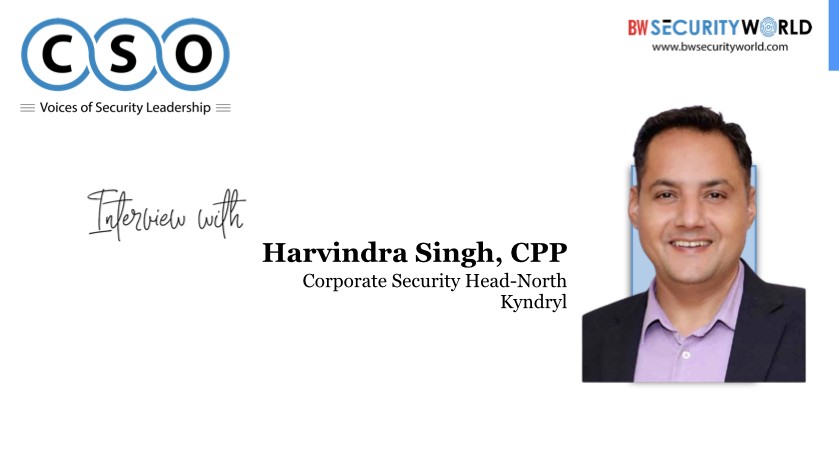
In this interview, Harvindra Singh, CPP, Corporate Security Head-North, Kyndryl reflects on the mindset, methods and metrics that elevate security from compliance to competitive advantage.
“Leadership is not about being in charge, it’s about taking care of those in your charge,” as Simon Sinek once said. How do you embody this philosophy in leading diverse security teams?
I truly believe that leadership in security is about service, not authority. Simon Sinek’s words resonate deeply with me because in a high-stakes environment, your team’s trust is your greatest asset. I focus on creating a culture where every member feels valued, supported, and empowered to succeed.Leading diverse security teams across geographies means understanding individual strengths and cultural nuances. I start by listening—taking time to know my team, their aspirations, and challenges. This helps me align roles to strengths, fostering both efficiency and confidence.During critical operations, my priority is to provide clarity and resources so the team can act decisively without fear. I lead from the front when required but never micro- manage; instead, I instill ownership and accountability.Beyond day-to-day tasks, I invest in their growth through mentorship, training programs, and certification support because when people see that their leader cares about their future, they go the extra mile.For me, leadership is about trust and empathy. When your team knows you stand by them, whether in the boardroom or during a crisis, they don’t just follow instructions; they deliver excellence.
Winston Churchill said, “Difficulties mastered are opportunities won.” Can you share a crisis you’ve navigated that reshaped your approach to resilience and leadership?
One of the most transformative challenges I faced occurred during a global crisis that disrupted operations and created unprecedented uncertainty. Restrictions, evolving regulations, and heightened anxiety within teams meant that normal procedures could no longer apply. The biggest challenge wasn’t just operational continuity, it was keeping people motivated and emotionally secure in a rapidly changing environment.I quickly realised that resilience is not about rigid control but about adaptability and empathy. We shifted to flexible work models, leveraged technology to maintain operational oversight, and most importantly, communicated openly and frequently. I encouraged team members to share their concerns and ideas, which led to creative solutions like virtual monitoring, staggered deployments, and enhanced safety protocols.This experience reshaped my leadership philosophy. I learned that transparency builds trust, and trust drives performance, even in crises. By focusing on people first, listening to their needs, prioritizing well-being, and fostering collaboration, we turned adversity into an opportunity for innovation and growth. Today, I approach every challenge with a mindset that resilience is collective, and leadership means standing with your team, not ahead of them.
Often security is seen as a safeguard. How do you position it as a business enabler, especially when partnering with enterprise clients on mission-critical systems?
Security is no longer just a gatekeeper; it is a strategic enabler that drives trust and continuity in business operations. I position security as an integral part of business outcomes rather than an afterthought. When engaging with enterprise clients on mission-critical systems, the conversation is framed around risk reduction, operational resilience, and customer confidence.By aligning security goals with business objectives, we demonstrate that proactive security measures protect not only data and infrastructure but also reputation and revenue streams. For instance, a well-designed access control system or cybersecurity posture doesn’t just prevent breaches, it ensures regulatory compliance, reduces downtime, and enhances client trust, which directly impacts profitability.Furthermore, security provides the foundation for innovation. Whether it’s adopting cloud technologies, enabling remote work, or implementing AI-driven solutions, these initiatives succeed only when backed by robust security frameworks. Therefore, security isn’t a cost, it’s an investment in business growth. When organizations understand that security enables agility, compliance, and confidence in the marketplace, it transforms from a safeguard into a business accelerator.
Security leaders today are expected to build ecosystems of trust with clients, regulators, and even competitors. How is Kyndryl embracing this collaborative mindset?
Today’s security landscape is interconnected; no single entity can mitigate risks alone. Embracing collaboration starts with acknowledging that security is a shared responsibility across industries and geographies. I foster this mindset by actively engaging with external stakeholders, clients, regulators, and even competitors, through forums, industry associations, and joint exercises.Building trust requires transparency. Sharing threat intelligence, best practices, and lessons learned not only strengthens resilience but also sets a benchmark for industry standards. For example, cross-industry information-sharing platforms have proven invaluable in addressing emerging threats such as ransomware or supply chain vulnerabilities.Internally, this mindset translates into breaking silos and promoting cross-functional collaboration between IT, legal, compliance, and operations. When external collaboration is paired with strong internal alignment, organizations can collectively anticipate risks, respond faster, and create an ecosystem of trust.Ultimately, collaboration is not about giving away competitive advantage; it’s about safeguarding the collective interest, which in turn protects businesses, economies, and societies. In security, the real strength lies in unity, not isolation.
Stephen Covey called trust the “glue of life.” In corporate security, how do you measure and strengthen trust with employees, boards, regulators, and even clients?
Trust in corporate security is intangible yet measurable through engagement, compliance, and communication. I start by defining trust as consistency, consistency in delivering on commitments, maintaining transparency, and prioritizing safety without compromise.To measure trust, we look at key indicators such as employee feedback on safety programs, adherence to compliance requirements, and the level of stakeholder involvement in security initiatives. High participation rates in awareness programs or voluntary reporting of incidents are strong signals that people trust the system and feel secure.Strengthening trust requires a proactive approach. With employees, it means creating an environment where concerns can be raised without fear. With boards and regulators, it’s about clear reporting, risk metrics, and aligning security posture with business objectives. For clients, trust grows when we integrate security into value delivery, not as an add-on but as a fundamental part of service.Regular communication, timely updates during crises, and demonstrated preparedness turn security from a policing function into a trusted partner. In essence, trust isn’t built overnight, it’s earned through consistent actions and openness across every interaction.
What advice would you give to the next generation of CSOs who aspire to not just protect organisations, but also sit at the strategy table as trusted advisors?
The future CSO is not just a protector, they are a business strategist, risk advisor, and innovation enabler. My advice to aspiring CSOs is to broaden their horizon beyond security operations. Understand the business model, financial implications, and emerging technologies that shape the industry. Speaking the language of the board— ROI, risk appetite, and resilience, is essential to gain a seat at the table.Invest in continuous learning. Certifications and technical skills matter, but equally important are soft skills like negotiation, communication, and crisis leadership. Build relationships across departments; your ability to collaborate with legal, HR, IT, and operations will determine your influence in strategic discussions.Finally, embrace innovation. AI, IoT, and data analytics are transforming security from reactive to predictive. Position yourself as someone who not only mitigates risk but also drives secure growth. When CSOs align security with business objectives, they are no longer seen as cost centres, they become critical to strategy, enabling organizations to operate with confidence in a complex world.
About the Interviewee
With 17 years of distinguished experience in risk management, executive protection, physical security, and crisis response, Harvindra Singh has emerged as one of the most respected voices in the global security industry. He became the first Asian to receive the prestigious Distinguished Service Award at GSX 2024 in the USA and is a two-time recipient of the Security Professional of the Year Award in India, a testament to his extraordinary leadership and impact.
Beyond his professional achievements, Harvindra has been a dedicated leader within ASIS, serving three terms as Chairman of the New Delhi Chapter and currently volunteering as Assistant Regional Vice President for Region 13A. A passionate mentor, he has inspired professionals through his newsletter The Chairman’s Insight, certification programmes, and community initiatives focusing on CSR, women’s empowerment, and youth development. His leadership philosophy is firmly rooted in collaboration, empathy, and innovation— positioning security as an enabler of business growth and societal resilience.
Disclaimer: Views expressed are in individual capacity and must not be treated as employer’s views.