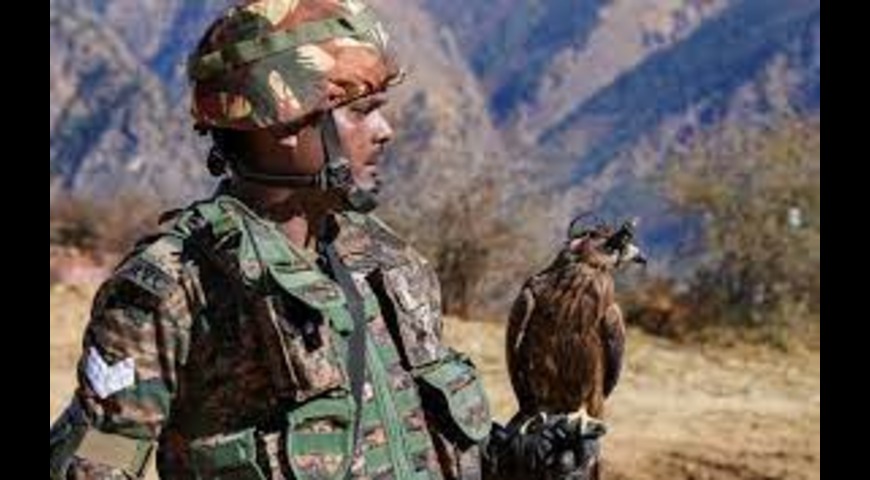
Named “Arjun” and “Deep,” these kites were outfitted with sophisticated head-mounted camera systems, allowing them to intercept drones and provide real-time imagery to ground troops
During the ongoing “Dharma Guardian” exercise in Rajasthan, a collaborative effort between the Indian and Japanese armies showcased an innovative approach to surveillance and security. In a noteworthy display, the Indian Army incorporated a unique asset into their operations: a trained kite, belonging to the eagle family, for anti-drone and surveillance missions.
Named “Arjun” and “Deep,” these kites are outfitted with sophisticated head-mounted camera systems, allowing them to intercept drones and provide real-time imagery to ground troops. This fusion of nature and technology was demonstrated through the lightweight cameras seamlessly attached to the birds for aerial surveillance.
Utilising birds for such missions offers distinct advantages. Their innate ability to navigate complex terrains makes them well-suited for surveying remote or challenging areas. Additionally, their discreet presence minimizes the risk of detection by adversaries, unlike conventional drones or aircraft vulnerable to radar detection.
In addition to avian assets, specially trained dogs played a vital role during the exercise. These canines underwent rigorous training to excel in various scenarios, including apprehension, jungle search, and vehicle assault. Referred to as assault dogs, they contribute significantly to supporting military personnel by immobilising or incapacitating targets as directed by handlers.
Furthermore, the Army underscored its reliance on explosive detection and mine detection dogs, highlighting the diverse roles these specially trained animals play in ensuring security and safety during military operations. This multi-faceted approach to utilizing animals in military exercises underscores the importance of innovation and adaptation in modern warfare.