From guarding gates to guarding trust, why this isn’t just another procurement exercise
Some tenders are more than tenders.
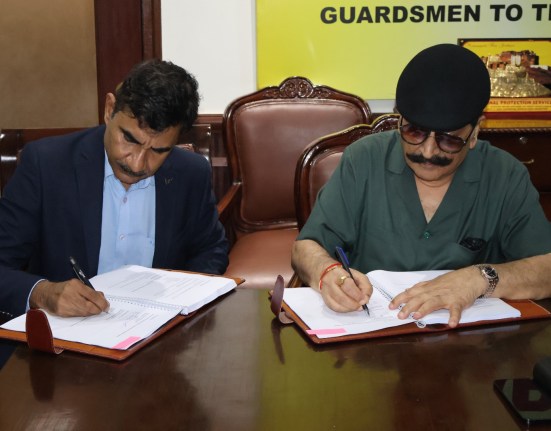
The National Testing Agency’s move to bring in professional private security services to protect its offices, examination material, and sensitive infrastructure looks, on the surface, like a routine procurement exercise. Look closer, and it signals something bigger: growing institutional confidence in what India’s private security industry is now capable of delivering.
That message matters.
Private security in India is no longer just about guarding gates — it’s about protecting trust. And few things demand more trust than the integrity of an exam system that shapes the futures of millions of young Indians.
From guarding premises to guarding credibility
The NTA’s requirements reportedly go well beyond a standard contract; covering confidential exam material, sensitive premises, warehouses, record rooms, restricted zones, and digital systems, with round-the-clock protection, access control, surveillance, patrol tracking, biometric attendance, and incident reporting built in.
This isn’t conventional guarding. It’s security management.
A security professional operating in this kind of environment needs to understand far more than access control: confidentiality, insider threats, technology, emergency response, documentation, and what a security failure actually costs. A breach involving exam material isn’t just a physical security lapse; it can damage institutional credibility, erode public trust, and derail the aspirations of millions of candidates. That’s what makes the NTA’s decision a milestone, not a footnote.
Time to retire the “manpower supplier” mindset
Private security in India has too often been reduced to a numbers game, how many guards, what’s the monthly rate, who bid lowest. That logic might work for routine facility contracts. It falls apart the moment the job involves protecting confidential information or critical national infrastructure.
Security isn’t a commodity. The cheapest option can turn into the costliest mistake the moment it fails.
The NTA’s apparent focus on technical capability rather than just price is a welcome shift, one that should become the norm across government and other critical sectors: procurement built around competence, technology, and training, not just cost.
An industry that has already transformed
India’s private security sector has changed dramatically. Millions of personnel now protect banks, hospitals, airports, industrial sites, IT parks, ports, logistics hubs, schools, residential complexes, and government offices, increasingly backed by CCTV command centres, access control, biometrics, GPS-tracked patrols, and integrated incident-management platforms.
But technology alone doesn’t create security. It needs trained people, sound processes, and real professional leadership behind it, and that’s where the industry now needs to focus.
CAPSI’s push for professionalisation
The Central Association of Private Security Industry (CAPSI) has long argued that the sector needs to evolve from a manpower business into a genuine professional services industry, shifting focus from headcount to capability, from guarding to risk management, and from lowest-cost bidding to value-based security. CAPSI has consistently pushed for stronger training and certification, professional standards, wider technology adoption, and better procurement practices, while engaging with government on strengthening the regulatory framework.
The NTA case shows exactly why that shift matters: when private security is trusted with sensitive exam infrastructure, it has to deliver more than physical presence. It has to deliver reliability, accountability, confidentiality, and above all, trust.
Security professionals as part of institutional architecture
Security personnel today are increasingly embedded in an organisation’s operations, not just stationed at its gate. In a sensitive facility, they’re often the first to spot something wrong, the first to respond, and the first line against an unauthorised breach, decisions with consequences well beyond the building’s perimeter. That level of responsibility demands better recruitment, verification, training, supervision, and career growth. Greater trust has to come with greater professional recognition.
A new compact between government and industry
The NTA initiative should open a wider policy conversation: government institutions handling sensitive operations need risk-based security standards, agencies chosen on demonstrated competence, specialised training for sensitive postings, technology paired with human capability, and continuous security audits. Procurement needs to recognise that good security costs money, but security failure costs far more. In turn, the private sector has to raise its own standards, invest in people and technology, and build more specialised capability.
Toward a “Security Industry 2.0”
As physical security, cyber risk, information protection, insider threats, and operational disruption increasingly overlap, India needs a new security philosophy, one built on people, technology, intelligence, process, and professionalism together. That’s the direction the industry has to move in, and CAPSI has a role to play in leading it.
The message has been sent, now the industry has to answer it
The real significance of the NTA’s decision isn’t the contract value or the number of sites involved, it’s the trust behind it. When an institution responsible for the exam futures of millions of Indians hands its security over to private professionals, it’s effectively saying: we believe you can protect what the nation can’t afford to lose.
That trust has to be earned, not just accepted. The private security industry now has to prove it’s ready — not just to supply guards, but to deliver professional security capability worthy of national trust. The shift is already underway, and it may come to be seen as one of the clearest signs yet that India’s private security industry is moving from the edges of institutional operations to the centre of the country’s security and resilience ecosystem.
That’s not just an industry milestone. It’s a national necessity.
— Kunwar Vikram Singh, Chairman, Central Association of Private Security Industry (CAPSI)