Indian Rare Earths, IGCAR, and BARC are key players in India’s scientific and technological advancements, especially in the realms of nuclear energy and rare earth materials
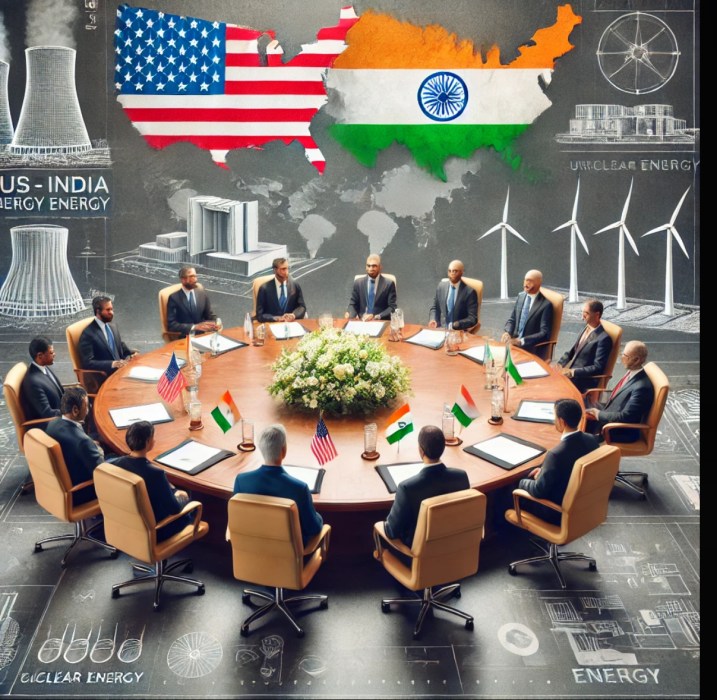
The United States Bureau of Industry and Security (BIS) has removed three major Indian entities—Indian Rare Earths, the Indira Gandhi Centre for Atomic Research (IGCAR), and the Bhabha Atomic Research Centre (BARC)—from its restrictive Entity List. This decision signifies a significant step forward in strengthening US-India bilateral relations and advancing joint energy cooperation.
The US Department of Commerce described the move as part of its effort to “support US foreign policy objectives” by lowering barriers to collaboration on advanced energy projects. This includes joint research and development in science and technology, with a focus on securing shared energy security goals. The delisting is expected to foster closer collaboration between the two countries, particularly in critical minerals and clean energy supply chains, which are pivotal for resilient energy solutions.
Indian Rare Earths, IGCAR, and BARC are key players in India’s scientific and technological advancements, especially in the realms of nuclear energy and rare earth materials. Their removal from the Entity List is anticipated to further civil nuclear cooperation, a long-standing focus in US-India relations.
Renewed Commitment To Civil Nuclear Cooperation
This development coincides with a formal declaration made last week by US National Security Advisor Jake Sullivan during his visit to New Delhi. Sullivan highlighted the foundation laid nearly two decades ago by former US President George W. Bush and then Indian Prime Minister Dr. Manmohan Singh, which paved the way for civil nuclear cooperation between the two nations. He acknowledged that while progress has been made, the full potential of this partnership remains unrealised.
“The Biden administration is committed to taking the next major step in advancing the US-India partnership,” Sullivan stated, underscoring the strategic significance of the energy collaboration.
Simultaneously, the US Department of Commerce added 11 Chinese organisations to its Entity List, citing their involvement in activities that conflict with US national security and foreign policy objectives. The move is seen as a direct message to China regarding the consequences of supporting military modernisation initiatives.
Decade-Long Dialogue
For over a decade, India and the US have been in talks to supply US nuclear reactors to address India’s increasing energy needs. The dialogue gained momentum in 2007 when President George W. Bush signed a landmark agreement enabling the US to sell civilian nuclear technology to India.
The delisting of Indian Rare Earths, IGCAR, and BARC is expected to open new avenues for India to access critical technologies and resources, while reinforcing US-India cooperation in the energy and technology sectors.
The move not only strengthens bilateral ties but also reflects a shared commitment to sustainable energy solutions and regional stability in a rapidly changing geopolitical landscape.