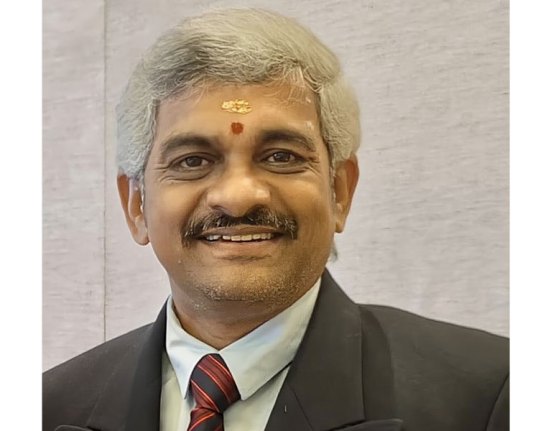
In a conversation with BW Security World , Motwani unpacks how consumer-centric innovation and digitally-enabled systems are reshaping India’s security architecture, both physical and cyber
With over three decades at Godrej, Shyam Motwani has witnessed—and led—multiple waves of change across the company’s business verticals. From FMCG and consumer durables to modern retail and now locks and architectural solutions, his leadership journey has been rooted in one constant: staying ahead of consumer evolution. Today, as India’s construction and infrastructure sectors digitise at breakneck speed, Motwani is at the centre of a quiet revolution, transforming how the country thinks about security, access, and resilience.
In a conversation with BW Security World , Motwani unpacks how consumer-centric innovation and digitally-enabled systems are reshaping India’s security architecture—both physical and cyber.
Consumer Expectations Reshaping Security Itself
“Over time, we’ve moved from ‘value for money’ to ‘money for value,’” Motwani remarks. “Today’s consumer is not just price-conscious, but deeply research-driven, seeking technological sophistication, seamless aesthetics, and enhanced functionality.”
This shift has catalysed the transition from mechanical to digital and connected locking solutions. For Godrej, it has meant rethinking product development from the ground up. One such result is the Advantis IoT 9, a smart lock designed, engineered, and manufactured entirely in India. Packed with biometric controls, mobile connectivity, and AI-based access insights, it embodies the growing preference for intelligent, integrated, and intuitive security.
Motwani believes that digital transformation is not a top-down mandate but a response to a digitally native customer. “We’re designing for the tech-savvy urban homeowner, but also for institutional buyers, infrastructure developers, and architects who demand robust, scalable, and interoperable solutions,” he explains.
Innovation At Intersection Of Legacy & Technology
While Godrej has long been a trusted name in Indian households, what makes its present-day journey compelling is its embrace of next-generation tools like AI, predictive analytics, and robotic process automation (RPA). These technologies, traditionally seen in IT or industrial automation, are now powering lock design, testing, and production.“We’re deploying simulation tools such as FMEA for design validation, using lifecycle testing to ensure durability, and automating selectively to enhance throughput while retaining job continuity,” Motwani notes. This approach reflects Godrej’s balanced ethos—modernising without alienating its workforce or abandoning legacy systems too quickly.
This agility is especially critical in India’s real estate ecosystem, one of the fastest-growing globally. Motwani observes a distinct push toward smart homes, intelligent office spaces, and secure public infrastructure. Here, Godrej sees not just end-users but a growing ecosystem of collaborators—architects, designers, contractors, and retailers—who co-create with the brand.
“We don’t view them as passive channels,” he says. “They are part of our innovation engine.” Initiatives like the *Godrej Vishesh Lab Club* and *Value Co-Creators Club* are designed to bridge the gap between field insights and factory execution, ensuring that on-ground realities inform strategic product design.
Embedding Cybersecurity & Risk Intelligence
As physical security goes digital, so do the risks. With internet-connected locks, biometric data, and cloud-based access systems, the stakes for data privacy and cyber resilience have never been higher. Motwani emphasises that Godrej follows an “India-first” data policy—ensuring encryption, local storage, and alignment with emerging national compliance mandates.
“Cybersecurity is no longer a tech function—it’s embedded into product thinking and customer trust,” he asserts. This is a crucial differentiator at a time when breaches and data leaks have eroded confidence in several global smart home brands.
At the enterprise level, Godrej has institutionalised a robust risk management culture. “Each vertical functions under an Enterprise Risk Management framework, where we periodically assess macroeconomic, operational, and geopolitical risks,” Motwani shares. Whether it’s supply chain volatility, regulatory uncertainty, or digital threats, every risk factor is quantified, reviewed, and fed into strategic decision-making.
Tech, Trust, & Transformation
Motwani sees the future of security as not just digital, but deeply human-centric. “It’s about empowering users, not just protecting them,” he says. And that requires a fundamental redesign of products, platforms, and even organisational mindsets.
With urbanisation accelerating, and digital inclusion deepening, access control is no longer a luxury but a necessity. Digitally-enabled locks and integrated access management systems are fast becoming standard in new construction. The players who can combine trust, technology, and scalability will shape this new era.
For Godrej, the blueprint is clear: honour its legacy of trust while relentlessly pursuing innovation. In Shyam Motwani’s vision, smart security isn’t a product, it’s a philosophy. One that adapts to change, responds to risk, and always places the consumer at the heart of every decision.