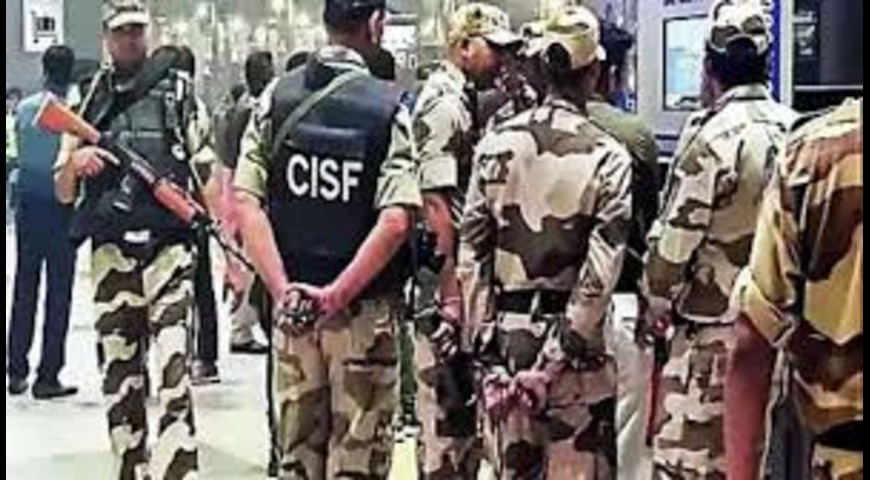
While the perimeter of the Parliament complex still sees the presence of Delhi police personnel, the recent addition of 140 CISF personnel further reinforces security at entry gates. Inside the complex, approximately 1,600 Central Reserve Police Force (CRPF) personnel form part of the Parliament Duty Group, primarily tasked with handling intrusion or forced entry scenarios
The Central Industrial Security Force (CISF) is set to assume full responsibility for the security of the Parliament complex, according to three officials familiar with the matter. This change comes as part of a strategic move to streamline security operations within one of the nation’s most prominent establishments, the officials disclosed on Monday, preferring to remain anonymous.
The decision to entrust the CISF with the entire security apparatus of the Parliament complex stems from the belief that having multiple agencies involved in security could pose challenges. This decision follows a major breach in security that occurred on December 13, when two individuals infiltrated the Lok Sabha chamber and deployed smoke canisters concealed in their shoes, coincidentally on the anniversary of the 2001 Parliament terror attack.
Initially deployed to manage security following the December incident, the CISF has gradually taken over access control and other security measures within the complex. Presently, it operates a three-tier security system at various entry points, gates, and crucial areas such as the new Parliament building and the library. This transition has seen the displacement of the Delhi police, who previously handled access control alongside the Parliament Security Services (PSS).
Under the new system introduced by the CISF, security measures now mirror those found in airports, with thorough frisking procedures that include the removal of all metal objects, including wallets and keys. Moreover, there have been instances where CISF personnel have mandated the removal of shoes during security checks, a measure implemented in response to the December 13 breach.
While the perimeter of the Parliament complex still sees the presence of Delhi police personnel, the recent addition of 140 CISF personnel further reinforces security at entry gates. Inside the complex, approximately 1,600 Central Reserve Police Force (CRPF) personnel form part of the Parliament Duty Group, primarily tasked with handling intrusion or forced entry scenarios.
However, the transition to full CISF security raises questions regarding the future role of the PSS, which has traditionally played various functions within the Parliament complex. Although not involved in frisking, PSS personnel have historically handled tasks such as issuing entry passes, facilitating lawmakers and visitors, and providing additional security layers for VIPs.
Amidst concerns regarding the compatibility of the CISF with the diverse functions of the PSS, uncertainty looms over the future role of the latter. Nevertheless, officials assure that efforts will be made to integrate the PSS within the new security framework, acknowledging their longstanding presence and expertise within the establishment.
In addition to assuming security responsibilities within the Parliament complex, the CISF is also set to replace the CRPF in securing the perimeter. The role of the Delhi police will be restricted to managing traffic and securing areas outside the complex during sessions.
With a workforce of around 200,000 personnel, the CISF is entrusted with safeguarding various critical installations nationwide, including airports, metro stations, sensitive installations, and government facilities in regions affected by left-wing extremism. Notably, following the December security breach, the Union home ministry directed the CISF to conduct a comprehensive security assessment, culminating in the submission of a detailed report to its headquarters in New Delhi.