From safeguarding high-value assets to ensuring the safety of people in an unpredictable world
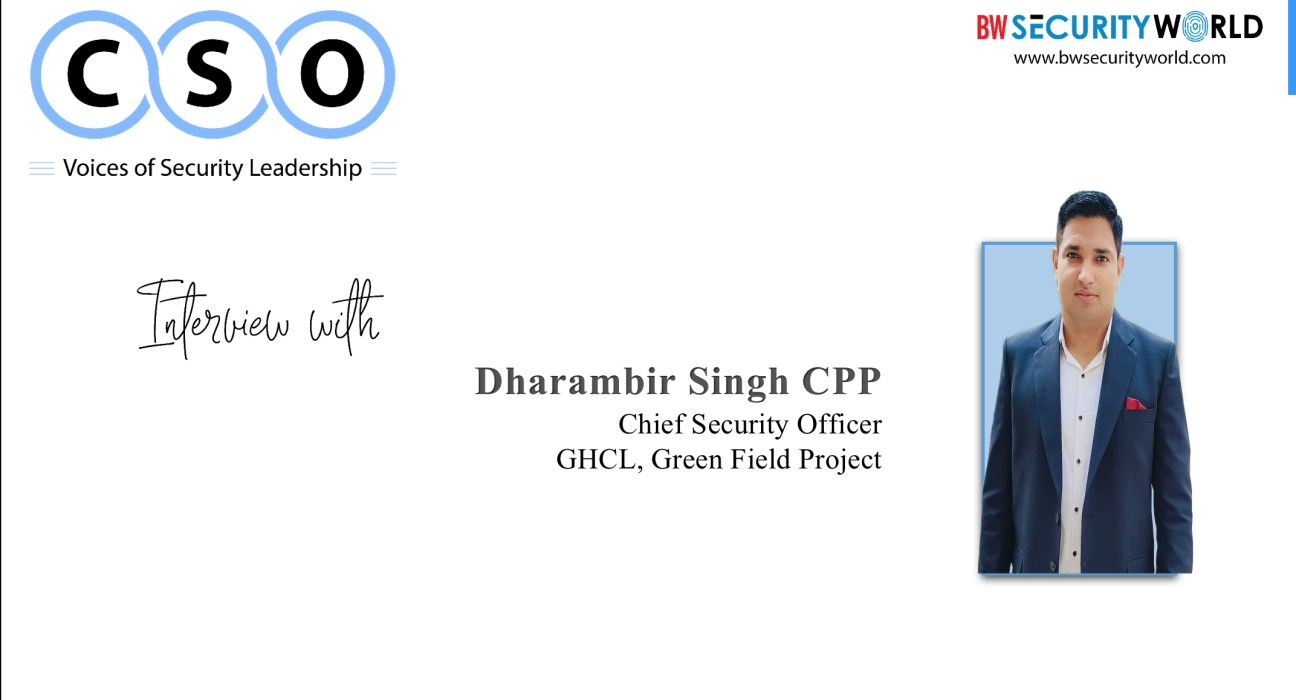
In an era where physical threats are increasingly intertwined with digital vulnerabilities, the role of the Chief Security Officer (CSO) has never been more critical. From safeguarding high-value assets to ensuring the safety of people in an unpredictable world, today’s CSOs must navigate a rapidly changing threat environment while balancing efficiency, compliance, and innovation. In this conversation, BW Security World with Dharambir Singh, Chief Security Officer at GHCL Ltd. soothing, to explore emerging trends, the impact of new technologies, and the leadership mindset required to build resilient, future-ready physical security strategies.
How has the role of a Chief Security Officer changed with the increasing integration of physical and cyber security measures?
Over the past decade, the CSO role has expanded beyond traditional physical protection to encompass digital security considerations. With assets, systems, and operational processes increasingly connected, the role now demands a hybrid approach—integrating cyber threat intelligence with physical security frameworks. In my experience, this shift has required upskilling in areas like security automation, data-driven decision-making, and coordinated cyber-physical incident response.
What are the most pressing physical security risks organisations face today, and how do you prioritise them?
The key risks today include theft of high-value assets, insider threats, sabotage of critical infrastructure, and disruptions to supply chains. Prioritisation is based on a comprehensive risk assessment—evaluating threat probability, potential impact, and operational dependencies. In industries like oil & gas and power, safeguarding critical assets takes precedence, followed by ensuring personnel safety and business continuity.
What do you see as the main drivers of growth in the physical security market in the coming years?
Growth will be driven by technology adoption, stricter compliance regulations, heightened threat perception, and the need for cost-effective, scalable security solutions. Industries are recognising the value of AI surveillance, real-time tracking, and automation to enhance efficiency while reducing operational costs.
How do you approach evaluating and integrating emerging technologies like AI surveillance, biometrics, and IoT into existing security systems?
I start with a needs assessment aligned to the organisation’s risk profile, followed by pilot testing in controlled environments. Technology adoption must balance innovation with reliability and integration capability. For example, AI-driven CCTV and GPS tracking were rolled out in phases to ensure operational readiness without compromising ongoing security.
What criteria do you use to assess and select physical security vendors and solutions?
Key criteria include technology robustness, ease of integration, compliance with relevant regulations, vendor reliability, cost efficiency, and post-deployment support. I also evaluate vendors on their ability to adapt solutions for industry-specific environments such as mining or steel manufacturing.
How do you ensure that connected physical security systems remain resilient against cyber threats?
We adopt a layered security model—isolating networks where possible, enforcing strict access control protocols, and conducting regular vulnerability assessments. Coordination between IT security teams and physical security staff is essential, alongside continuous monitoring to detect anomalies in connected devices like access control panels or surveillance systems.
In what ways do regulatory requirements influence your physical security strategy and technology adoption?
Regulatory compliance serves as a baseline, shaping everything from system design to operational processes. For instance, compliance with oil & gas safety norms or mining security regulations directly informs technology selection and audit schedules. Regular multi-agency drills also ensure readiness and adherence to statutory requirements.
How do you measure and demonstrate the return on investment for major physical security upgrades or projects?
ROI is measured through reduced incident rates, lower insurance premiums, improved operational efficiency, and measurable cost savings from optimised manpower deployment. For example, deploying AI-enabled surveillance reduced crime incidents significantly while cutting manual monitoring costs.
What steps do you take to ensure your security team is trained and ready to handle new technologies and evolving threats?
We follow a structured training plan that includes hands-on sessions with new equipment, scenario-based drills, and regular refresher courses. Collaboration with technology vendors ensures personnel receive expert guidance on operating and troubleshooting advanced systems like online visitor management platforms and biometric access controls.
Which upcoming innovations do you believe will most significantly transform the physical security landscape in the next decade?
Predictive analytics for threat detection, drone-based surveillance, autonomous security robots, and advanced biometric authentication will play transformative roles. Combined with AI-driven incident response systems, these innovations will enable proactive rather than reactive security management.
About the interviewee:
Dharambir Singh, CPP, is an accomplished security professional with over 13 years of experience spanning law enforcement and corporate security leadership. Currently serving as Chief Security Officer for GHCL Limited’s Greenfield project in Kutch, Gujarat, he is responsible for building and overseeing security architecture for a major industrial initiative. His career began with the Central Industrial Security Force (CISF) in 2012, where he developed strong operational skills in public safety. Transitioning to the private sector, he joined Tata Steel in 2017, rising from Assistant Security Manager to Zonal Manager – Security. He later served as Chief Security Officer at Vedanta Sesa Goa, managing enterprise risk and public relations before taking on his current role. Holding an MBA from Symbiosis University, along with postgraduate and undergraduate degrees from Kurukshetra University and Government PG College Hisar, Dharambir also has a diploma in translation from Bhartiya Anuvad Parishad, New Delhi.
Disclaimer: Views expressed are in individual capacity and must not be treated as employer’s views.