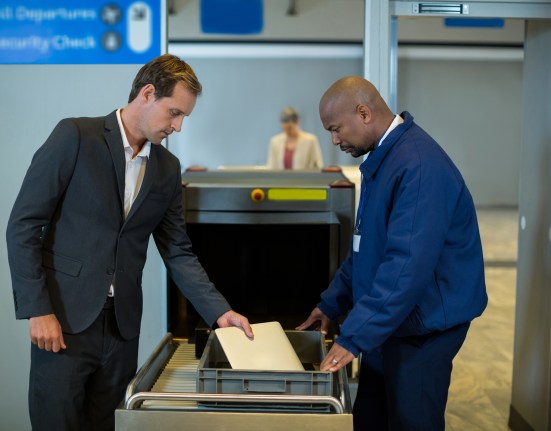
The government is also considering potential changes to the interior design of airports and exploring cross-utilisation of X-ray machines at both domestic and international terminals
In a bid to ease the pain of the long queues and delays faced by international air travelers at immigration counters and security checks, the government is exploring new technologies, including e-biometrics. A high-level meeting, chaired by Civil Aviation Minister Jyotiraditya Scindia, was held on Friday, bringing together top officials from major airport operators, the Bureau of Immigration, the Central Industrial Security Force (CISF), and the Ministry of Civil Aviation.
During the meeting, Scindia expressed the government’s commitment to addressing the challenges faced by air travelers and highlighted the ongoing discussions on design models to expedite immigration and security processes for international travelers. Emphasising the role of new technologies, he mentioned that e-biometrics is currently being tested and could play a crucial role in India’s vision for international aviation hubs.
“We are currently discussing the design models to speed up immigration & security for international travellers. New technologies such as e-biometrics are also on the anvil, and are currently being tested. These will be key in our vision for international aviation hubs in India,’’ Scindia said in a post on X microblogging site.
The government is also considering potential changes to the interior design of airports and exploring cross-utilisation of X-ray machines at both domestic and international terminals. Representatives from airport operators, ministries of civil aviation, home affairs, and external affairs, as well as officials from the Airports Authority of India (AAI), CISF, Bureau of Immigration (BOI), and Bureau of Civil Aviation Security (BCAS), attended the meeting.
Efforts to ease congestion at major airports, especially during peak travel periods, are underway. The discussions drew inspiration from successful international airport models, such as those in Singapore and Canada. One proposed solution involves the cross-utilisation of X-ray Baggage Inspection System (XBIS) machines at Delhi airport, aiming to enhance availability and reduce waiting times.
To facilitate the movement of XBIS machines between terminals, potential changes to existing airport designs will be explored. Proof-of-concept trials for the use of e-gates and e-biometrics for immigration are already underway, signalling a commitment to deploying cutting-edge technologies. The analysis also considers the manpower requirements of CISF and immigration officers in light of planned expansions at existing and new airports, including those in Jewar and Navi Mumbai.
This initiative reflects the government’s proactive approach to enhancing the efficiency of immigration and security processes at airports, promising a more seamless experience for international travellers.