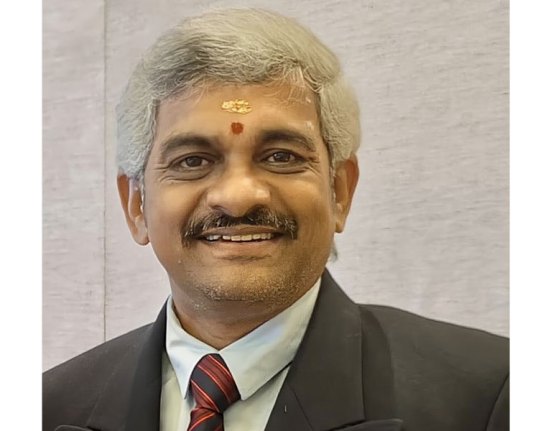
The integration, if implemented effectively, could be especially beneficial for the country’s large private security workforce
Labour and Employment Minister Mansukh Mandaviya announced that the government is considering merging the Employees’ State Insurance Corporation (ESIC) with the Ayushman Bharat Pradhan Mantri Jan Arogya Yojana (AB-PMJAY) to enhance healthcare services for ESIC beneficiaries.
Speaking at the third regional meeting of western states in Rajkot, Mandaviya said, “Under this policy, ESIC beneficiaries will have access to quality medical facilities in more than 30,000 hospitals empanelled with AB-PMJAY.” The goal is to eliminate distinctions between government, public sector, and private hospitals, allowing beneficiaries to receive treatment efficiently from any empanelled hospital, he added.
The integration, if implemented effectively, could be especially beneficial for the country’s large private security workforce. With over 9 million employees and 25,000 private security agencies (PSAs) in India, the private security sector is one of the largest employers in the nation, second only to agriculture. Since much of this workforce operates in the unorganized sector, the expansion of ESIC services would ensure better medical assistance for these workers.
The meeting in Rajkot, attended by top officials from Maharashtra, Gujarat, Goa, and other states, was the third in a series of six regional meetings organized by the Ministry of Labour and Employment. These gatherings aim to discuss key labour and employment issues with states and union territories.
Following the meeting, the ministry released a statement highlighting the government’s plans to upgrade the National Career Service (NCS) portal. Mandaviya explained that the NCS will be integrated with advanced technologies like Artificial Intelligence (AI) and linked with the e-Shram portal to help both organised and unorganised sector workers find job opportunities more easily.
Mandaviya also emphasised the importance of collaboration between the Centre, states, and union territories in gathering and managing employment data. “This data should feed into a centralized dashboard equipped with advanced analytics, simulation, forecasting, and modeling. This would help the Centre and states frame more effective employment policies,” he said.
The minister also urged states to strengthen feedback mechanisms for beneficiaries of government schemes. “Since states and union territories are the primary implementing agencies for most welfare and employment schemes, they are well-positioned to collect feedback,” Mandaviya noted.
In addition, the Ministry of Labour and Employment is working with states and union territories to extend ESIC services to all districts across the country. “Greater coordination between the Centre, states, and UTs is essential to leverage Information Technology (IT) and AI, making healthcare services more accessible to beneficiaries,” Mandaviya concluded.