The path to Viksit Bharat requires Sustainable Citizen Security, empowering communities is the cornerstone of sustainable citizen security
In the vision of Viksit Bharat of India, the evolution of a robust citizen security culture stands as the critical path of Suraksit Bharat. It emerges as a beacon of hope amidst the complexities of its socio-political landscape and escalating security threats. Embracing the ideals of justice, equity, and dignity, the nation grapples with the imperative of safeguarding its citizens from diverse threats and vulnerabilities.
The recent bomb hoax calls in schools, malls and air flights have highlighted the inadequacy of response and lack of security consciousness among the citizens. If it would not have been a hoax the consequences would have been disastrous. Must we wait for it to happen? The recent spate of terror attacks in the Jammu sector in the recent times is a stark reminder of the dark shadow of terrorism on soft targets with high visibility and payoffs. As citizens we need to introspect and asses if we are security conscious and responsible? Is it a cultural deficit that exposes our vulnerability both to the escalating kinetic and non-kinetic threat?
The path to Viksit Bharat requires Sustainable Citizen Security.Empowering communities is the cornerstone of Sustainable Citizen Security. Empowering communities requires a National Citizen’s Security Culture (NCSC) for which the Private Security Industry along with MHA can provide yeoman service to the nation.
Accordingly a novel initiative was launched by Central Association of Private Security Industry (CAPSI) under the vision of its Chairman Kunwar Vikram Singh in March 2024. The first round table conference on 15 march 2024 was accordingly convened to deliberate and evolve a strategic construct for its manifestation. CAPSI thus has taken the lead to empower the nation and its citizen’s by evolving a National Citizen’s Security Culture.
The Critical Security Deficit Gap
With a crime rate rising faster than the population growth rate, new threats are emerging and challenging national security. In 2023 the total cognisable crimes were 58,24,946 against a population of 1.44 billion making the crime rate 422.2 per lakh persons. This is certainly very high and thus India ranks 79 among 197 countries in an assessment of crime rates by country in 2024. The public-to-police ratio at 152.80 per lakh against 222 per lakh defined by the UN shows how understaffed India stands and exposes citizens’ safety. Thus a critical security vulnerability gap exists. Bridging this gap is the responsibility of the Private Security Industry with a one crore workforce that must harness citizens as an extension of their arm to exhibit security consciousness as a culture. This would help create an environment where individuals can thrive, families can feel safe, and communities can flourish. This requires an expanded role of the PSI along with its transformation and technology integration to remain ready and relevant for the future. The national chorus must be – “STAY ALERT–STAY SAFE”. After all, security is everyone’s responsibility.
The Need For National Citizen’s Security Culture
India needs to evolve its National Citizen’s Security Culture for several reasons:
Challenges To Citizen’s Security
“The true measure of any society can be found in how it treats its most vulnerable members.” – Mahatma Gandhi
India confronts a myriad of challenges in fostering a national citizen security culture, including resource constraints, social fragmentation, institutional weaknesses, public security mechanism inadequacies, and technological disparities. The allocation of limited resources towards security initiatives often exacerbates socio-economic disparities and undermines the accessibility of justice for marginalized communities. Moreover, divisive forces fuelled by religious, ethnic, and regional identities perpetuate social tensions and erode trust in institutions, posing formidable obstacles to inclusive security governance.
Chanakya had stated four types of threats to a nation. External threat externally abetted, external threat internally abetted, internal threat externally abetted and internal threat internally abetted. Today India faces all. They are both kinetic and non-kinetic in nature which impact a citizen directly. They may be caused by inner political turmoil, or provoked, prompted or proxied by an enemy country, perpetrated even by such groups that use a failed, failing or weak state, causing insurgency, terrorism or any other subversive acts that target innocent citizens, cause animosity between and amongst groups of citizens and communities intended to cause or causing violence, destroy or attempt to destroy public and private establishments. Besides cyber-attacks, electronic warfare, psychological operations, data manipulation, and misinformation campaigns are some of the faces of non-kinetic threats.
Understanding Citizen Security In Indian Context
“Security is not a privilege; it is a fundamental right that every citizen deserves and must drive.” – Unknown
In the Indian context, citizen security encompasses a broad spectrum of concerns ranging from traditional crime rates and communal tensions to emerging challenges posed by cyber threats and environmental degradation. Beyond the realm of physical safety, it embodies the aspirations of individuals to lead lives free from fear, discrimination, and violence. The quest for citizen security transcends geographical boundaries, cultural divides, and socioeconomic disparities, underscoring the need for a cohesive and inclusive approach towards its realization.
National Citizen’s Security Culture refers to the shared values, norms, beliefs, attitudes, behaviours and actions of citizens and society that promote the protection and preservation of a nation’s security interests and the safety of its citizens. It elicits curiosity that exhibits security consciousness as a moral responsibility in a day-to-day schedule. The key challenge remains the “Cultural Change”.
Culture is changing the behavioural design. Tiny habits – small changes that change everything. So, behaviour equals a combination of motivation, ability, and prompt at the time of the behaviour. Fogg’s model explains that behaviour happens when motivation, ability and promptcome together at the same time. Motivation can range from low to high. Ability can range from being something very hard to do to something very easy to do. And then the prompt is something internal or external that says, all right, we want you to do this thing.
Expectations From Citizens As Stakeholders Of NCSC
The expectations are very elementary in terms of following, reporting, providing and leading.
Ends, Ways & Means For Strategic Construct Of NCSC
The strategic construct for NCSC requires clarity in understanding the end, ways and means as under;
Strategies For Building Citizen Security Culture
“Empowering communities is the cornerstone of sustainable security.”
– PM Narendra Modi
To build a resilient citizen security culture, concerted efforts are required to empower communities, enhance law enforcement capacities, strengthen legal frameworks, and promote education and awareness. Community engagement initiatives such as neighbourhood watch groups, citizen patrols, and youth forums play a pivotal role in fostering social cohesion and grassroots participation in security governance. Similarly, reforms aimed at enhancing police professionalism, accountability, and integrity are essential to restore public trust and confidence in law enforcement agencies. Here are some strategies for building a citizen security culture in India:
Community Engagement and Participation: Empowering communities to actively participate in crime prevention and security initiatives is crucial. Establishing community policing programs, neighbourhood watch groups, and citizen patrols can enhance trust between law enforcement agencies and residents, promote information sharing, and foster a sense of ownership and responsibility for public safety.
Strengthening Law Enforcement Capacities: Investing in the professional development, training, and equipping of law enforcement personnel is essential to enhance their effectiveness in preventing and responding to security threats. Implementing community-oriented policing approaches, improving intelligence gathering and analysis capabilities, and deploying modern crime-fighting technologies can bolster law enforcement capacities and improve public perceptions of police legitimacy and accountability.
Promoting Legal Reforms and Access to Justice: Strengthening legal frameworks, enhancing access to justice, and expediting judicial processes are critical for ensuring accountability, deterring crime, and protecting citizens’ rights. Reforms aimed at reducing case backlogs, improving court infrastructure, enhancing witness protection mechanisms, and providing legal aid services to marginalized populations can enhance the rule of law and promote citizen security.
Fostering Social Cohesion and Inclusion: Promoting social cohesion, diversity, and inclusivity is fundamental for building a resilient citizen security culture. Encouraging dialogue, tolerance, and understanding among diverse communities, addressing underlying social inequalities and discrimination, and promoting interfaith and intercultural harmony can mitigate the risk of communal tensions, extremism, and identity-based conflicts.
Investing in Education and Awareness: Education plays a pivotal role in shaping attitudes, behaviours, and perceptions related to security and citizenship. Integrating civic education, human rights literacy, conflict resolution skills, and values of tolerance and respect in school curricula can instil a culture of lawfulness, responsibility, and civic engagement among youth, fostering a more secure and inclusive society.
Harnessing Technology for Security: Leveraging technology and innovation can enhance security capabilities, improve emergency response mechanisms, and facilitate crime prevention efforts. Deploying surveillance systems, implementing digital platforms for reporting crimes and emergencies, and utilizing data analytics for predictive policing can augment law enforcement’s ability to detect, deter, and respond to security threats in real time.
Promoting Cross-Sectoral Partnerships: Collaboration and coordination among government agencies, civil society organizations, private sector entities, and international partners are essential for addressing complex security challenges and promoting sustainable solutions. Establishing multi-stakeholder platforms, sharing best practices, and leveraging resources and expertise from diverse sectors can amplify the impact of citizen security initiatives and foster collective action towards building safer and more resilient communities.
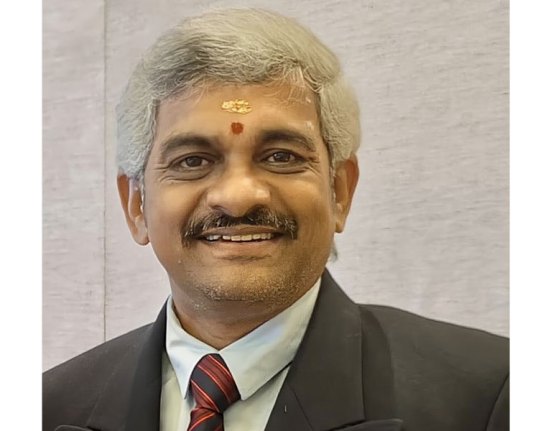
– LT GEN A B SHIVANE, PVSM, AVSM, VSM (RETD)