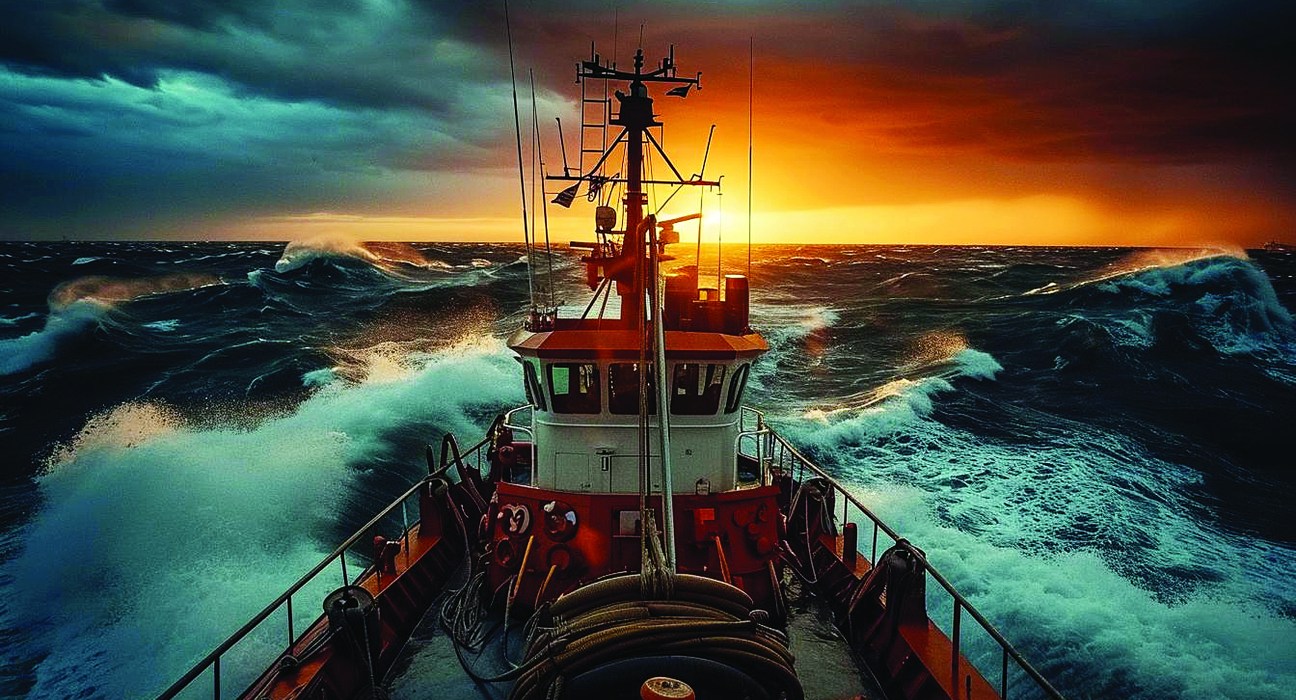
India’s maritime security emerges as a critical national imperative given its extensive coastline and strategic reliance on sea routes
The maritime environment is constantly changing, and India faces various challenges requiring a sophisticated and nuanced response. Asymmetrical tactics and grey-zone warfare create security dilemmas, while emerging threats such as combat drones and land-attack missiles at sea challenge traditional maritime security concepts. Non-traditional security threats also pose complex challenges. Illegal fishing, often tied to geopolitical issues like those with Sri Lanka, depletes marine resources and harms coastal communities’ livelihoods. Frequent and intense natural disasters, such as cyclones and tsunamis, challenge maritime security and emergency response efforts. Human and drug trafficking through maritime routes contribute to maritime insecurity. Climate change effects, such as rising sea levels and extreme weather events, disproportionately impact less developed states, making them more vulnerable to environmental changes. Zero-sum competition in the Indo-Pacific introduces a geopolitical dimension to maritime security. The perceived rivalry between powerful nations in the region, particularly the United States and China, raises concerns about diverting attention and resources away from addressing the security concerns of littoral states in Asia, Africa, and the Southern Pacific.
INITIATIVES FOR ROBUST MARITIME SECURITY
To tackle the diverse maritime security challenges, India has launched several strong initiatives to strengthen its maritime security apparatus. This includes modernising maritime security agencies like the Indian Navy, Coast Guard, and Marine Police, focusing on both capacity building and acquiring cutting-edge platforms, systems, and equipment. Key acquisitions include aircraft carriers, submarines, frigates, helicopters, radars, and satellites, which significantly enhance surveillance and patrol capabilities in India’s maritime zones. This holistic approach plays a crucial role in improving the nation’s maritime security. A crucial aspect of India’s maritime security strategy is the improved technical monitoring of coastal and offshore regions. Implementing projects like the Coastal Surveillance Network, the National Command Control Communication and Intelligence Network, the National Automatic Identification System, and the National Maritime Domain Awareness Project offers a comprehensive and integrated understanding of the maritime domain. These initiatives facilitate early detection and response to threats or incidents, promoting a proactive approach to maritime security. Effective inter-agency coordination is a cornerstone of India’s maritime security framework. By setting up organisations and committees such as the National Committee for Strengthening Maritime and Coastal Security, the National Maritime Security Coordinator, the Joint Operations Centres, and the Coastal Security Operations Centres, India fosters efficient collaboration and information exchange among relevant maritime security stakeholders.
This cooperative approach engages key entities, including the Navy, Coast Guard, Customs, Intelligence, Fisheries, and Ports, ensuring a unified and integrated response to maritime threats. India’s maritime security efforts go beyond institutional frameworks and engage fishing and coastal communities. Initiatives like biometric identity cards, transponder installation, distress alert transmitters, community awareness programmes, and livelihood support schemes aim to involve these communities actively. By fostering their participation, India strengthens grassroots maritime security, recognising the link between coastal communities and the broader security paradigm.
GLOBAL ENGAGEMENT AND PARTNERSHIPS
India acknowledges the interconnectedness of maritime security and actively participates in global initiatives and partnerships. The Security and Growth for All in the Region (SAGAR) initiative promotes regional collaboration, economic growth, and a secure maritime environment. Platforms like the Indian Ocean Naval Symposium (IONS) and the Indian Ocean Rim Association (IORA) facilitate dialogue, cooperation, and coordinated responses to shared maritime challenges. India’s engagement in global forums like the ASEAN Regional Forum (ARF) and the Quadrilateral Security Dialogue (Quad) demonstrates its commitment to strengthening maritime security cooperation. By participating in these platforms, India works with partner nations to exchange intelligence, conduct joint exercises, enhance capacity, and synchronise responses to shared threats.
FUTURE STRATEGIES AND VISION
Facing evolving maritime challenges such as combat drones, land-attack missiles, and geopolitical tensions, India focuses on reinforcing resilience and adaptability. The maritime security vision, centred on secure seas, drives the nation towards a future marked by regional stability, economic growth, and cooperative security initiatives.
India’s approach to future maritime security consists of anticipating emerging threats, embracing advanced technologies, and strengthening global collaborations. With a focus on adaptability and readiness, the nation’s maritime security strategy reflects the evolving nature of the maritime domain.India’s experience in ensuring its maritime security involves a delicate balance of addressing challenges, implementing strategies, and engaging globally. Its dedication to navigating these waters with insight and collaboration makes it a significant player in shaping the future of maritime security.