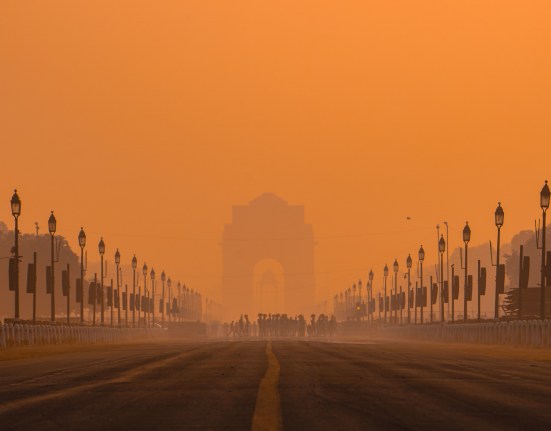
Why the ballot must remain mightier than the barricade?
Democracy Cannot Become a Hostage to Street Power
A phenomenon is gaining visibility in contemporary politics across the world: the growing temptation to seek a change of government through organised disruption, street confrontation and political upheaval rather than through the established democratic process. The expression “regime change” has acquired a troubling meaning when it is used to justify attempts to force democratically elected governments out of office through intimidation, violence or the systematic breakdown of public order.
A motley collection of political activists, disgruntled individuals, ideological groups and opportunistic organisations can sometimes come together under a common banner, despite having little agreement on what should replace the government they oppose. Their immediate objective is not necessarily to offer a credible alternative programme of governance, but to generate enough turmoil to make the continuation of an elected government difficult. This raises a fundamental question: can a democracy permit organised anarchy to become an alternative to the ballot box?
India’s Democratic Tradition: Governments Change, Institutions Remain
India offers one of the world’s most compelling examples of peaceful democratic transitions. In 1977, the mighty government of Prime Minister Indira Gandhi was defeated at the ballot box, bringing the Janata Party to power. It was a historic demonstration that even the most powerful political leadership could be removed by the collective will of ordinary citizens. In 1980, the electorate changed its verdict once again, restoring Indira Gandhi to office. In 1989, the Congress government lost power and V. P. Singh assumed office.
Further changes in leadership and governing coalitions followed in 1996, 1998 and 1999, all within the constitutional framework. In 2004, the government led by Atal Bihari Vajpayee accepted the electoral verdict, paving the way for the United Progressive Alliance government. In 2014, the electorate delivered another decisive mandate, bringing Narendra Modi and the Bharatiya Janata Party to national power.
These transitions demonstrate an extraordinary strength of Indian democracy: political power is temporary, but constitutional legitimacy is enduring. India did not need a revolution, the destruction of public institutions or violent confrontation to accomplish these changes. The people simply voted.
The Dangerous Illusion of Revolutionary Shortcuts
History shows that political upheavals do not automatically produce better governments. Recent developments in different parts of the world have shown how protests against corruption, economic distress, inequality or political leadership can escalate into demands for the immediate removal of governments. Some movements are genuinely rooted in public grievances and remain peaceful. Others become vulnerable to violent factions, opportunistic political actors or groups seeking to exploit public anger.
The distinction is critically important. A peaceful movement demanding accountability is an expression of democracy. An organised attempt to seize political power through violence and intimidation is an assault on constitutional government.
The romanticisation of street revolutions frequently overlooks their consequences: economic disruption, damage to public infrastructure, weakened institutions, political uncertainty and, in extreme cases, prolonged instability. Destroying an existing political order is often far easier than building a credible and functioning alternative. A crowd may bring a city to a standstill, but it cannot claim the constitutional mandate of an entire nation.
Dissent Is a Democratic Right. Anarchy Is Not.
India’s Constitution guarantees freedom of speech, expression, peaceful assembly and political association, subject to constitutionally permitted restrictions. These freedoms are essential to democratic life. Citizens must have the right to criticise the government, organise peaceful protests, expose wrongdoing and demand accountability. Indeed, a democracy without dissent would cease to be meaningful.
However, there is a clear distinction between democratic protest and unlawful coercion. Burning public property, attacking security personnel, threatening citizens, obstructing essential services through violence or attempting to paralyse constitutional institutions cannot be justified merely by invoking the language of political freedom. Equally, governments must not treat legitimate dissent as sedition, or every public demonstration as an attempt at regime change.
The State’s responsibility is to protect both constitutional liberty and public order. When violence occurs, law-enforcement agencies have a duty to intervene, but that intervention must remain lawful, proportionate and accountable. Excessive or indiscriminate force can itself damage public confidence in democratic institutions. A strong democracy must be capable of protecting peaceful protesters while firmly confronting those who resort to violence.
Who Pays the Price of Political Anarchy?
Political upheaval is often discussed in the language of ideology, revolution and transformation, but the actual price is paid by ordinary citizens. The daily-wage worker who cannot reach his workplace, the shopkeeper whose business is destroyed, the student whose education is interrupted, the patient unable to reach a hospital and the small entrepreneur facing financial losses are rarely the beneficiaries of political confrontation.
Public property destroyed during violent demonstrations is not the private property of any government. It belongs to the people of India. The economic damage caused by prolonged disorder ultimately becomes a burden on taxpayers and future generations. It is therefore worth asking those who advocate disruptive political confrontation: who has authorised you to impose the cost of your political ambitions on millions of innocent citizens? Political disagreement does not confer a licence to endanger the lives, livelihoods and security of others.
The Responsibility of Political Leadership
Opposition parties play an indispensable role in a parliamentary democracy. They are expected to question government decisions, challenge policies, expose administrative failures and present alternative programmes to the electorate. But political leadership must also exercise restraint and responsibility. It would be dangerous for any party, whether in government or in opposition, to encourage the belief that electoral defeat can be reversed through violent pressure.
A political organisation that seeks power through constitutional means strengthens democracy. One that legitimises violence as a substitute for electoral competition weakens the very institutions it may eventually seek to govern. Similarly, those holding public office must recognise that an electoral mandate does not provide immunity from criticism, judicial scrutiny or peaceful public mobilisation. Democracy requires both a responsible government and a responsible opposition.
The Ballot Is the Most Powerful Instrument of Regime Change
India has established an elaborate constitutional system for determining who governs. Periodic elections, universal adult franchise, independent electoral administration, judicial remedies and parliamentary accountability give citizens the means to change political leadership. The electoral process is not beyond criticism, and questions about fairness, transparency and institutional independence must be addressed seriously through lawful and constitutional means. But abandoning electoral democracy in favour of coercive street politics is not a solution. If citizens are dissatisfied with a government, they possess a far more legitimate instrument than political violence: the vote.
As elections approach in different parts of India, political parties and citizens should concentrate their energies on public debate, voter mobilisation, competing policy proposals and democratic participation. Let those who oppose the government convince the electorate that they can govern better. Let them present their vision for economic development, employment, national security, social harmony and institutional reform. Let them seek a mandate from the people rather than attempt to manufacture one through disorder. The legitimacy of a government must be tested by constitutional processes, not by the intensity of street confrontation.
India Must Reject the Politics of Manufactured Instability
India is a vast, diverse and complex democracy. Its social fabric is shaped by multiple languages, religions, communities, regional aspirations and political traditions. Instability in such a country has consequences far beyond the immediate contest between government and opposition. National development, investor confidence, internal security, social harmony and public welfare all depend on the continuity of constitutional institutions.
This does not mean governments should be shielded from criticism or public pressure. It means that political change must respect the constitutional order. India must remain vigilant against attempts to convert legitimate grievances into violent campaigns for political destabilisation. At the same time, accusations of conspiracy or regime change must be backed by credible evidence rather than used casually to discredit dissent. The answer to political extremism is not authoritarianism. It is a confident democracy governed by the rule of law.
Conclusion: Change the Government, Not the Rules of Democracy
India’s democratic journey has repeatedly shown that governments can rise and fall without the nation descending into chaos. No government is permanent. No political party has an eternal right to rule. No leader stands above the verdict of the people. But equally, no self-appointed group has the right to overthrow constitutional authority through violence simply because it dislikes the outcome of an election.
The power to change a democratically elected government belongs to the people, exercised through the constitutional process. Those who desire political change should organise, campaign, persuade and participate in elections. Those who seek accountability should protest peacefully, pursue legal remedies and hold public representatives answerable. But those who believe anarchy is a legitimate shortcut to power must understand that democracy cannot survive if every electoral disappointment becomes an invitation to violent upheaval.
India does not need a culture of forced regime change. It needs a stronger culture of democratic change. Let political battles be fought through ideas, policies and public persuasion. Let governments be judged by their performance. Let citizens deliver their verdict through the ballot. If you do not like the government, change it with your vote, not with violence. The ballot box is the legitimate instrument of democratic change, and the streets must never become a substitute for the sovereign will of the people.
By: Kunwar Vikram Singh, Author & National Security Analyst
The opinions expressed in this article are solely those of the author, and do not reflect the views of BW Security World.