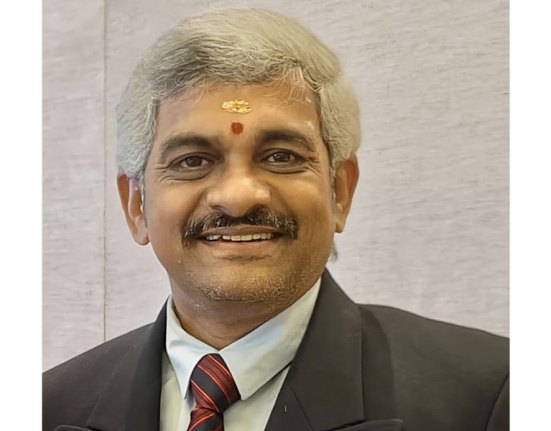
Nair noted that the amendment has removed uncertainty about the responsibilities of different ministries in the cybersecurity domain
In a recent move to resolve confusion over cybersecurity management in India, the Centre has amended the Allocation of Business Rules, 1961, assigning clearer roles to ministries involved in this critical area. National Cyber Security Coordinator (NCSC) Lieutenant General MU Nair highlighted this change while speaking at the India Mobile Congress on Wednesday.
Nair noted that the amendment has removed uncertainty about the responsibilities of different ministries in the cybersecurity domain. “Last time when I had spoken here, I mentioned the lack of clarity on responsibility across ministries in cybersecurity. This challenge has now been addressed, with cybersecurity included in the allocation of business rules of various ministries. Designated responsibilities, coordination, and strategic direction in this key domain of national security now rest with the National Security Council Secretariat (NSCS),” Nair stated. He added that the new arrangement would improve coordination and management of cybersecurity objectives across the country.
This follows the cabinet secretariat’s September 27 notification, which confirmed the NSCS as the body responsible for overseeing cybersecurity efforts. The NSCS operates under the Prime Minister and is India’s highest decision-making authority on national security matters. As the National Cyber Security Coordinator, Nair plays a key role within this structure.
Nair also announced plans to expand the National Security Directive on Telecommunication Sector (NSDTS) over the next few years. This directive, which was first issued in 2020, ensures that telecom equipment in the country comes from trusted sources. The measure gained importance after the 2020 Galwan Valley clashes with China, leading to efforts to reduce the use of Chinese components in India’s critical infrastructure. While the directive does not mandate replacing existing equipment, it ensures that future acquisitions adhere to security standards.
A key issue raised by Nair was the severe shortage of skilled professionals in cybersecurity. Despite the large number of computer science graduates in India, few have expertise in the field. “We generate so many computer science graduates in our universities today, but none of them have adequate knowledge about the cybersecurity domain,” Nair said. To address this gap, the NCSC, in collaboration with the Data Security Council of India, has developed TechSagar, a platform to showcase India’s technological capabilities. However, more needs to be done to meet the demand for cybersecurity talent.
Nair also warned about the rising number of cyberattacks targeting India’s critical infrastructure, noting that ransomware poses a significant threat. “Targeted attacks on our national resources and critical infrastructure have become more vigorous, with the potential to jeopardize our national security and social fabric,” he said.
Experts at the conference, including Dr. Faruk Kazi from the University of Mumbai, echoed Nair’s concerns, pointing out that state-backed hackers now pose a more serious threat than amateur cybercriminals. Dr. Lokesh Garg, Deputy Director General of the National Critical Information Infrastructure Protection Centre (NCIIPC), also observed that cyberattacks on essential infrastructure such as telecom and power are becoming more frequent.
As India rolls out 5G technology, the risks grow. The decentralized nature of 5G networks, combined with faster speeds and virtualization, increases the potential attack surface for cybercriminals. Salil Mittal, who leads cybersecurity for emerging technologies at Jio, noted that the shift from hardware-based to software-driven networks is making them more vulnerable.
Nair concluded by discussing the dual role of artificial intelligence (AI) in cybersecurity. While AI provides cybercriminals with new opportunities, it also offers tools to identify and prevent vulnerabilities. “They have enhanced the bandwidth and windows of opportunities for cyber criminals, but also offer features that assist in identifying vulnerabilities and trends proactively,” he said.
India is taking steps to safeguard its digital infrastructure, but addressing the skill gap and staying ahead of technological advancements will be essential to ensuring cybersecurity in the future.