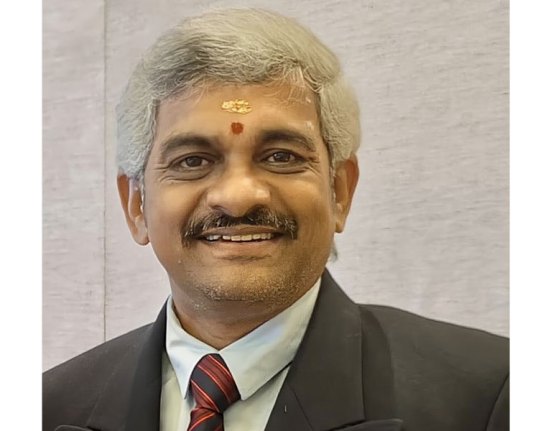
To foster innovation, the DRDO has taken significant steps, including the establishment of five ‘Young Scientists Laboratories’ in 2020
With India emerging as a prime target for cyber-attacks, the Defence Research and Development Organisation (DRDO) is stepping up efforts in cyber defence and deterrence, DRDO chairman Samir Kamat said on Tuesday. Addressing students at Techfest, the annual science and technology festival of the Indian Institute of Technology (IIT) Bombay, Kamat highlighted the critical role of technology in safeguarding national security.
“Cyber warfare is continuous. It is not a declared war; it happens every day. India is among the most attacked countries in the world,” he said. Kamat compared cyber security to the strategic nuclear domain, underscoring the dual priorities of cyber defence and deterrence. “You need deterrence capabilities to discourage attacks. Both cyber defence and deterrence are crucial, and this is where young minds can contribute significantly,” he added.
Future of Warfare: Network-Centric Battles
Kamat spoke about the future of warfare being network-centric, where seamless communication between sensors and shooters is pivotal. Technologies like satellite communication and software-defined radios are expected to provide a decisive edge. “Sensors and shooters may operate from different locations, but data must flow seamlessly,” he said, stressing the importance of real-time information sharing in combat scenarios.
DRDO’s Initiatives In Innovation
To foster innovation, the DRDO has taken significant steps, including the establishment of five ‘Young Scientists Laboratories’ in 2020. These labs focus on advanced technologies such as artificial intelligence, quantum computing, cognitive technologies, asymmetric warfare strategies, and smart materials.
Kamat also highlighted DRDO’s ongoing development of the Advanced Medium Combat Aircraft (AMCA), a fifth-generation stealth fighter with internal weapon bays and capabilities for real-time operation during combat.
Emerging Threats & Disruptive Technologies
Drawing lessons from global conflicts, Kamat emphasised the impact of disruptive technologies on modern warfare. “Unless we quickly adapt to these technologies, we risk falling behind. My goal is to show where the world is heading in defence research and inspire some of you to join us in this journey,” he said.
Focus On Underwater Domain Awareness
Another critical area for DRDO is underwater domain awareness, particularly the challenge of detecting submarines at depths beyond 200 metres. Traditional acoustic-based methods face limitations, but emerging technologies, such as space-based sensors that detect magnetic anomalies from submarine movements, show promise. “Developing capabilities in this area will be a major focus for us,” Kamat said.
The DRDO’s push for innovation and its focus on next-generation defence technologies aim to keep India at the forefront of global security challenges. Through initiatives like the Young Scientists Laboratories and cutting-edge research, Kamat called on the younger generation to actively contribute to the nation’s defence research and development journey.