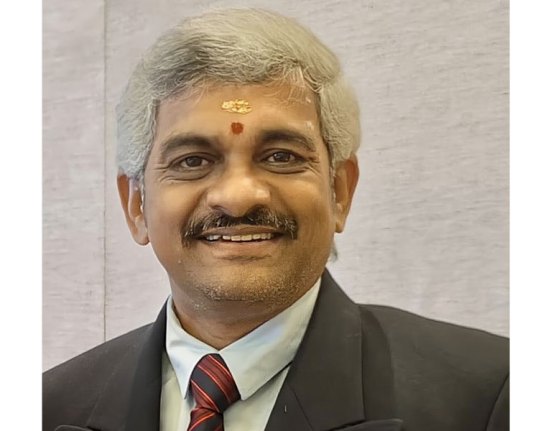
Judge Dugan was taken into custody by the US Marshals Service at 8:30am local time while at work in the courthouse
In a move that has sparked widespread concern and intensified debates over the separation of powers in the United States, the FBI on Friday arrested Wisconsin county circuit judge Hannah Dugan on charges of obstruction. Federal authorities allege that she intervened in an immigration arrest attempt inside her Milwaukee courtroom, enabling a man to evade detention.
Judge Dugan was taken into custody by the US Marshals Service at 8:30am local time while at work in the courthouse. According to the agency, she is facing charges for obstructing a proceeding and concealing an individual to prevent arrest. The arrest relates to an incident in which she allegedly assisted Eduardo Flores Ruiz, an undocumented immigrant, in avoiding apprehension by federal agents.
FBI Director Kash Patel, a Trump appointee, stated on X, “We believe Judge Dugan intentionally misdirected federal agents away from the subject to be arrested in her courthouse, Eduardo Flores Ruiz, allowing the subject – an illegal alien – to evade arrest.” He further noted that Flores Ruiz was eventually detained after being “chased down,” and is now in custody. Patel claimed the judge’s actions “created increased danger to the public.”
Judge Dugan was briefly presented in federal court later that morning and released from custody. She is expected to appear again in court on 15 May. Her attorney, Craig Mastantuono, said during the hearing: “Judge Dugan wholeheartedly regrets and protests her arrest. It was not made in the interest of public safety.”
A crowd gathered outside the courthouse in support of the judge, chanting: “Free the judge now.”
In a statement shared with the Milwaukee Journal Sentinel, Dugan’s legal team defended her longstanding commitment to justice: “Hannah C Dugan has committed herself to the rule of law and the principles of due process for her entire career as a lawyer and a judge. Judge Dugan will defend herself vigorously, and looks forward to being exonerated.”
The arrest prompted strong reactions from political leaders and legal experts across the spectrum. The Milwaukee city council called the development “shocking and upsetting,” adding, “Judge Dugan should be afforded the same respect and due process that she has diligently provided others throughout her career.”
They also criticised what they perceive as a broader trend of targeting immigrant communities, saying, “Perhaps the most chilling part of Judge Dugan’s arrest is the continued aggression by which the current administration in Washington, DC has weaponised federal law enforcement, such as ICE, against immigrant communities.”
Senator Tammy Baldwin, a Democrat from Wisconsin, described the arrest of a sitting judge as “a gravely serious and drastic move” that “threatens to breach” the separation of powers between the judiciary and the executive. “Make no mistake, we do not have kings in this country and we are a democracy governed by laws that everyone must abide by,” she said in an emailed statement.
Senator Bernie Sanders echoed similar concerns, calling the arrest an example of “unchecked power.” He said, “Let’s be clear. Trump’s arrest of Judge Dugan in Milwaukee has nothing to do with immigration. It has everything to do with [Trump] moving this country towards authoritarianism.”
Massachusetts Senator Elizabeth Warren added on social media, “This administration is threatening our country’s judicial system. This rings serious alarm bells.”
The FBI director later posted a photograph of Judge Dugan in handcuffs on X, captioned: “No one is above the law.”
Governor Tony Evers of Wisconsin expressed alarm over the Trump administration’s tone and actions. “I have deep respect for the rule of law, our nation’s judiciary, the importance of judges making decisions impartially without fear or favour, and the efforts of law enforcement to hold people accountable if they commit a crime,” he said. “I will continue to put my faith in our justice system as this situation plays out in the court of law.”
Court documents state that immigration agents were planning to arrest Flores Ruiz during his appearance in Dugan’s courtroom for an unrelated matter. Prosecutors claim Judge Dugan became “visibly angry” when she learned about the plan and ordered the agents to speak with the chief judge. She then allegedly escorted Flores Ruiz and his attorney through a restricted area leading to a public exit.
While initial reports suggested the judge may have hidden the individual, the Journal Sentinel, citing unnamed sources, clarified that she did not conceal Flores Ruiz in a jury room, but rather guided him to a public hallway.
This case mirrors a previous instance during the first Trump administration, where a Massachusetts judge was accused of similar conduct. That prosecution, widely criticised as politically motivated, was later dropped under the Biden administration in 2022 after the judge referred herself to a judicial misconduct body.
Judge Dugan, first elected in 2016, previously led the local Catholic Charities branch, which works with refugee resettlement programmes. She also served as a lawyer with the Legal Aid Society of Milwaukee, supporting low-income clients.
Federal prosecutors have drawn on a January memo from Emil Bove, the Justice Department’s principal associate deputy attorney general, urging legal action against state and local officials who allegedly obstruct immigration enforcement. “Federal law prohibits state and local actors from resisting, obstructing, and otherwise failing to comply with lawful immigration-related commands or requests,” the memo stated.
Pam Bondi, the attorney general, commented on Fox News, “Some of these judges think that they are beyond and above the law. They are not, and we are sending a very strong message today … if you are harbouring a fugitive, we will come after you and we will prosecute you.”
As the case unfolds, it marks a critical moment in the ongoing battle between federal immigration enforcement and local judicial authority—one that may have lasting implications for the role of the judiciary in politically sensitive matters.