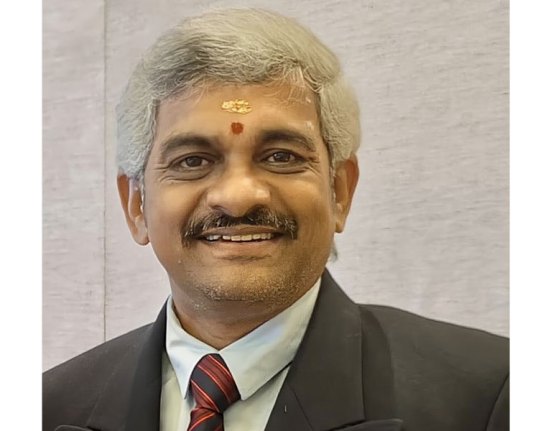
An exclusive interview with a co-founder of Jarsh Safety Kausthub Kaundinya on pivoting from R&D to mission-critical safety gear, the technical challenge of miniaturising AC, and the ambitious goal of preventing accidents before they happen
The Personal Protective Equipment (PPE) industry has historically been defined by stagnation. For decades, the hard hat, the reflective jacket, and the safety shoe have remained virtually unchanged, offering protection only after an accident occurs. But with annual global deaths due to occupational hazards exceeding 2.5 million, the need for proactive technology is critical.
What specific moment or experience sparked the idea for the company, and was it a single incident that drove the focus on safety innovation?
Not really. It was not a single incident; it was multiple incidents. The company is legally named Jarsh Innovations and started out as an R&D company. We are three co-founders, three engineers, focused on innovating and creating new stuff.
After we developed the air-conditioned helmet, it gave us a lot of exposure to the safety industry, especially around COVID time. The more we saw this industry, the more we understood one simple and astonishing fact: this industry is decades old. You can think of a time when the phone was any different, but you can’t think of a time when a helmet or a reflective jacket was any different. From the 1970s and 1980s, it’s always been the same.
We saw that the person working in a mine is likely using the exact same safety equipment his grandfather used. We realized there was a significant gap where basic technology was not being applied. This gap is leading to a lot of deaths—2.5 million people expire every year across the world due to occupational accidents and diseases. We pivoted to become a safety company, building various products to save lives.
Our radical approach is that traditionally, safety equipment is designed to protect the person post an accident. For example, insulated gloves reduce the impact if you touch a live wire. We have come up with a device that can detect if the line is live or not from a distance—a non-contact line indicator. The person gets an alert before he goes near the line, so we are trying to prevent an accident rather than protect the person post-accident. We want to track the hazard and give an early caution.
What was the toughest technical challenge in designing the air-conditioned helmet, and how is its adoption progressing, especially among construction workers?
The biggest challenge for the air-conditioned helmet is that an air-conditioner doesn’t exist in a portable format. We had to come up with an AC that is small enough, light enough, and power efficient enough to run on a battery. This was a technological challenge. We worked on making the available technologies efficient enough, and we got an air-conditioner that weighs only 200 grams. It was enough to cool the area around the head and could run on a battery. That innovation is patented.
Now I would like to add one point here: don’t think of this company or our innovation as an AC helmet company. It’s essentially a safety company where there is a portfolio of products tackling various different hazards—for people working at height, with electricity, or in heat.
Regarding construction workers, there is definitely a requirement, but unfortunately, the adoption is very low. Construction hazards are also not very critical in the same way. We focus on areas where the first accident is the last accident. For example, working with 66,000 volts of electricity or on a windmill at 428 feet—if it falls, it means he’s dead. Our goods are focused on these mission-critical areas like mining, ports, and oil and gas.
Can you share a real-life incident where one of your products played a role in saving someone’s life?
Absolutely. For example, the voltage detector that we sell. We have sold close to 35,000 units in the last six months. Every year, as per official government data, 10,000 people die from electricity. With these detectors, the number of lives at risk is coming down significantly.
Previously, a person going up a pole had to rely on the trust of the person on the ground who said the line was closed. They had no way to verify if the transformer switch was working or if the line was truly off. They were just going by trust. Now they have a way to verify it.
Have companies admitted that using your products revealed the extent to which they previously compromised on safety?
No, no, no. That’s really the biggest dichotomy of this industry. The company really knows the hazards. It’s very unfortunate that they are unable to find the right solutions. It’s not that they are unaware. They are aware that it’s a problem, but the right solutions are not available in the market, and that’s where we are filling the gap. Many of the products we are developing are not just our dreams. We are talking to customers, they are telling us the problems, and we are solving them with technology.
Is the company’s primary focus safety, or is it sustainability?
It is both, I would say. For example, one of our products, Work Alive, is a remote working solution. Instead of two or three people going to a site, a single person goes. Our clients, who have 21 solar power plants, had one person travelling to all 21 sites every quarter for inspection. Now they are doing it remotely using our solution. The travel risk is gone, and it’s sustainability as well. Whenever you are reducing the risk, the sustainability also goes up because the amount of PPE used is gone, so the wastage of plastic material is gone.
Are your helmets becoming smarter by tracking worker vitals and alerting supervisors, & how are you incorporating AI?
Actually, we are already working on such a product, and we will be launching it this year. That is definitely a core use case. As for AI, it is here to analyse the data and bring form to it. From a functional point of view, yes, we are using AI right now for remote assistance, remote working, and remote inspections. We are incorporating AI into the systems.
Given this is a challenging market, what has kept you going through the hardest days of the business?
I would say perseverance, for sure. The perseverance to do something. To have the ego that [I] started this, this cannot close down. That definitely helps. The second thing is trying to destroy all your other options such that you have no other choice. This is the only thing we have to do. It’s life or death now.
Interviewer: How is the company winning local trust and scaling globally, especially as a high-tech gear manufacturer in an import-dominated Indian market?
Our vision is definitely to make in India and export across the world. We have just started exporting to the Middle East recently. We want to export to at least 10 different countries over the next 2-3 years. I would say that’s where we will add value to the society and to the nation—that we design in India, make in India, and sell across the world. There is an established market for safety equipment globally, and if somebody wants a customized solution engineered for them, the cheapest place to get it done is India. The cheapest place to manufacture it is also India, so I think we are definitely well-placed for that.
Can you share the company’s revenue figures for the last year and current projections?
Last year we did RS 4.5 crore; this year we are on track to do about RS 20 crore.
That’s great growth. How do you quantify safety improvements for workers, and how often do you visit sites to understand the on-ground reality?
That is our day-to-day job: visiting sites. We, as an entire team, are practically visiting at least three different clients every single day. That’s part of our task. We do demos, customer awareness, and customer visits on a daily basis to understand the on-ground reality. Theoretically, we can do a lot of stuff using the internet and research, but on the ground, the practicality is very different. We ensure that there are people on the ground who are talking to the end-users rather than just the purchasers.