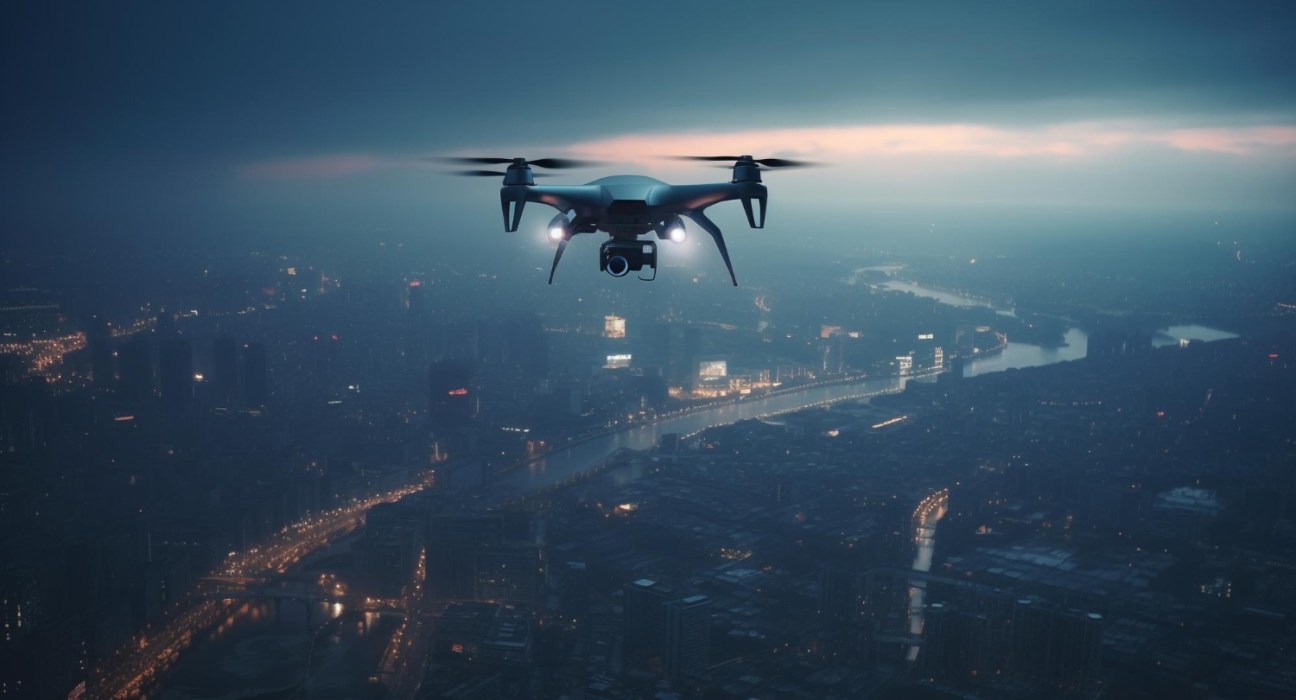
While the immediate applications appear to be military and border surveillance, the team sees potential in disaster response, rescue operations and environmental monitoring
In a striking display of India’s growing capabilities in autonomous flight and homegrown defence technology, the Indian Institute of Technology (IIT) Kanpur has developed an ornithopter — a lightweight drone that mimics the flapping flight of birds. The unmanned aerial vehicle, which was revealed at the Global Capability Centers (GCC) Innovation Summit 2025, held on campus in Uttar Pradesh, is capable of flying for up to an hour, reaching heights of one kilometre.
Designed and built entirely in India by IIT Kanpur’s Unsteady Aerodynamics Lab, the ornithopter’s most distinctive feature is its resemblance to birds. It achieves lift and propulsion by flapping its wings, a flight mechanism shared by avian species, bats and some insects — unlike conventional drones that rely on rotating blades.
The autonomous drone uses a GPS-based navigation system, and is equipped with sensors and a camera for live transmission, allowing it to carry out surveillance without human intervention. Its wingspan stretches to 1.6 metres in the largest prototype, and it is capable of flying distances of 300–400 metres at a time.
Low visibility, high impact
According to the research team, one of the ornithopter’s strategic advantages lies in its minimal use of metal, making it difficult to detect by radar. “It’s not an ordinary drone,” said researcher Shramna Das. “It’s designed for discretion, endurance and real-time intelligence.”
While the immediate applications appear to be military and border surveillance, the team sees potential in disaster response, rescue operations and environmental monitoring — tasks where traditional drones or human presence may be risky or impractical.
The ornithopter was the highlight of the summit, which brought together over 25 Global Capability Centres — innovation arms of multinational companies — as well as investors, policy leaders and educational institutions. The event was inaugurated by Alok Kumar, Principal Secretary for Planning, Vijay Kiran Anand, CEO of Nivesh UP, and Professor Brij Bhushan, Deputy Director of IIT Kanpur.
Innovation beyond defence
The summit also offered a window into India’s expanding tech ecosystem beyond national security. Among the other prototypes were smart devices that can convert conventional electricity meters into smart meters — potentially aiding utilities like KESCo — as well as educational smart boards and robotics.
A backpack that charges laptops drew attention for its simplicity and real-world appeal. The device, called ADAS Power Solution, was created by Dhruv, a BBA student, and Shruti, a BTech AI student from PSIT, and aims to address the common frustration of device charging during travel.
From lab to reality
The showcase underscored a broader shift in India’s innovation landscape, as research institutions increasingly serve as incubators for commercially viable, socially relevant technologies. But how soon these developments transition from prototype to product remains an open question.
At the summit, optimism ran high that such platforms could accelerate partnerships between academia, industry, and government — and that India’s tech talent would not only imagine the future but build it.