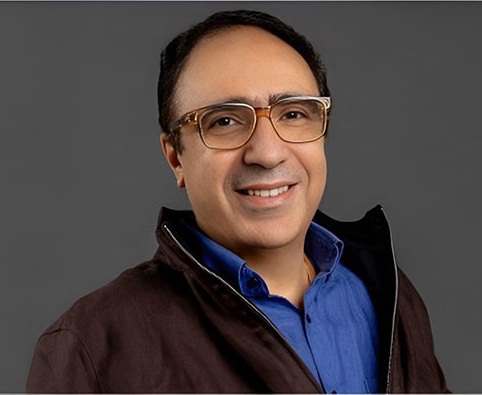
Vehant Technologies, building smarter cities and safer spaces with indigenous innovation
From under-vehicle scanners at high-security locations to AI-powered crowd analytics at Kumbh Mela, Vehant Technologies is quietly powering India’s critical security and surveillance infrastructure. Co-founded by Kapil Bardeja and Anoop G Prabhu, the deep-tech company—born out of IIT Delhi in 2005—is addressing complex national challenges using indigenously developed, AI-driven solutions in security, safety, and traffic enforcement.
In an exclusive conversation with BW Security World, Kapil Bardeja spoke about Vehant’s origin, flagship deployments, and how the company balances AI innovation with real-world constraints.
Deep-Tech From Lab To Field
Vehant Technologies began its journey at IIT Delhi with a mission to develop homegrown alternatives to imported security systems. “We started with five professors from the computer science department and aimed to build solutions tailored to Indian needs,” says Bardeja. Today, the company operates across three core verticals: premise security, aviation security, and smart city infrastructure.
In the premise security vertical, Vehant offers solutions such as under-vehicle scanning systems, dual-view x-ray baggage scanners, and explosive trace detectors. These technologies serve sensitive installations like hotels, office complexes, and defence locations.
In the aviation space, Vehant’s high-end scanners and detectors—regulated by the Bureau of Civil Aviation Security—are deployed across 90 Indian airports, with over 450 AI-powered x-ray machines installed to date.
The smart city and traffic enforcement vertical is perhaps where the company’s AI capabilities shine brightest. “We have built vision-based traffic enforcement systems that suit India’s chaotic roads,” says Bardeja. Unlike radar-based systems used in the West, Vehant’s solutions rely on a single camera to capture vehicle speed and number plates, reducing costs and increasing reliability in multi-vehicle, multi-lane scenarios.
Vehant’s systems currently operate across 20,000 lanes in 70 smart cities, detecting violations ranging from overspeeding to triple riding and no-helmet infractions.
Engineering For India’s Realities
Hardware and environmental constraints remain key challenges in deploying AI in India. Vehant’s technology is custom-built to withstand erratic lighting, monsoon rains, fog, dust, and inconsistent network connectivity. “AI works well in labs or indoor spaces, but outdoor deployment is a different game altogether,” Bardeja explains. “Our systems are designed to function with high accuracy in real-world conditions, where lighting, vibration, and bandwidth vary drastically.”
This fusion of ruggedised hardware and intelligent algorithms also extends to crowd analytics. During the recent Kumbh Mela, Vehant deployed AI-based density mapping and crowd monitoring solutions. These systems provided real-time insights into crowd flows and parking lot occupancy, aiding both traffic management and law enforcement.
NanoSniff Edge
One of Vehant’s standout products is an explosive trace detector developed in collaboration with NanoSniff Technologies, a company incubated at IIT Bombay. Bardeja, who is an investor and board director at NanoSniff, highlights its uniqueness: “It’s a 100 per cent indigenous MEMS sensor, fabricated in IIT Bombay and IISc Bengaluru, with Indian electronics and software.”
Vehant holds the manufacturing and distribution license for the detector, which enhances its broader security solutions portfolio while promoting Make-in-India hardware innovation.
AI: From Buzzword To Backbone
While AI is often viewed as a buzzword, Vehant treats it as an enabling layer rather than the end product. “What was once known as computer vision is now called AI,” quips Bardeja. “It’s not just about algorithms—the camera quality, computing infrastructure, and AI models all evolved together.”
Vehant’s AI focus is firmly on image and video analytics, not generative AI. Their goal is precision—achieving detection accuracy levels as high as 90 per cent, even in complex environments. This is critical in applications like fire and smoke detection, weapon identification, loitering analysis, and foreign object detection in under-vehicle scans.
In highways, their AI modules identify speeding, low visibility, and potential accidents—helping authorities intervene faster and more effectively.
Building Trust Through Rigorous Validation
When it comes to high-stakes environments like airports or defence bases, there’s no room for error. Each Vehant product goes through years of R&D, testing, and control-site validation before deployment. “Even changing a camera component goes through a six-month to one-year cycle,” says Bardeja. “There are no shortcuts in this business.”
Vehant also provides law enforcement with tools for identifying stolen or suspicious vehicles. “We are generating nearly half the traffic violation challans in India,” says Bardeja. “Our systems are active contributors to real-time policing and public safety.”
Ethics, Anonymity & Responsible Deployment
The rising use of surveillance technology brings inevitable questions around ethics and privacy. Vehant addresses this by focusing primarily on government-led use cases, where security and law enforcement are the primary goals.
“We educate our clients—whether it’s an airport or a hotel—about where and how data can be used,” Bardeja notes. For commercial settings like malls or restaurants that wish to use video data for business intelligence, Vehant enables anonymised analytics. “We never reveal personally identifiable information like names or faces in such scenarios,” he adds.
From AI-powered scanners at airports to adaptive traffic monitoring in smart cities, Vehant Technologies is not just innovating for India—it is building for India. By combining academic research, indigenous hardware, and pragmatic engineering, the company continues to push the boundaries of what security technology can achieve in the world’s most dynamic environments.