This move follows a serious incident in January aboard an Air Busan flight
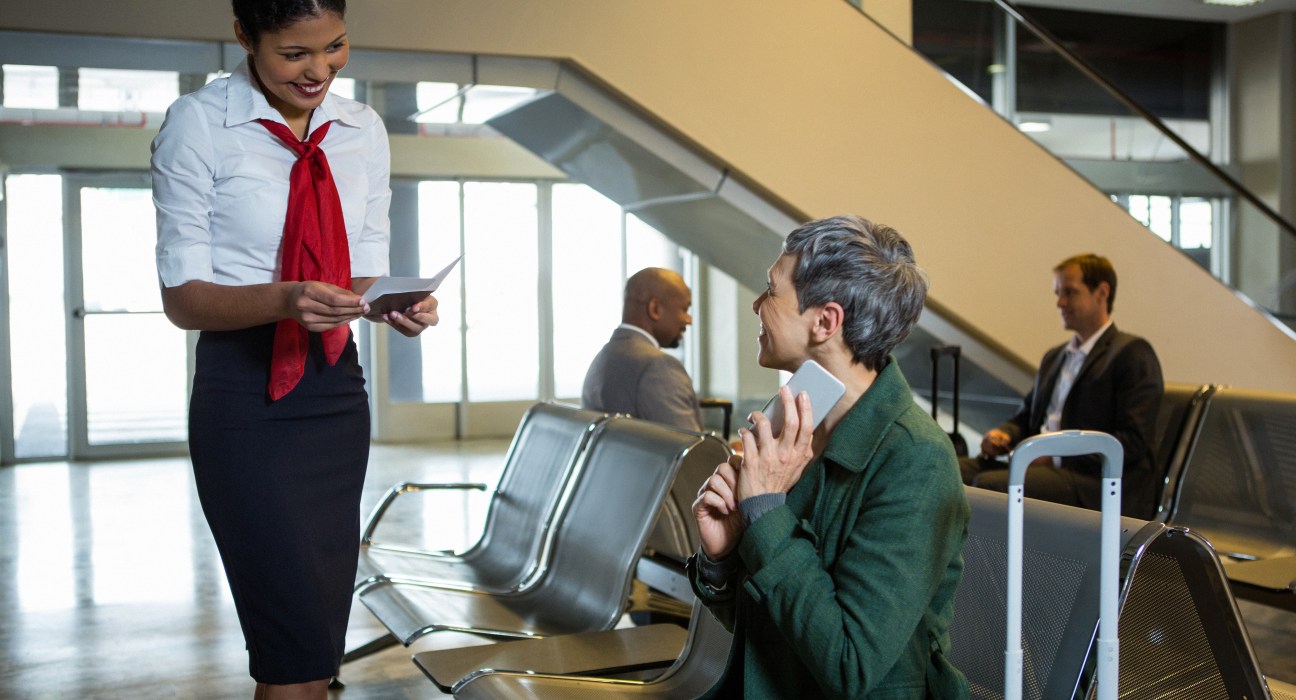
Airport security procedures in South Korea are undergoing a curious shift. Alongside familiar tools like metal detectors and gloves, security officers may now be seen handing out plastic bags to travellers — not for liquids or snacks, but for lithium batteries.
Since April, passengers have been asked to place their spare batteries in plastic bags before boarding, as part of a new directive issued by the Ministry of Land, Infrastructure and Transport. The aim is to prevent battery terminals from coming into contact with other objects, a situation that could potentially trigger fires during flights.
This move follows a serious incident in January aboard an Air Busan flight. A battery, believed to have been stored in an overhead bin without proper short-circuit protection, caught fire just before takeoff at Gimhae International Airport. The resulting emergency evacuation involved all 176 passengers and crew members.
Under the new regulation, travellers who arrive at security checkpoints without plastic bags for their batteries are supplied with them on the spot. However, the directive has quickly drawn criticism from experts and industry insiders who question the practicality and effectiveness of this approach.
“Handing out plastic bags is completely pointless,” said Lee Yong-kang, a professor of aviation security at Hanseo University, in an interview with The Korea Times. “Unlike the removable batteries in old cellphones, today’s power banks are sealed units, which makes the risk of fires from external short circuits very low.”
Concerns have also been raised about how passengers actually use the bags. According to a senior official from the Incheon branch of the Korean Confederation of Trade Unions, many passengers discard the plastic bags after passing through security. “Most passengers ended up discarding the plastic bags anyway, rendering the measure ineffective,” said the official, speaking on condition of anonymity.
The cost and scale of the policy have also raised eyebrows. Incheon International Airport is currently using around 10,000 sealable bags every day, each costing about 17 won (roughly 1.2 cents), while Gimpo International Airport uses about 5,000 bags per week, costing 25 won each.
Rather than focusing on plastic bags, experts suggest the government should look into more effective, evidence-based measures to prevent in-flight battery fires. Professor Lee pointed to the use of portable fire containment units filled with dry sand or metal fire extinguishing agents as a more reliable option. “That way, if a fire risk arises, portable power banks can be placed inside and sealed immediately,” he said.
Another preventive step being recommended is to discourage the carrying of fully charged batteries. Batteries at full charge are more prone to internal failures, which are a common cause of lithium fires. The U.S. Federal Aviation Administration (FAA), for instance, advises that lithium-ion cells shipped as cargo should not be charged beyond 30 per cent of their capacity.
In addition, experts urge passengers to use batteries certified with Korea’s KC (Korea Certification) Mark, as these are considered more reliable and less likely to pose safety hazards. Batteries bought from unofficial or low-cost online retailers may not meet the required safety standards.
International practices also highlight the uniqueness of Korea’s current policy. In the United States, spare lithium-ion batteries must be carried in hand luggage, with terminals insulated using nonconductive tape. While placing batteries in individual plastic bags is accepted as one way to prevent short circuits, it is not mandated, and airport authorities do not hand out bags.
In the European Union, similar rules apply. However, there is an added emphasis on battery testing, in line with the United Nations Manual of Tests and Criteria. European regulators also encourage travellers to buy batteries from reputable sources to reduce the risk of fire from substandard or counterfeit products.
As criticism mounts, it remains to be seen whether Korean authorities will revise their approach or bolster it with more effective fire-prevention measures. For now, though, thousands of plastic bags continue to be distributed daily — and just as quickly discarded.