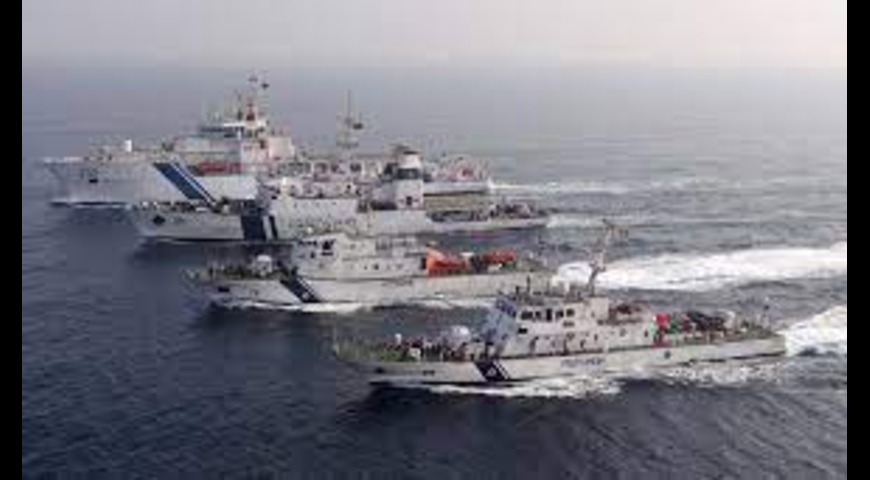
With more than 80 per cent of global commerce transported by sea, the sector is seen as central to safeguarding supply chains
The global maritime security market is forecast to grow sharply over the next decade as governments and shipping operators step up efforts to protect international trade routes from piracy, smuggling and terrorism.
According to new industry research, the market is valued at USD 23.5bn in 2025 and is expected to reach USD 45.5bn by 2032, representing a compound annual growth rate of 9.9 per cent. Analysts attribute the expansion to the increasing adoption of advanced surveillance and monitoring systems, alongside tighter international regulations on maritime safety.
With more than 80 per cent of global commerce transported by sea, the sector is seen as central to safeguarding supply chains. Maritime surveillance systems are emerging as the most significant product segment, driven by demand for real-time monitoring and early warning tools. Access control measures, including biometric checkpoints, are also gaining ground in ports and harbours.
North America currently dominates the market, supported by well-established naval infrastructure and major port hubs, while Europe’s growth is underpinned by EU regulations and port investments. Asia-Pacific is projected to be the fastest-growing region, as rising trade volumes and frequent piracy incidents prompt governments to upgrade offshore and port security.
Industry observers highlight both opportunities and constraints. The adoption of artificial intelligence, internet-connected surveillance, and automated threat detection systems is expected to create new revenue streams. However, high installation costs, difficulties in integrating legacy systems, and a shortage of skilled personnel remain barriers for smaller operators.
Major defence contractors are at the forefront of these developments. Lockheed Martin recently launched a next-generation surveillance platform, while Thales secured contracts to deliver integrated solutions across ports in Europe and Asia-Pacific. Other key players include Saab, Northrop Grumman, L3Harris, BAE Systems, Raytheon, General Dynamics and Kongsberg Gruppen.
Analysts suggest that closer collaboration between governments and private security providers, coupled with growing investment in maritime cybersecurity, will be critical to shaping the market in the coming years.