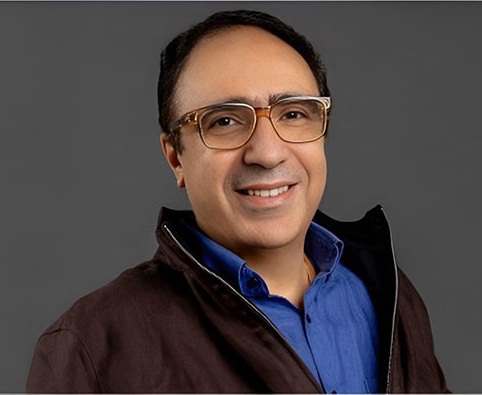
The signing ceremony in New Delhi brought together key figures from both organisations
The Unique Identification Authority of India (UIDAI) has announced a landmark five-year research and development pact with the Indian Statistical Institute (ISI), aiming to reinforce the resilience, security and reliability of the Aadhaar system through advanced, data-driven innovation.
The umbrella agreement – ratified earlier this week – pledges collaborative efforts across an array of technical fronts: from fraud and anomaly detection to enhancements in biometric matching algorithms, liveness detection tools, and identifying high-risk enrolment or update categories.
The signing ceremony in New Delhi brought together key figures from both organisations. UIDAI’s Deputy Director General (Technology Centre), Tanusree Deb Barma, and ISI Bengaluru Centre head, B. S. Daya Sagar, formalised the agreement in the presence of UIDAI CEO Bhuvnesh Kumar and Puja Singh Mandol, Additional Secretary at the Ministry of Statistics and Programme Implementation.
“This collaboration with the Indian Statistical Institute is a step towards building advanced, secure, and citizen-centric innovation,” remarked Mr Kumar, underscoring the growing imperative for Aadhaar’s infrastructure to stay ahead of evolving threats.
For its part, ISI brings nearly a century of expertise in mathematics, statistics, computer science and data science — disciplines crucial for fortifying Aadhaar’s biometric and authentication frameworks.
Yet, amid rapid technological evolution and mounting concerns over digital identity systems, questions linger: how will metrics for success be measured? Will findings be made public? And what safeguards will ensure that enhanced biometric technologies do not further marginalise vulnerable populations? The terms of the agreement are yet to specify oversight mechanisms or transparency provisions.
As Aadhaar continues to underpin vast swathes of public and private services, the stakes of such an R\&D collaboration cannot be overstated. The partnership signals an intent to push the technological envelope — but vigilance and scrutiny will be necessary to ensure it ultimately serves the public interest.