“Every smart building that we admire today, runs on something we rarely notice, until it stops working, cooling,” says Ashish Kumar Deb, Deputy General Manager-Ducted, VRF and Chillers, Commercial Air Conditioners, Blue Star
As urbanisation accelerates and temperatures rise, India’s cooling sector is under pressure to scale without driving energy consumption to unsustainable levels, a challenge that is reshaping product design, regulation and building infrastructure alike, industry said as the demand is set to accelerate sharply in the coming years.
“In a fast growing and ambitious nation like ours, the demand for cooling is rising at an extraordinary pace. The residential space, the residential commercial space is still booming. And at the same time, the commercial buildings alone is already representing a substantial share of overall energy consumption,” said Ashish Kumar Deb, Deputy General Manager-Ducted, VRF and Chillers, Commercial Air Conditioners, Blue Star.
The increase is being driven by a combination of rapid urbanisation, growth in residential and commercial real estate, and rising expectations of indoor comfort. With cooling demand expected to climb further, the focus is shifting from capacity expansion to efficiency.
“The question before us is not how much cooling we will need. The real question is how intelligently we can deliver it,” Deb said.
Industry experts say this transition is already underway, with conventional air-conditioning systems being replaced by more integrated and responsive technologies. These include connected systems that allow centralised control, adaptive cooling based on usage patterns, and predictive maintenance to reduce downtime.
“Today, we are witnessing a clear shift from conventional air conditioning to intelligent cooling ecosystems, systems that are energy efficient, connected, self-learning, adaptive and above all sustainable,” Deb said.
The shift is particularly relevant in India, where cooling systems must operate under challenging conditions. These include extreme heat, high humidity, inconsistent power supply and worsening air quality, especially in smaller cities where infrastructure gaps remain.
“You need to design an air conditioner which has to be all-weather,” Deb noted, pointing to the need for systems that can perform even at high ambient temperatures without significant loss of efficiency.
Policy measures are also playing a key role in shaping the sector. The government’s India Cooling Action Plan (ICAP), launched in 2019, outlines targets to reduce cooling demand, improve energy efficiency and phase down high global-warming refrigerants in line with international commitments.
A major regulatory push has come in the form of mandatory star labelling for commercial cooling systems from 2024, extending efficiency standards beyond household appliances to large-scale installations.
The impact of such measures could be significant. According to estimates cited during the address, a mid-sized commercial installation using a higher-rated system could save around Rs 13 lakh annually in power costs compared to a lower-rated alternative, with a payback period of under three years.
The sector is also seeing a shift in how cooling infrastructure is managed, with remote monitoring and predictive maintenance gaining traction. These systems allow operators to track performance in real time and address potential faults before they lead to breakdowns, improving uptime in critical environments such as healthcare and hospitality.
At a broader level, the transition is being framed as a coordinated effort across stakeholders, including policymakers, manufacturers, architects and end-users.
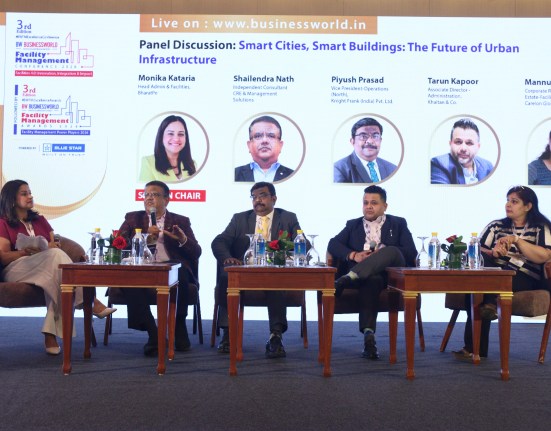
“Government has already laid down the stipulations, we have to follow regulatory norms and come up with innovative and efficient products,” Deb said at BW Businessworld Conference, adding that building design and user choices will also play a key role in reducing overall energy consumption.
India has committed to phasing down the use of hydrofluorocarbons, refrigerants with high global warming potential by 2048 under international agreements, a move expected to significantly alter the cooling technology landscape. As demand continues to rise, industry participants say the challenge will not be meeting cooling needs, but doing so without sharply increasing the country’s energy burden.
By: Priyanshu Priya