With each technological advance and every strategic partnership forged on the global stage, we inch closer to a future where safety and security are not merely aspirations but realities
In the dynamic landscape of contemporary India, concerns surrounding safety and security have surged to the forefront of public consciousness. As the nation evolves, so too do the challenges it faces, necessitating a sophisticated response from security businesses.
In recent years, the imperative for heightened security measures has grown exponentially, catalysed by a confluence of factors ranging from private security tensions to the omnipresence of digital threats. This shifting paradigm has compelled security businesses to undergo a transformative process of upscaling, aligning their strategies with the evolving needs of a nation navigating an increasingly complex security landscape.
At the vanguard of this transformation stand industry stalwarts such as Tenon and G4S, recognised as leading players in India’s security ecosystem. Armed with a wealth of experience and a commitment to innovation, these companies have emerged as beacons of reliability and efficacy, pioneering the deployment of cutting-edge tools and technologies to counter emergent threats.
From state-of-the-art surveillance systems to advanced access control solutions, the arsenal of modern security providers is as diverse as it is formidable. Yet, beyond the mere adoption of technology lies a deeper commitment to safeguarding the well-being of communities and institutions across the nation. It is this ethos of service and vigilance that underpins the mission of every private security enterprise featured within our pages.
As we embark on this journey together, the private security sector seeks to serve as a conduit for dialogue, exploration and empowerment within the realm of security. By amplifying the voices of industry leaders, analysts and practitioners, we aim to illuminate the path forward, fostering a safer, more secure tomorrow for all.
We stand on the precipice of a promising new era in security discourse. Propelled by the momentum of technological innovation and guided by the steadfast commitment of industry leaders, India’s security landscape is poised for a transformative evolution. The strides taken by companies like Tenon and G4S under illuminating leadership underscore not only the resilience of our nation’s security infrastructure but also its capacity for continual adaptation and growth.
Looking ahead, the horizon brims with possibility. With each technological advance and every strategic partnership forged on the global stage, we inch closer to a future where safety and security are not merely aspirations but tangible realities. The journey towards this destination is sure to be fraught with challenges, yet it is imbued with the spirit of steadfast progress and possibility.
As India’s security apparatus extends its reach beyond borders, engaging with global partners and embracing best practices from around the world, the vision of a safer, more secure world comes into sharper focus.
In the crucible of innovation, amidst the crucible of change, we find the promise of a better world—a world where the barriers to security are dismantled and where the forces of good prevail over adversity. As we venture forth into this brave new frontier, let us do so with unwavering resolve and boundless optimism, knowing that together we have the power to shape a future defined not by fear but by freedom and fortitude.
Major Manjit Rajain, Global Chairman, Tenon Group while talking to BW Security World says that private security companies need to continually adapt to new security technologies.
How does the security sector traditionally differ from other industries in terms of innovation, and what challenges do you face when trying to foster an entrepreneurial culture within it?
As a manpower-driven industry, India’s security services sector has one of the largest employment bases, second only to the Indian Railways. The industry employs over 1 crore security personnel, which makes us more accountable as employers, particularly in terms of job creation.
An entrepreneur’s success is much defined by how quickly one adapts to change. While ushering in such changes, a considerable amount of long-term capital and human investment is required to train the guards, supervisors and other technical and non-technical personnel. Developing technology solutions, establishing command and data centres and establishing comprehensive training programmes are some of the catalyst operations that require a lot of patience and effort, but they provide long-term benefits with respect to technology adaptation.
What strategies or methods can security professionals use to encourage creative thinking and risk-taking while maintaining the highest standards of security and safety?
I believe scenario-based training is something that can help security professionals think creatively. The training departments should conduct scenario-based training exercises that simulate real-world security challenges, i.e., mock fire drills, disaster management trainings and emergency preparedness training modules.
Moreover, supervisors should foster a culture of critical thinking where security professionals are encouraged to question assumptions, explore alternative solutions or suggest desirable actions. Constant technological adaptation will always leverage them towards creativity to enhance both safety and innovation.
What are your comments on the ethical and legal considerations that private security professionals need to be mindful of in their line of work?
Balancing innovation and risk with security requires a thoughtful approach that combines creativity with a commitment to maintaining the highest standards of safety. It’s crucial to create an environment that supports experimentation within the boundaries of ethical and legal considerations. Security guards must respect the rights and dignity of individuals, treating them with fairness and impartiality. For example, the use of force or other physical interventions should be proportionate to the situation. They must also be aware of property rights and legal boundaries related to trespassing at the respective locations or sites.
What are the key challenges private security companies face in maintaining the security of their clients, especially in today’s rapidly changing landscape?
Private security companies face several challenges in maintaining the security of their clients, particularly in the dynamic and rapidly changing landscape of today. Some key challenges include:
Technological Advancements: Rapid advancements in technology bring both opportunities and challenges. Private security companies need to continually adapt to new security technologies, including surveillance systems, access control and cybersecurity measures.
Globalisation: Clients with international operations require security companies to navigate the complexities of global security risks. Understanding diverse cultural, legal and geopolitical environments is essential for effective security planning.
Training and Skill Development: Ensuring that security personnel are well-trained and possess the necessary skills to respond to diverse security challenges is an ongoing challenge. Regular training programmes are crucial to keeping staff prepared.
Regulatory Compliance: Compliance with local, national and international regulations is a constant challenge. Private security companies in India are governed by the PSARA Act, where implementation lies with every state and the service providers must stay abreast of changes in laws and regulations that impact their operations and the security measures they employ.
Wage Inflation and Budget Constraints: Over the last decade, wages in the security sector have doubled, significantly increasing the budgetary burden on clients. This has led to a greater demand for standardisation and resource optimisation through processes like Business Process Re-engineering and Operations (BPRO).
Technological advancements have become imperative for all organisations, let alone security agencies. How does the Tenon model guarantee substantial growth that aligns with these technological transformations?
Moving with the shift, we at Tenon Group have considered the importance of technology and have adopted technology integration in our security operations, thus making us a human-IT-enabled security services provider.
Soteria, our state-of-the-art command centre, currently monitors nearly 3,500 locations, with over 75,000 sensors and CCTVs, seamlessly connected and communicating in real time. This technological advancement has significantly alleviated the workload of our on-site security team, resulting in a remarkable 20 per cent reduction in direct manpower-related costs at the site.
Tenon Group has developed an in-house workforce management platform named Tenon Connect, which seamlessly integrates our entire workforce, comprising 80,000 employees, along with an additional unbilled workforce of over 1,000 personnel.
This innovative solution has empowered our business to effectively monitor both workforce movements and their adherence to service level agreements (SLAs). Whether it’s addressing shortages, conducting performance reviews or ensuring compliance with mandatory training, Tenon Connect provides business leaders with clear visibility into activities and account health statuses. This capability has proven invaluable for a large-scale integrated facility management (IFM) company like ours, resulting in a remarkable increase in individual productivity of over 25per cent.
Furthermore, these enhancements have reflected positively on our customer scorecards. The average score, which previously stood at 95 per cent, has now surged to an impressive 98 per cent on average—an impressive 3 per cent improvement. In fact, some customers have even achieved a perfect 100% score in certain months.
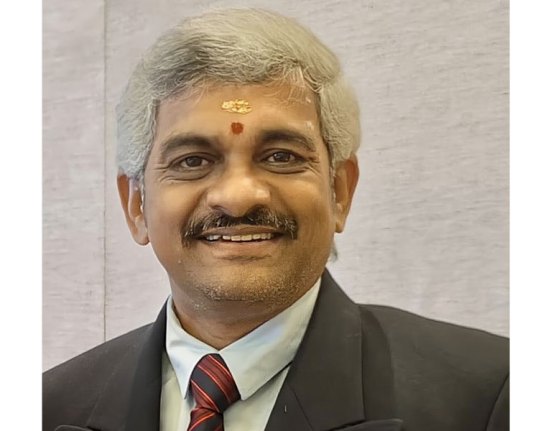
Rajeev Sharma, Director G4S Secure Solutions India Pvt. Ltd, believes that advanced surveillance, sophisticated access control and intelligent data analysis are essential armouries in our security arsenal.
G4S leverages technology to train and upskill the physical security workforce to effectively utilise advancements in security measures, ensuring a forward-thinking approach to security challenges.
Can you outline your strategic vision for enhancing physical security services in G4S India? How do you plan to align security strategies with the evolving needs of clients and industry standards?
The security landscape is transforming, shifting from traditional man-guarding to a data-driven approach for accurate threat prediction and effective countermeasures. In the security landscape, the future belongs to those who adapt and evolve. While technology and intelligence will play a crucial role in the evolution of security, the importance of physical security services will continue to be the bedrock on which these solutions will be built. Emphasising the vital role of guard quality, G4S continuously focuses on the right hiring. From the intense screening of applicants and their documentation to antecedent verification and their health at the time of onboarding a new guard, the journey continues. Once deployed, our focus on continuous training, multi-skilling, upskilling, active engagement and ensuring the well-being of our guards are some of our continuous efforts for enhanced physical security. G4S sets industry standards in security management with a commitment to employee well-being, including online benefits, timely salary payments, providing adequate and quality PPE and a strong safety focus. G4S leverages technology to train and upskill the physical security workforce to effectively utiliseadvancements in security measures, ensuring a forward-thinking approach to security challenges.
Given the advancements in security technology, how do you envision integrating cutting-edge technologies within the physical security framework of G4S India? How can technology enhance the efficiency and effectiveness of security operations?
G4S prioritises technological innovation, investing in cutting-edge solutions and embracing “InTech” (intelligence in technology) to develop comprehensive security strategies. We believe in harnessing technology and best practices to constantly evolve our services and stay ahead of threats. Our dedicated teams, both global and local, push boundaries to develop cutting-edge security solutions for our clients.
While traditional manned guarding played a crucial role in the past, today’s complex threats demand more. Physical asset protection requires a multi-layered approach. Advanced surveillance, sophisticated access control and intelligent data analysis are essential armouries in our security arsenal.
This integrated world brings both immense potential and new challenges. Enter InTech or “Intelligence in Technology”. It’s not just about deploying the latest gadgets; it is about harnessing data, leveraging expert insights and crafting a dynamic security strategy that adapts to constantly evolving threats. The flood of information is pointless unless we know how to translate it into actionable intelligence. Our experts analyse threats, interpret data and develop AI-powered solutions that go beyond the limitations of traditional ManTech. While setting up SROC, we took our learnings from our operations in Denmark, where 70 per cent of the security solutions we offered were based on technology. We believe this integrated approach is the key to securing your assets, your people and your future in today’s interconnected world.
Security risks are dynamic. How do you approach risk assessment and what strategies would you employ to proactively identify and mitigate potential security threats?
In a world where threats emerge faster than ever, a static approach to security is a tragedy waiting to happen. At G4S, we embrace the dynamism of risk with a multi-layered and proactive strategy. Our risk assessment is not a one-time event but a continuous cycle of data-driven analysis, threat intelligence gathering and human expertise. We analyse the information, incorporating internal vulnerabilities, external threat landscapes and even emerging trends to anticipate the possible situation. A dedicated response team, equipped with a well-prepared plan, ensures swift and effective actions in response to security situations. But foresight is not enough. We believe in robust mitigation strategies. We tailor security protocols to each threat, leveraging advanced technology like access control systems, automated incident response platforms and even physical barriers. Operational excellence is demonstrated through the proactive addressing of security threats. Be it handling Covid challenges, mitigating adverse weather conditions, or protest reports, we at G4S combine data-driven insights with human expertise and cutting-edge technology to identify and mitigate potential security threats to safeguard your business, assetsand employees. We embrace the dynamic nature of risk and constantly evolve our strategies to stay ahead of the curve.
Managing control rooms requires seamless coordination. How would you ensure operational excellence within G4S India’s control rooms? Can you provide examples of successful control room management strategies you have implemented in the past?
Ensuring operational excellence in control rooms is crucial for us. We work with our customers to bring value to them by recommending innovative and cost-effective solutions. We rely on technology as an enabler to bring multiple efficiencies. Implementing advanced technologies like video analytics, AI-powered monitoring systems and real-time response tools enhances our control rooms.
With G4S SROC, we implement a real-time incident tracking system integrated with CCTV cameras, access control systems and alarm monitoring. This allows control room operators to receive instant alerts, assess situations accurately and dispatch the response team promptly. The system also generates comprehensive incident reports for analysis, leading to continuous improvement in response times and incident resolution.
Beyond SROC, we have the iCONNECT app, which ensures transparency and control. The app helps optimise cost, better SLA adherence and ease of use. The app covers four main categories: safety, visibility, attendance and efficiency. All the data is accessible at the Operations Excellence Centre and is monitored at the control room (Pulse) to handle any onsite emergencies in real-time. This solution is scalable and customisable to the changing needs of any business. This comprehensive approach enhances transparency, operational control and efficiency across various aspects of G4S operations.
In the security industry, client needs can vary significantly. How do you plan to ensure that G4S India’s physical security solutions are customised to meet the unique requirements of diverse clients? How would you enhance client relationships and satisfaction?
Customisation plays a crucial role in driving customer satisfaction and meeting the diverse needs of the industry, including compliance, state/terrain, security threats, adoption of technology, and sensitive or critical data centers. At G4S, we understand the importance of adapting to these unique requirements, which is why we focus on both technological advancements and customer interactions.
Transparency and seamlessness of information, along with a strong emphasis on compliance and safety, are the strategies we follow to enhance customer relationships and satisfaction. For example, our technology-driven approach includes coding each customer unit to ensure compliance with applicable regulations. Each assignment is digitally captured with a unique code, enabling us to deploy the right personnel based on specific compliance and customer requirements. Our employees are carefully mapped against these codes, ensuring adequate safety requirements are fulfilled.
With process automation tools like iCONNECT and PULSE, we can intelligently manage the fulfilment of service delivery. Our goal is to deliver customised solutions that meet the unique needs of each client while maintaining the highest standards of compliance, safety, and efficiency. G4S India’s customer-centric approach prioritises achieving customer delight through innovative solutions and service delivery. We also calculate the net promoter score every month to ensure that we are continuously focused on delivering the highest standards of customer service.
A skilled workforce is crucial for the success of security operations. How would you approach the training and development of security personnel within G4S India?
In a vast organisation like ours, seamless information exchange is crucial for success. That iswhy we empower our 1,35,000+ ground staff with smartphone-based tools for instant connection, interaction and updates. We believe in the power of both physical and digital training, ensuring efficient knowledge dissemination and skill development.
G4S prioritises systematic employee development through its Learning and Development (L&D) wing, training all our staff annually with a focus on security competence, emerging security solutions, soft skills, health and safety and mental wellness. The ‘SpeakOut’ initiative enables anonymous employee concerns so that they are not taken advantage of in any way by anyone.