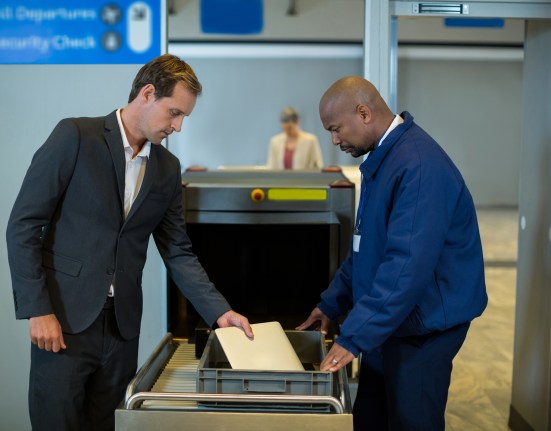
These full-body scanners are a significant upgrade from conventional metal detectors, as they can detect both metallic and non-metallic threats, including explosives
Delhi’s Indira Gandhi International Airport is set to begin trials of advanced full-body scanners from May, aimed at enhancing security while ensuring faster passenger movement through checkpoints, according to Delhi International Airport Limited (DIAL).
The scanners, which are already in use at airports in the United States, Canada and Australia, are capable of scanning passengers in just three seconds. Each unit can process up to 1,200 individuals per hour, potentially easing congestion at security screening points during peak travel periods.
DIAL stated that the new technology produces a standardised two-dimensional image displayed on a preset human avatar, ensuring passengers’ privacy. No personal or biometric images are stored during the process. All scan data will be securely handled, with access limited to authorised agencies.
Two scanners have been installed at Terminal 1 and two more at Terminal 3, DIAL confirmed. The airport operator is currently finalising the IT interface for the machines. Once the trial phase concludes, a committee led by the Bureau of Civil Aviation Security (BCAS) will assess the results and develop standard operating procedures before full deployment.
These full-body scanners are a significant upgrade from conventional metal detectors, as they can detect both metallic and non-metallic threats, including explosives. “The trial follows BCAS’s latest directives to enhance airport security infrastructure while improving passenger convenience,” DIAL noted.
The scanners are equipped with four touch-screen monitors that enable real-time image analysis and passenger instructions. The system is designed to screen individuals of varying heights, ranging from 3.3 feet to 6.7 feet.
While Delhi Airport prepares for its first round of trials, Kempegowda International Airport in Bengaluru has already been testing similar technology for about a year. The experience from Bengaluru is expected to offer valuable insights as Delhi looks to modernise its screening processes.
If successful, the introduction of full-body scanners could mark a shift in how passengers experience security checks at Indian airports — making them not only more secure but also quicker and less intrusive.