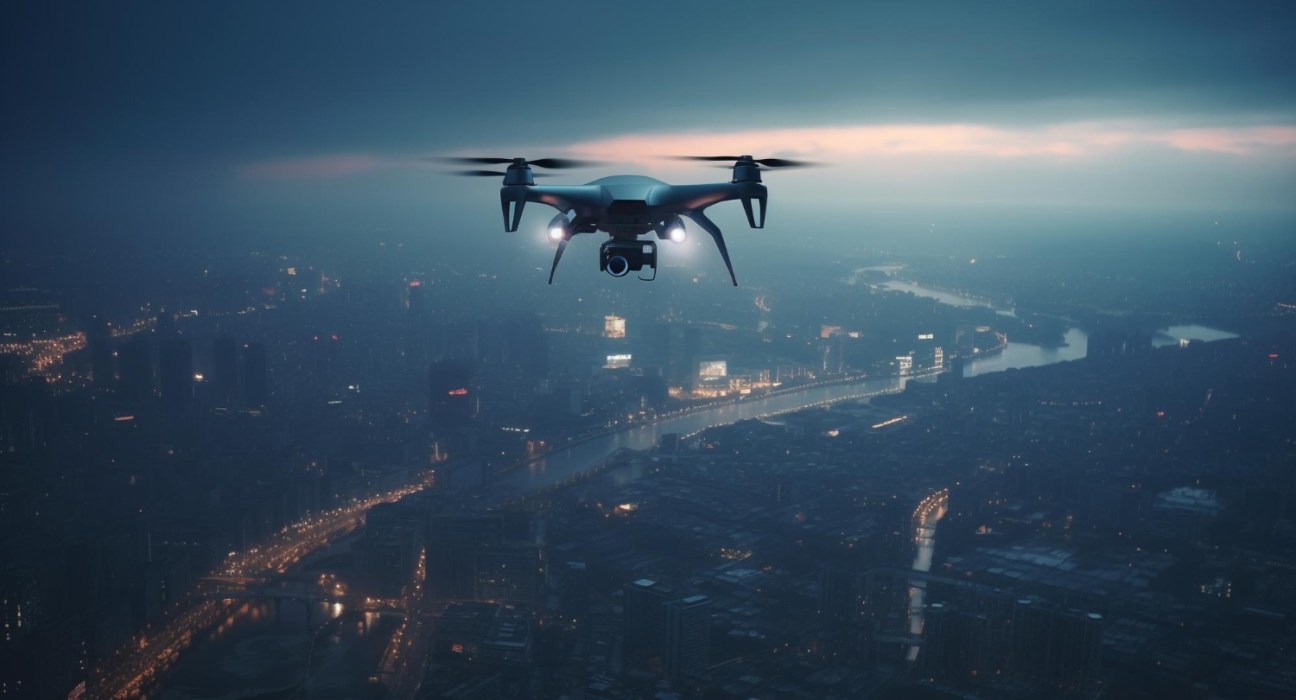
As the drone ecosystem evolves, India’s challenge will be to ensure regulations keep pace with technology
As drones increasingly define the future of logistics, defence, and disaster response, India is emerging as one of the few countries trying to strike a calibrated balance between rapid innovation and national security. While several nations still grapple with regulatory uncertainty, India has moved to build an enabling ecosystem for unmanned aerial systems (UAS) by removing red tape and introducing transparent protocols—without losing sight of safety, surveillance, and sovereign concerns.
Recent years have witnessed a wave of policy changes that liberalise the sector. From simplified licensing to the launch of digital airspace mapping tools, the government’s approach has been focused on unlocking the commercial potential of drones while embedding safeguards against misuse.
Regulatory Reform Encourages Innovation
For startups, this shift in policy has brought much-needed clarity. Arindam Mukhopadhyay, Partner and Head of the ‘Robotics, Unmanned and Space’ investment thesis at India Accelerator, believes the new rules have transformed the landscape for entrepreneurs and investors alike.
“India’s drone regulations are a strong step toward building a responsible and innovation-friendly ecosystem,” he says. “By simplifying the rules and setting clear airspace guidelines, the government is allowing startups to focus on research and real-world applications without getting stuck in red tape.”
The introduction of the Digital Sky platform has been pivotal. It provides a single-window clearance system that streamlines permissions for drone flights. Alongside this, the mandatory use of Unique Identification Numbers (UIN) and the ‘No Permission, No Takeoff’ (NPNT) rule ensure every drone is registered, monitored, and operated within approved limits.
Mukhopadhyay sees this balance as fundamental for investor confidence. “A clear and stable regulatory environment makes it easier to back drone startups with confidence—especially those working in areas like logistics, agriculture, surveillance, and disaster response,” he says. “At India Accelerator, we’re seeing a strong rise in promising drone ventures, and today’s policy framework plays a big role in making these investments feel more secure and future-ready.”
Security Drive Smart Controls
While the promise of drone technology is vast, the risks of unregulated skies are equally significant. From border intrusions to potential threats in urban spaces, drones could easily become vectors of disruption if not properly regulated. India’s strategy reflects an understanding of this dual-use nature.
Capt Nikunj Parashar, Founder of Sagar Defence Engineering, points out that the liberalisation of drone norms hasn’t come at the cost of national security. “The current drone regulations strike a balance between encouraging innovation and safeguarding national security,” he says. “Simplified registration processes and Production-Linked Incentive (PLI) schemes have indeed spurred rapid growth of drone startups, especially in logistics, agriculture, and defence-tech.”
However, this push has been accompanied by prudent checks. The government has introduced digital airspace maps that categorise zones as green, yellow, or red—ensuring drones don’t operate in sensitive locations without permission. Additionally, real-time tracking and automated logging are becoming integral to compliance.
Balanced Deployment: Operation Sindoor
The potential of drones in national security was brought into sharp focus during Operation Sindoor 2025—a major mission that deployed unmanned aerial vehicles for surveillance and logistics in a high-tension border region. Drones played a crucial role in both reconnaissance and rapid-response delivery of supplies.
Parashar says the operation highlighted how drones can be integrated into strategic defence frameworks while adhering to strict regulatory norms. “It shows why stringent airspace mapping, digital permissions, and tracking mechanisms are essential,” he notes. “Without them, we risk turning powerful tools into liabilities.”
For India, Operation Sindoor wasn’t just a demonstration of technological maturity—it was proof that innovation need not come at the expense of vigilance. Rather, the two must work in tandem.
Regulating For Resilience
As the drone ecosystem evolves, India’s challenge will be to ensure regulations keep pace with technology. The integration of AI, edge computing, and swarm intelligence into drone operations will require even more sophisticated oversight. There is also a growing need to harmonise India’s rules with international standards to enable cross-border collaborations and exports.
Yet the current trajectory inspires confidence. With the right mix of liberalisation and layered controls, India is laying the groundwork for a resilient drone sector—one that supports economic growth, empowers startups, and strengthens national preparedness.
If anything, the model emerging from India may well offer a regulatory blueprint for other countries grappling with similar challenges.