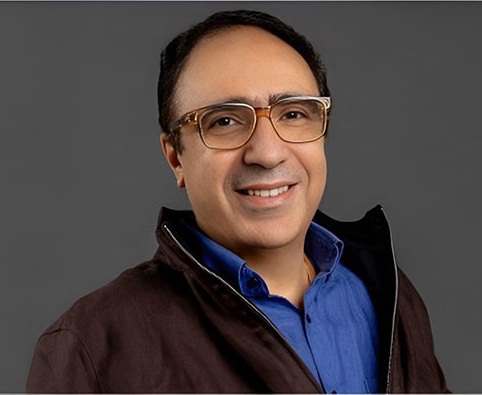
Gen. Haugh, who served just over a year in the dual role, was removed last Thursday night without any official explanation, prompting bipartisan concern
The unexpected dismissal of Gen. Timothy Haugh, the head of the National Security Agency (NSA) and U.S. Cyber Command, has intensified discussions within national security circles about whether the two agencies should be separated — a move that could reshape the country’s approach to offensive cyber operations.
Gen. Haugh, who served just over a year in the dual role, was removed last Thursday night without any official explanation, prompting bipartisan concern. The role, traditionally apolitical and typically retained across administrations, had previously been held for six years by Gen. Paul Nakasone.
The NSA and Cyber Command have shared a director since Cyber Command was created in 2010. While the NSA is tasked with intelligence gathering and surveillance, Cyber Command conducts both defensive and offensive military cyber operations. The shared leadership — known as the “dual-hat” arrangement — has helped ensure strategic alignment and intelligence sharing between the two.
However, Haugh’s abrupt exit may provide an opening for the Trump administration to act on long-standing calls to divide the leadership roles, a plan reportedly being explored by members of the Trump transition team since December.
Shift Towards Cyber Offence
Dividing the NSA and Cyber Command could potentially unleash Cyber Command to conduct more aggressive offensive cyber strikes. Critics of the current structure argue that Cyber Command’s ability to act is often limited by concerns about jeopardising NSA intelligence operations.
“NSA intelligence operations tend to be quiet — we don’t want to get caught,” said Jason Healey, a senior research scholar at Columbia University. “Whereas in a military operation, the spirit of the bayonet is to kill, it’s to get involved with the adversaries.”
National security adviser Mike Waltz has signalled strong support for a more offensive approach in cyberspace. “We need to start going on offence,” Waltz has said, aligning with similar statements from the Pentagon’s acting chief information officer.
Risks To Intelligence Sharing
Still, many in the intelligence community warn that severing the NSA and Cyber Command could hinder operations and risk national security. Jake Williams, a former NSA hacker and now faculty at IANS Research, said the intelligence-sharing model is too valuable to discard.
“Divorcing the two offices could be disastrous,” Williams told Axios. “It’s something that will get reversed, but probably only after an intelligence failure.”
Democratic senators echoed this sentiment in a letter sent to President Trump on Monday, cautioning that dismantling the dual-hat arrangement “would severely degrade the speed and effectiveness” of both agencies and could “have dire consequence for our national security.”
Next Steps & Political Scrutiny
Any decision to formally split the two agencies would require approval from Congress. The issue is expected to feature prominently during a Senate Armed Services Committee hearing, where Lt. Gen. William Hartman, the newly appointed acting head of Cyber Command, will testify about the command’s direction and future.
As the administration considers changes, experts stress that maintaining balance between espionage and military cyber operations will be crucial.
The shake-up comes at a time when cyber threats from state and non-state actors continue to rise, and the U.S. cyber defence and offence posture remains a central pillar of national security. Whether the government can successfully navigate this structural debate without undermining either agency’s capabilities remains to be seen.