With the rise of quantum computing threatening to upend traditional encryption methods, Quantum Security emerges as the cutting-edge solution, offering unbreakable protection for sensitive data in an increasingly vulnerable digital world
In the rapidly evolving landscape of technology, the need for robust security measures has never been more pressing. As we continue to push the boundaries of innovation, the threat of cyber-attacks and data breaches looms large, compromising sensitive information and jeopardising national security. The advent of quantum computing has further exacerbated this threat, with its immense processing power capable of breaking even the most secure encryption algorithms. In response, a new frontier in security has emerged: quantum security. This revolutionary technology harnesses the principles of quantum mechanics to create unbreakable encryption and secure data transmission, ensuring the confidentiality, integrity, and authenticity of sensitive information. As we embark on this new era of quantum computing, it is essential to understand the principles, benefits, and challenges of quantum security and to explore its vast potential to safeguard our digital world.
Threat Of Quantum Computing
Quantum computers possess unparalleled processing power, enabling them to tackle complex calculations at unprecedented speeds. This capability allows them to break many encryption algorithms currently in use, compromising sensitive information and rendering traditional security measures obsolete. The threat of quantum computing is multifaceted and far-reaching. First and foremost is the issue of exponential speed. Quantum computers can process vast amounts of data exponentially faster than classical computers, making them ideal for cracking complex encryption codes and solving problems that were previously unsolvable. As a result, encryption methods that have safeguarded online transactions, communication, and data storage are now vulnerable to quantum attacks, including widely used algorithms such as RSA and elliptic curve cryptography (ECC).
Furthermore, quantum computing raises the stakes for data compromise. These powerful machines can access and exploit sensitive information, from financial data to personally identifiable information, and even national security secrets. The fallout from such breaches could lead to significant financial losses, reputational damage, and even threats to national security.
Cybersecurity risks are also magnified by quantum computing. It increases the potential for data breaches, espionage, and other malicious activities, compromising the integrity of digital systems and exposing sensitive information to potential adversaries.
Quantum computing additionally presents a challenge to long-term data security. Even data that has been archived with robust encryption methods is at risk of being compromised, as quantum computers can break the encryption used to secure it. This means that information thought to be secure today may become vulnerable in the future as quantum technology advances. Given these threats, it is critical to develop and implement new security measures, such as quantum security, to counter the emerging risks and safeguard sensitive information. Organisations and governments must prioritise quantum-resistant cryptography and invest in quantum security solutions to protect against the impending quantum computing threat.
Threats To Existing Encryptions
The advent of quantum computing poses a significant threat to many existing encryption methods. Quantum computers have the potential to dismantle established cryptographic systems by exploiting their immense computational power. RSA encryption, which relies on the difficulty of factoring large numbers, is vulnerable to quantum computing. Quantum computers can factor large numbers exponentially faster than classical computers, rendering RSA encryption ineffective. Elliptic Curve Cryptography (ECC) faces a similar risk. Quantum computers can solve the elliptic curve discrete logarithm problem more efficiently, undermining the security that ECC has provided. Even AES encryption, considered secure against classical computers, is not immune. Quantum computers can potentially break AES-128 and AES-256 using quantum algorithms like Grover’s algorithm, though this remains a complex and computationally intensive task. Public-key cryptography, such as Diffie-Hellman key exchange and digital signatures, is similarly threatened. The foundation of secure communication systems may crumble under the processing power of quantum machines. Hash functions, which play a crucial role in maintaining data integrity and creating digital signatures, could also be broken by quantum computers. Algorithms such as SHA-256 and SHA-3, which are widely used today, may become vulnerable in a post-quantum era.
Rise Of Quantum Attacks
Quantum computers open the door to various forms of attack on traditional encryption systems. These quantum attacks can undermine the security measures we rely on today. A quantum brute force attack, for instance, leverages quantum parallelism to try all possible keys simultaneously, making it far more efficient than classical brute force attacks. Quantum side-channel attacks exploit quantum properties to extract sensitive information, bypassing traditional security measures. Similarly, quantum algorithmic attacks use powerful quantum algorithms like Shor’s algorithm to factor large numbers, effectively breaking RSA encryption. The consequences of these quantum attacks are profound. Data breaches become easier, exposing sensitive information to adversaries. Financial losses, particularly with the rise of cryptocurrencies and digital financial transactions, become more likely. National security risks are also heightened as classified information is at greater risk of being accessed.
What Is Quantum Security?
Quantum security represents a revolutionary approach to secure communication and data protection, harnessing the power of quantum mechanics to develop encryption methods that are theoretically unbreakable. By leveraging the principles of quantum physics, quantum security ensures the confidentiality, integrity, and authenticity of sensitive information. At the heart of quantum security lies Quantum Key Distribution (QKD), a secure method of communication that utilises quantum mechanics to encode and decode messages. QKD generates random quantum keys shared between two parties, which are then used to encode and decode messages. This process is theoretically unbreakable because any attempt to intercept the communication would introduce detectable errors. QKD is rapidly becoming the backbone of quantum security, providing unprecedented protection for secure communication networks, data centres, and Internet of Things (IoT) devices. By tapping into the power of quantum mechanics, QKD and quantum security offer unparalleled protection for sensitive information, ensuring it remains shielded from even the most sophisticated threats.
The Benefits Of Quantum Security
Quantum security offers a wide range of benefits, making it an attractive solution for organisations that handle sensitive information. One of the most significant advantages is its unbreakable encryption. Quantum security provides the highest level of encryption, making it ideal for safeguarding financial data, personally identifiable information, and national security secrets. In addition to encryption, quantum security ensures secure data transmission. It prevents interception and eavesdropping, which is especially important in high-stakes communications such as financial transactions and sensitive government communications. Furthermore, quantum security is future-proof. It is designed to withstand the coming threat of quantum computing, ensuring long-term protection. As quantum technology continues to advance, quantum security will remain effective, protecting against even the most sophisticated quantum attacks. Another advantage is its ability to enable high-speed encryption. This makes quantum security suitable for applications that require real-time communication, such as video conferencing and online transactions.
Migration To Quantum-Resistant Cryptography
As quantum computing becomes increasingly powerful, it is vital to transition to quantum-resistant cryptography to safeguard sensitive information. Quantum-resistant cryptography refers to cryptographic methods that are immune to attacks from both classical and quantum computers. Several promising methods are emerging in the field of quantum-resistant cryptography. Lattice-based cryptography, for example, uses complex mathematical structures called lattices to create encryption schemes and digital signatures. This approach is considered quantum-resistant due to the inherent difficulty of lattice problems. Code-based cryptography utilises error-correcting codes to build cryptographic primitives. Its resistance to quantum attacks stems from the difficulty of decoding random linear codes. Multivariate cryptography, based on the hardness of solving multivariate polynomial equations, also offers quantum resistance. Finally, hash-based signatures rely on the difficulty of finding collisions in hash functions, making them resilient to quantum attacks. Migrating to quantum-resistant cryptography offers several benefits, including long-term security and future-proof protection. It ensures compliance with emerging security regulations and standards and demonstrates a proactive approach to safeguarding sensitive information.
Challenges & Considerations
Despite its advantages, migrating to quantum-resistant cryptography presents several challenges. Key management, for instance, requires specialised infrastructure and expertise. The performance of quantum-resistant algorithms can also be computationally intensive, potentially impacting the efficiency of certain applications. Ensuring interoperability between quantum-resistant cryptography and existing infrastructure is another critical consideration, as is the need for standardisation. Establishing universal standards for quantum-resistant methods is essential for widespread adoption.
Addressing Challenges
To overcome these challenges, organisations can invest in research and development to improve the scalability and interoperability of quantum security systems. Developing standards and protocols is also crucial to ensure seamless integration with existing infrastructure. Training and education are equally important. Providing programmes to develop expertise in quantum security implementation and maintenance will help prepare organisations for the quantum era.
Real-world Applications & Case Studies
Quantum security has a wide range of real-world applications, from securing communication networks for governments and financial institutions to protecting data centres and IoT devices from cyber threats. Several case studies highlight the potential of quantum security. Swiss Quantum, a Swiss company, has developed a quantum security system that uses QKD to encode and decode messages, ensuring secure communication. Similarly, Google’s Quantum AI Lab has created a quantum security system for secure data transmission, further demonstrating the practical applications of this revolutionary technology.
Future Of Quantum Security
As research and development in quantum security continue, we can expect to see significant advancements. Improved scalability will allow for the implementation of quantum security on a larger scale, while integration with existing infrastructure will make adoption more feasible. Ultimately, quantum security will become widely adopted across industries and governments, ensuring the highest levels of data protection in the quantum age. Quantum security is the next frontier in data protection, offering unparalleled security for sensitive information. While challenges remain, the benefits of quantum security make it an essential investment for organisations and governments seeking to safeguard their data in the quantum era. As technology advances, it is crucial to stay ahead of the curve and adopt quantum security to ensure the long-term security of sensitive information.
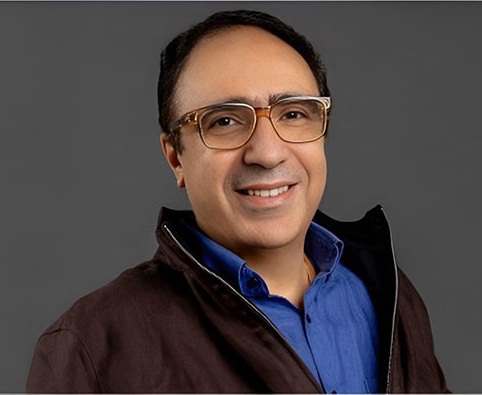
Author: Col (Dr) Inderjeet Singh Barara, COO, Vara Technology