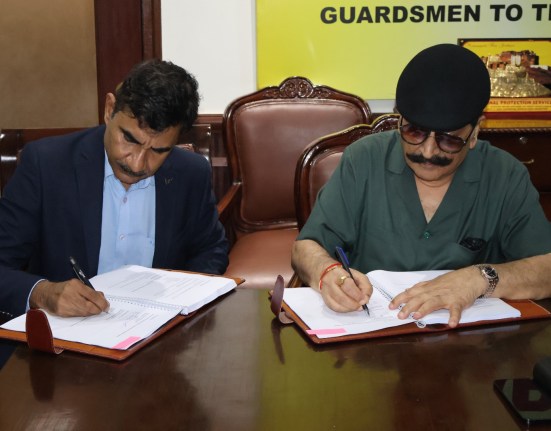
To secure a PSARA licence, applicants—be they companies, partnerships, or one-person businesses—must meet a strict set of criteria
India’s private security sector has boomed in response to the growing demand for protection from individuals and businesses. But this rapid expansion, while providing millions with employment, has also raised serious concerns about accountability, professionalism, and rising crime. To bring order to this sprawling, often unregulated industry, the government enacted the Private Security Agencies Regulation Act, 2005 (PSARA).
Administered by the Ministry of Home Affairs, PSARA serves as the core legal framework for a sector that has been vital to a tremendous increase in the number of business establishments. It is designed to ensure that private security providers operate with proper oversight and adhere to national standards.
Under Section 4 of the Act, no individual or company can operate a private security agency without a licence from a designated state authority. This licence, which can cover a single district or an entire state, is a crucial step towards standardising the industry. Agencies wishing to operate in multiple states must obtain a separate registration in each one.
Strict Rules and Mandatory Training
To secure a PSARA licence, applicants—be they companies, partnerships, or one-person businesses—must meet a strict set of criteria. Directors and partners must be Indian citizens, over 18 years of age, of sound mind, and, crucially, possess a crime-free record. To prevent foreign influence and ensure national security, the Act explicitly prohibits firms with non-Indian majority shareholders or directors from obtaining a licence.
One of the most significant requirements under the Act is the mandatory training for all security guards. Applicants must enter into a Memorandum of Understanding (MoU) with a state-approved training institute. Before they can begin work, security guards must complete a minimum of 120 hours of prescribed training, though ex-servicemen are granted certain relaxations. This ensures that guards are not just bodies in uniform but are properly equipped to handle a range of situations, from physical safety to emergency response.
The application process is thorough and includes a police verification of the applicant’s background. Controlling authorities leverage national electronic databases like the Crime and Criminal Tracking Networks and Systems (CCTNS) to verify an applicant’s criminal history. This rigorous vetting process is intended to weed out unscrupulous operators and increase public trust in the industry.
Comprehensive Framework for Accountability
In addition to these checks, applicants must submit a wide range of documents, including proof of identity and address, tax returns, and registration certificates under labour laws such as the Employee Provident Fund (EPF) and Employee State Insurance Corporation (ESIC). This extensive documentation ensures that agencies are compliant with broader employment regulations, thereby protecting the rights of their employees.
Once granted, a PSARA licence is valid for five years and can be renewed upon application, provided the agency continues to meet the necessary standards. This regular renewal process acts as an ongoing check on the quality and integrity of a company’s operations.
Ultimately, the PSARA Act is not just a bureaucratic hurdle; it is a vital tool for regulating an industry that has a direct impact on the safety and security of millions. By mandating training, vetting, and accountability, it aims to transform a largely informal sector into a professional, trustworthy, and effective force.