Anticipate risk, protect value, lead with purpose
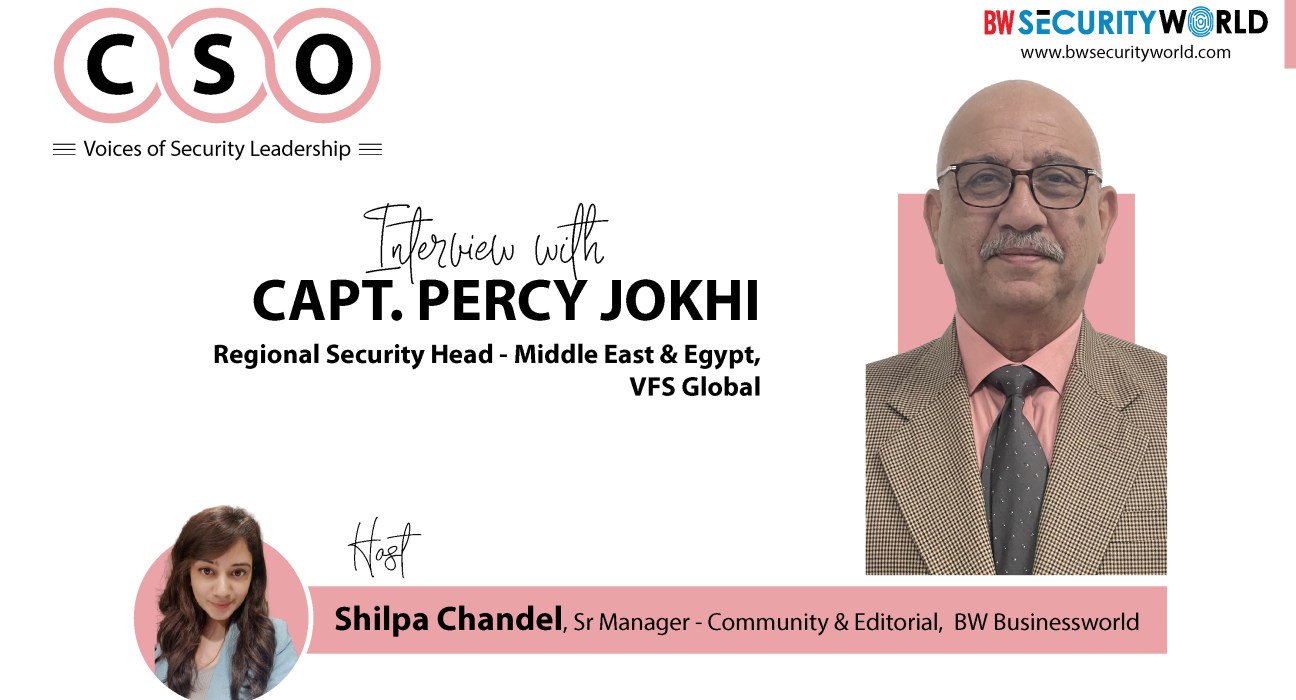
Security today isn’t just stationed at the gate, it’s embedded in code, culture, and continuity. From digital firewalls to human instincts, it’s a strategic force that anticipates rather than reacts. Few embody this transformation as effectively as Capt. Percy Jokhi, Regional Security Head–Middle East & Egypt . With his foundational years in the Indian Army and a rich corporate journey thereafter, Capt. Jokhi brings a rare blend of discipline, foresight, and people-centric leadership.
While speaking with BW Security World, he opens up about the evolving definitions of physical security, how he bridges the gap between cyber and physical domains, and why real leadership is measured in values, not just metrics.
Security roles are often behind the scenes but incredibly high-stakes. What originally drew you to this field, and what keeps you motivated?
That’s true, security often operates in the background but holds immense responsibility. In many organisations, its value is seen differently, especially since it’s not a direct revenue generator. Early in my corporate career, I had the privilege of working with a visionary manager, Raju Venkatraman, who recognised the criticality of the function and even involved me in client-facing bids.
When I transitioned from the Army to the corporate world, options were limited, and I gravitated toward security. During my time at the Taj Group, I was also entrusted with HR responsibilities, but I chose to stay with security. It felt meaningful, it protects not just people and assets, but profits too. That’s a line I often repeat: “We protect people, assets, and profits.” It’s not just about surveillance; it’s about value.
How has your view on physical security evolved with the rise of digital-first systems? Has this created new vulnerabilities or shifted priorities?
Threats and risks are constantly evolving, and naturally, so must our responses. Digitalisation has been a double-edged sword, its enhanced capabilities but also introduced new vulnerabilities. Our priorities must shift accordingly.
One particular concern is the surge in certifications earned through ghostwriting. I’ve personally been approached to help with this, which shows how real the problem is. This influx of underqualified professionals lowers the industry standard and creates hidden risks. It’s not enough to just have a certificate; the knowledge behind it must be sound.
“Technology is best when it brings people together.” How are you building harmony between people, technology, and policy in your security strategy?
That quote by Matt Mullenweg touches on the potential of open-source collaboration. I often say: before we harmonise people and technology, we must first harmonise physical and cyber security.
We’ve worked towards this integration, my collaboration with then-CTO Sanjiv Dalal is a great example. We openly sought each other’s insights, which allowed us to find workable, compliant solutions that respected local laws and data privacy norms. If egos are set aside, we can achieve a unified, policy-driven strategy that serves all ends.
If you had the ability to solve one major security challenge across your industry, what would it be?
I would address the lack of internationally recognised, affordable certification programs for Indian security professionals. Bodies like IISSM need to take the lead here. We need structured, knowledge-based certifications that equip our professionals with both credibility and real-world capabilities. It would elevate the entire industry.
In your experience, what’s the difference between managing a security team and truly leading one?
Leadership is deeply human. Ratan Tata put it best: “Leadership is not about being in charge. It’s about taking care of those in your charge.” When your team makes a mistake, you take ownership. That builds trust.
Leadership means sharing knowledge, setting values, and being a role model. Gen. Patton once said, “Do everything you ask of the men you command.” You must stand up for your people, correct them privately, and lead by example. That’s how you create loyalty, confidence, and resilience.
How do you separate hype from what truly matters when evaluating next-gen security tech or startups?
There’s a saying—seeing is believing, but we don’t believe everything we see. The key is to assess the idea’s relevance and practicality for your specific industry.
Years ago, while working with an MNC bank, I pushed for a Central Monitoring Station when it was still a novel idea. I believed in its potential—and it worked. Similarly, new tech must be vetted for actual operational impact, not just marketing sheen.
If the future of security lies in anticipation rather than reaction, what capabilities must leaders build now to stay ahead?
I tell my team: “You stay ahead to keep up.” It sounds paradoxical, but it’s true. If you’re not pushing forward, you’re falling behind.
Today’s leaders must invest in predictive risk intelligence; tracking, analysing, and synthesising data from diverse inputs. This helps forecast potential threats and build resilience ahead of impact. It’s not about reacting anymore; it’s about readiness, agility, and foresight.
About the interviewee:
Capt. Percy Jokhi is a distinguished security, risk, and investigations professional with decades of experience spanning the Indian Army and global corporate roles. Currently serving as the Regional Security Head–Middle East & Egypt, he has previously worked with industry leaders like Tata Group and a major MNC bank. His expertise spans physical and digital security integration, business continuity, executive protection, crisis response, and investigations. A passionate mentor and speaker, he is known for championing ethics, strategic foresight, and cross-functional collaboration in the global security ecosystem.
Disclaimer: Views expressed are in individual capacity and do not reflect those of the employer.