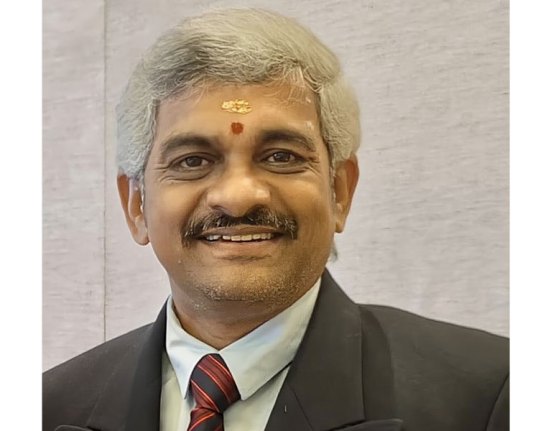
Wipro’s Global Security Head, Capt. Sanjay Sharma, unveils game-changing strategies, transformative leadership principles, and pioneering innovations shaping the future of enterprise security
With over three decades of distinguished leadership across the Indian Army and global corporations, Capt. Sanjay Sharma is widely recognised as one of India’s foremost security visionaries. As the Global Security Head at Wipro Ltd, and a two-time recipient of India’s “Top Corporate CSO” award, he has been instrumental in elevating security from an operational necessity to a boardroom-level priority.
In this exclusive conversation, Capt. Sharma shares his strategic insights, innovations, and leadership philosophy that continue to shape the future of enterprise security.
Your journey spans the Indian Army and global corporations. How has this shaped your leadership and your vision for security at Wipro?
My transition from the Indian Army to leadership roles in American, European and Indian multinationals has given me a unique lens on resilience and operational strategy. Military service instilled discipline, composure under pressure, and long-range thinking capabilities that have been vital in navigating the evolving corporate security landscape.
Over the past 25 years in the corporate world, I’ve led not only security, but also general administration, facilities management, employee commute services, and real estate operations across multiple geographies. This breadth of experience reinforced my belief that security must be integrated into the broader organisational ecosystem, not operate in silos.
At Wipro, my vision has been to build an intelligence-led, holistic security and administration framework that enables agility, builds stakeholder trust, and strengthens resilience. Leadership for me is about empowering diverse teams, encouraging cross-functional collaboration, and ensuring alignment with the company’s strategic objectives. Ultimately, I view this as a shared journey, grounded in humility and empathy, where every team member contributes to sustainable success.
How did you design Wipro’s security organisation with four Centres of Excellence, and what impact has this had?
Redesigning Wipro’s security structure was a turning point in redefining our function as a value creator rather than a cost centre. We introduced four Centres of Excellence (CoEs), each addressing a critical area of corporate security.
The Geopolitical Threat Intelligence & Risk CoE monitors global developments and translates them into actionable insights, while the Physical Security Technology CoE drives innovation in surveillance, access control, and intrusion detection. The Security Audits & Compliance CoE ensures proactive regulatory alignment and swift risk closure, and the Security Programme Governance CoE oversees policies, metrics, and strategic coherence to maintain a robust and unified security framework.
We paired this with a matrix model that tightly links these CoEs to regional physical security teams. This structure promotes two-way communication, strategic direction flows down, and on-ground realities inform top-level decisions.
The outcomes have been tangible: faster incident responses, improved audit results, and increased stakeholder confidence. Most importantly, we’ve built a security organisation that supports business growth, not just asset protection.
What inspired your integration of advanced systems and Generative AI into physical security?
Traditional systems were reactive and fragmented. We envisioned an ecosystem where intelligence and automation drive real-time, proactive response. We began by integrating CCTV, access control, and intrusion detection systems into a centralised command application.
From there, we layered in Generative AI. One chatbot now communicates with our CCTV platform, staff can inquire about server health, storage, and uptime using natural language. Another interfaces with our security policy repository, providing instant clarity on complex regulatory or procedural queries.
This transformation has elevated our command centres into operational intelligence hubs. We’ve improved response times, system availability, and decision-making while aligning security with broader business continuity and resilience goals.
Can you describe a leadership challenge and how you overcame it?
The COVID-19 pandemic tested every aspect of security leadership. With offices vacated and assets vulnerable, we had to act decisively. We activated our Crisis Management Framework and transitioned monitoring to remote command centres almost overnight.
Our guard force was retrained and redeployed, PPE-equipped, and vaccinated. We implemented contactless access, wellness checks, and temperature screening—integrated into dashboards for executive oversight.
Clear, honest communication became our most powerful tool. We reassured staff that their safety was our highest priority. As a result, not a single major breach occurred, and employee confidence soared.
That experience reinforced my belief: in times of crisis, leadership must be rooted in clarity, compassion, and agility.
How does today’s geopolitical uncertainty affect organisations, and how can corporate security provide value to the C-suite?
Geopolitical volatility-conflicts, sanctions, shifting alliances has made risk management more complex than ever. For the C-suite, it’s not just a question of safety, but of business continuity, market access, and brand integrity.
Our dedicated Geopolitical Threat Intelligence CoE analyses regional developments and advises leadership on asset relocation, risk mitigation, and strategic recalibration. This intelligence shapes boardroom decisions and ensures business strategies are resilient, not reactive.
The robust security capabilities enable operational continuity, enhance client trust, and differentiate us in regulated markets. Security has become a business enabler, reducing downtime, protecting talent, and allowing strategic expansion into high-risk geographies.
As a twice-awarded “Top CSO in India”, how do you align your team’s excellence with Wipro’s strategic goals?
These recognitions reflect the calibre of the team, not just the individual. At Wipro, our Corporate Security function comprises engineers, analysts, legal advisors, and veterans, all focused on one mission: enabling business growth through security.
Each team member’s output is tied directly to enterprise goals, whether it’s integrating next-gen surveillance systems, interpreting geopolitical shifts, or ensuring compliance across jurisdictions.
Awards like the K.P. Medhekar Award for Global Organisational Security, and platforms like BW Security World, further motivate us. They amplify the relevance of security, showcasing it as a strategic discipline that deserves boardroom attention.
My article in Business Security World Magazine, titled “Redefining Security”, reflects our industry’s shift, from operational function to strategic advantage. Platforms like these drive the professionalisation of our field and help shape the narrative around security’s transformative impact.
What advice would you give to aspiring security leaders in today’s complex landscape?
First, master your craft, but don’t stop there. Learn the language of business, understand global dynamics, and stay ahead of technological change.
Be curious. Attend forums, read widely, and build a network. The best leaders today are not just experts, they are communicators, collaborators, and influencers.
Most importantly, lead with integrity and empathy. Security is ultimately about people, earning their trust and protecting what matters. In our line of work, how you lead is just as important as what you lead.
Embrace change, stay grounded in purpose, and use your position as a platform to create positive impact. That’s how security leaders help shape, not just protect the future.
Capt. Sanjay Sharma’s approach embodies the future of enterprise security—strategic, people-centric, and powered by intelligence. His leadership has not only transformed Wipro’s security posture but has also set a benchmark for the industry at large. In a world increasingly defined by risk, his message is clear: true security leadership empowers organisations to grow with confidence, resilience, and vision.