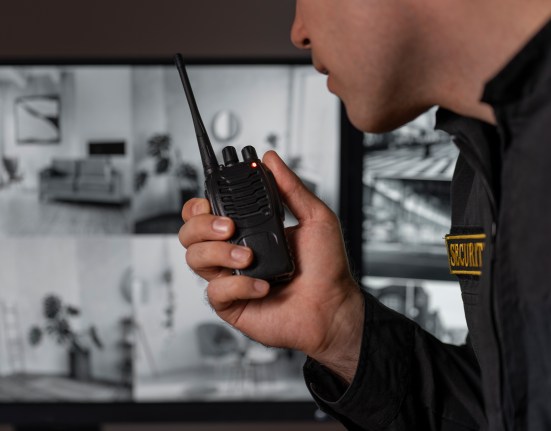
Rising demand for vehicle undercarriage inspection reflects broader push for proactive security at critical sites
The under‑vehicle surveillance systems (UVSS) market exceeded USD 8.85 billion in 2022 and is projected to grow at a compound annual growth rate of 13 per cent through 2030, as demand rises across high‑security sectors, according to industry analysts. The expansion signals a shift towards more comprehensive inspection protocols, particularly at airports, military bases, and government facilities.
Tool of modern security
UVSS technology enables detailed inspection of vehicle undercarriages—areas often exploited to conceal contraband or threats. It’s increasingly deployed at entry points to government buildings, military posts, embassies, and key infrastructure to bolster perimeter checks.As traditional visual and access‑control measures face limitations, under‑vehicle systems add a critical layer of protection in threat detection.
Fuelled by luxury and legislation
Although high in cost, surveillance-equipped luxury vehicles are helping to spur adoption across broader markets, as manufacturers incorporate UVSS for enhanced vehicle security—ranging from anti‑terror measures to theft deterrence. However, the rate of growth is also sustained by increasing regulations and mandates in sectors where under‑vehicle screening is considered essential.
R&D investments in surveillance software and hardware are likewise rising, particularly in regions including North America, which currently commands the largest share of the market, and Asia‑Pacific—where security concerns and automotive manufacturing are both rapidly expanding.
Threats driving demand
The surge in under‑vehicle surveillance deployment corresponds to growing threats in public and national-security domains. High‑profile attacks using improvised devices hidden beneath vehicles have underscored the need for automated, accurate inspections at scale. As a result, fixed and portable UVSS platforms are emerging as essential infrastructure components—even amid the high acquisition cost.
Sector still finding its balance
Despite growth, the market faces obstacles. The high cost of deploying UVSS—especially for portable systems or networked installations across borders—remains a barrier for smaller organisations or developing countries. Even so, the ROI narrative is strengthening, as surveillance models shift from reactive to preventive paradigms.
Looking ahead
Observers expect UVSS demand to accelerate as global infrastructure projects, urbanisation, and transport hubs expand security footprints. Regulatory frameworks and industry standards are also evolving to require enhanced vehicle screening, bolstered partly by lessons learned from past vulnerabilities and public safety incidents.
Within the broader surveillance ecosystem—valued at over USD 130 billion globally, with video systems alone expected to reach USD 74.6 billion by 2025—UVSS, may still be a niche. Yet its role is increasingly critical in layered security design.
India and other markets with rapidly developing infrastructure may find particular value in UVSS adoption. Border crossings, sensitive entry points, and critical installations stand to benefit from automated, non-intrusive inspection capabilities. As the market evolves, the convergence of cloud-enabled analytics, regulatory compliance and high-precision hardware could position UVSS as a standard for future perimeter protection.