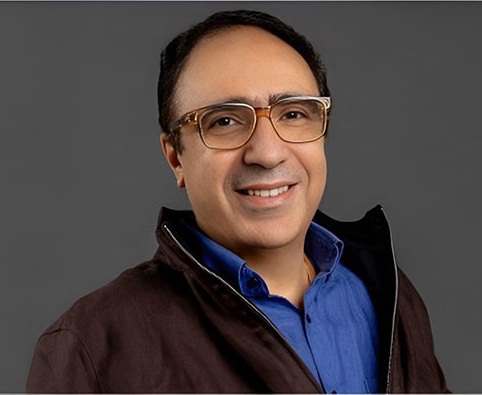
As scams surge and regulations tighten, Mudrex details how platforms and users can safeguard digital assets
With crypto-related thefts touching USD 2.17 billion in the first half of 2025 alone, investors across the world are confronting an increasingly hostile threat landscape. In India, a recent Madras High Court verdict recognising cryptocurrency as “property” has further intensified discussions on regulation, exchange accountability, and investor safety. Against this backdrop, Mudrex, one of India’s leading crypto investment platforms, outlines what users, regulators, and exchanges must do to build a safer, more trustworthy ecosystem.
In this interview, Mudrex’s CEO Edul Patel breaks down the rising risks, the future of regulation, and the security architecture that exchanges must adopt to protect users in an unpredictable market.
With global crypto hacks rising sharply, what best practices should users follow to keep their funds secure?
The first half of 2025 saw over USD 2.17 billion stolen globally. If this continues, losses could hit USD 4 billion by year-end, so users must stay extremely cautious.
The basics still matter the most. The first is protecting private keys and seed phrases. These should always be stored physically, in multiple secure locations not digitally. Users should also test their recovery process on a secondary device.
The second layer is multi-factor authentication across wallets and exchanges, preferably using authenticator apps or hardware tokens instead of SMS.
The third is phishing awareness. Most thefts still begin with phishing links or fake interfaces, and we’re now seeing AI deepfakes promoting fake giveaways or urgent calls to action.
Finally, users must follow good operational security—verify every transaction, use unique passwords stored in encrypted password managers, and transact only on secure networks or VPNs.
After the Madras High Court declared crypto as ‘property’, what regulatory shifts do you expect in India?
This ruling is a landmark because it gives crypto clear ownership status and legal protection. It also enables Indian courts to hold platforms accountable even if they operate overseas.
Following this, we expect regulators to speed up frameworks around custody, audits, asset segregation, and platform accountability. This decision puts investor protection at the centre, and it will push India towards clearer, more robust crypto regulations.
How can crypto platforms remain compliant globally while still innovating?
Compliance must be built into the product from day one. In India, every exchange must be FIU-registered, following strict KYC and AML norms.
Exchanges should treat compliance as a competitive advantage, not a burden. If platforms have transparent reporting, audit-ready systems, and adaptable architecture, they can stay compliant across jurisdictions without slowing down innovation.
What security measures do trading platforms typically implement to prevent hacks or unauthorised access?
Most platforms rely on cold wallets for storing user assets, spread across multiple wallets to avoid single-point failures.
On the user-facing side, exchanges implement 2FA, anti-phishing tools, encryption protocols, and continuous security audits. Regular penetration testing and infrastructure reviews help detect vulnerabilities early and strengthen defence.
How crucial is user education in reducing risks, and what is Mudrex doing to empower investors?
User education is the strongest defence. Even with the most advanced platform, unaware users remain vulnerable to scams and hype-driven decisions.
This is why we launched ‘Learn with Mudrex’, now India’s largest crypto education platform. We conduct live sessions, bootcamps, and structured learning courses to simplify complex concepts.
On the app, Mudrex Insights helps users make informed decisions with technical, fundamental, and sentiment analysis in simple language.
We also publish newsletters, explainers, and updates on scams and global developments. Our goal is to build a community of responsible, informed investors.
In the event of a breach, what protocols should exchanges follow to minimise damage and restore trust?
The first principle is risk containment. No exchange should store all assets in one place. Those with under USD 1 billion AUM should ideally rely on third-party custodians rather than maintaining their own wallets.
Mudrex uses globally recognised custodians who manage billions and insure assets at 100 per cent capacity, offering high resilience.
Internally, every transaction at Mudrex requires multiple authorisations. If any anomaly is detected, the system halts approvals and freezes transactions. We also maintain strict transactional limits to prevent large losses.
If a breach occurs, platforms must immediately pause operations, secure remaining funds, audit vulnerabilities, and communicate transparently with users.
What innovative tools has Mudrex introduced to improve user safety and confidence while trading?
We’ve introduced several features focused on risk management and trading efficiency:
Add/Reduce Margin and TP/SL tools help traders secure profits and limit losses automatically.
API Trading enables sophisticated 24/7 automated strategies with secure key management.
A keyboard-first trading panel offers high-speed, precision-oriented execution.
Reduce-Only Orders ensure users never accidentally increase exposure in volatile markets.
Together, these tools make the trading experience safer, more controlled, and more professional.